

4×4 Mercedes-Benz Zetros Trial Truck (42129): the first Technic diff lock
This is the first Technic set with locking differentials, and the lock is worked from your phone. Underneath are two driven axles, and a slider in the Control+ app locks the differentials so the truck keeps crawling when one wheel lifts off the ground. Finished, it is 48 cm long and sits on four chunky tyres, with a bright green flatbed behind a grey cab and a rubber duck on the front bumper.
It is in the Brick Club library. Below is what the four motors are known to drive, how the six numbered bags split the build, and where the two reviews we have found say people slip up. One thing up front: neither reviewer is a Technic regular, so the mechanism section leans on LEGO’s own description and Brickset’s data more than I would like.

Why this one matters
The Zetros is a real Mercedes-Benz off-road truck, introduced in 2008 and used mostly for rescue work and agriculture. The set is the trial-truck version with a made-up race livery: fictional sponsor stickers, a number 13 on the cab, and four course flags on stands. Milan Reindl designed it, and it went on sale on 1 August 2021 as one of two Technic flagships that summer. The other was the pneumatic Heavy-Duty Tow Truck (42128); this was the Control+ one.
The headline is the differential lock. LEGO calls it a first for Technic, and it is the function that makes the truck worth motorising rather than pushing. Open, the wheels on an axle can turn at different speeds, which is what you want on a corner. Locked, the motors force them to turn together, which is what you want when one wheel is in the air. The Brick Fan review said the build itself was not very interesting but that you learn how differentials work by doing it, and that is fair: the mechanism is in the first bags, in the middle of the chassis, and you see every gear of it before the body covers it.
What it is not is quick. Both reviews say it is slow, and BricksFanz found the turning circle poor. The electronics are also most of the price. BricksFanz put the hub and four motors at over 60 per cent of the cost if bought separately, which is why 2,110 pieces carried a launch price of £274.99 (BricksFanz’s pre-release figure; Brickset now lists £284.99). For a member that maths does not matter, which is rather the point of the library.
What it actually does
Everything here runs from the app, through the hub, to a motor. Without the phone, as the Brick Fan put it, it just sits there.
Two axle sections are built separately and then joined, and the differentials let the wheels on each axle turn at different speeds around a corner. The lock is a slider in the app: move it and the motors force the wheels to the same speed, so a wheel in the air cannot spin away the drive. That is the whole trick of a trial truck, and it is why this one clambers over a step or up a steep ramp. The Brick Fan counted a couple of motors on the lock; neither review says which of the four does what, so the path below stops at the motors.
The front axle assembly carries its own motor for steering. From the app you steer with a slider on the lever screen, or by dragging an arrow around a picture of the truck on the other. The turning circle is poor: BricksFanz took the four flags to be a slalom course and found the truck could not really thread them. Treat it as a crawler, not a rally car.
Each axle hangs off springs. The rear axle goes on in the second set of bags and attaches to the back of the truck through springs that double as its suspension; the front axle gets the same treatment in the third. LEGO’s own feature panel marks the suspension travel with an arrow at the front wheel, which is what the springs and the tall tyres are for.
The bonnet hangs on a pair of Technic beams and flips forward to show the engine. LEGO’s description promises a detailed engine with a spinning radiator fan, and a service hatch you open to inspect the gearbox. Neither review says what turns the fan, so there is no path for this one. The Mercedes star on the grille is a printed dish rather than a sticker, and the cab doors open too.
The hub sits behind the cab and is held in by a small Technic beam, so a battery change means lifting the beam and sliding the hub out, nothing more. It takes six AA batteries, and BricksFanz would rather have had a rechargeable one, which I second. It is battery box and Bluetooth receiver in one, and it drives three L motors and one medium motor.
The only way to drive it is the app. The first screen is levers: an up-and-down slider for forward and reverse, another for direction, and a third to lock and unlock the differentials. The second screen is a drawing of the truck; drag an arrow out of it and the arrow sets both direction and speed. There is an augmented reality view, and a challenge mode with achievements and high scores that the Brick Fan counted among the more fun things to do. BricksFanz reviewed on a beta, so the screens may have moved since.


How the build goes
Six numbered bags, plus separate bags for the motors and the hub, and a very large sticker sheet. Neither review gives hours. Our estimate is two or three evenings, with the first spent almost entirely on gears.
Chassis and the differential lock
Most of the chassis, and in the middle of it the gear mechanism for the differential lock: the gears that let the wheels turn at different speeds and the switch that forces them to turn together. This is the mechanical heart of the set. Go slowly. A part the wrong way round here is the error BricksFanz warned about, the kind you only find much later.
Rear axle
Mostly the rear axle, which attaches to the back of the chassis through the springs that also act as its suspension.
Front axle and steering
The front axle assembly with its steering motor and its own springs. Once the hub and motors are in and wired, that is the point to stop, fit six AAs, install the app and pair the hub. BricksFanz wanted a test option partway through because the book gives you no way to see if you have connected things up correctly; pairing here is the nearest thing to one, and a fault is easier to reach now than after the cab goes on.
Cab
The large cab: three seats, a steering wheel with a stickered Mercedes-Benz logo, doors with sticker mirrors, and detailing stickers all round the sides.
Bonnet
Not much going on here. The printed Mercedes dish goes on the grille, and the bonnet hangs on two Technic beams so it flips forward to show the engine. The rubber duck goes on the bumper.
Flatbed and flags
The bed, with its bright green sides against the grey of the rest of the truck, and the fake-sponsor stickers, which are the same on both sides, mirrored. Then the four flags on their stands.
No member diary for this one yet, so these come from the two reviews, each of which spotted different things.
- The bonnet and doors open themselves. Tip the truck nose down on a slope and both tend to swing open. The Brick Fan called that area fragile. It matters on a ramp, which is exactly where you will want to drive it.
- The instructions. BricksFanz found them hard to follow in places, with cluttered drawings, and suggests the Instructions Plus app so you can zoom in and turn the model in 3D. Have it on the tablet before you open bag one.
- No test point. The book never tells you to check the drive. Pair the app as soon as the hub and motors are wired in and run every motor before the body closes over them, because working back through a Technic chassis is near enough impossible without pulling it apart.
- Stickers. A very large sheet, most of it on the cab sides and the bed. If the kit arrives with them applied, leave them alone. If not, they can be left off and the truck loses nothing mechanical.
- Keep it clean. It is at its best climbing outdoors and it will manage a fairly steep ramp, but grit in the motors is the one thing that would end its time in the library. Dry paving and a garden step, not mud.
On the shelf
It is 48 cm long, 19 cm wide and 21 cm tall, so it takes a full shelf and most of its depth. The grey and black cab against the green bed is a strong combination, and the sponsor stickers read as a race livery from across a room. The two things visitors spot first are the rubber duck on the bumper and the Mercedes star on the grille.
Without the phone it is a static model. The bonnet tilts forward for anyone who wants to see the engine, and the hub slides out from behind the cab so the batteries can come out before it goes back in the box.

It is the one for you if you want to understand how a differential and its lock work, or if you want a Control+ truck that climbs rather than one that races. It is a longer and more gear-heavy build than the X-treme Off-Roader (42099), at more than twice the piece count, and slower on the floor. Allow two or three evenings, download Control+ and Instructions Plus before the box arrives, put six AAs on the list, and pair the hub as soon as it and the motors are wired in. If you want play features beyond driving, the Brick Fan thought the Heavy-Duty Tow Truck (42128) had far more going on.
If you like this one, try
The other off-roaders in the library. The X-treme Off-Roader is the earlier, smaller Control+ 4×4; the G 500 is the other Mercedes and has two differential locks worked by hand; the Defender is a hand-worked replica of a real vehicle, and the Audi is a smaller Control+ rally car driven from the same app.


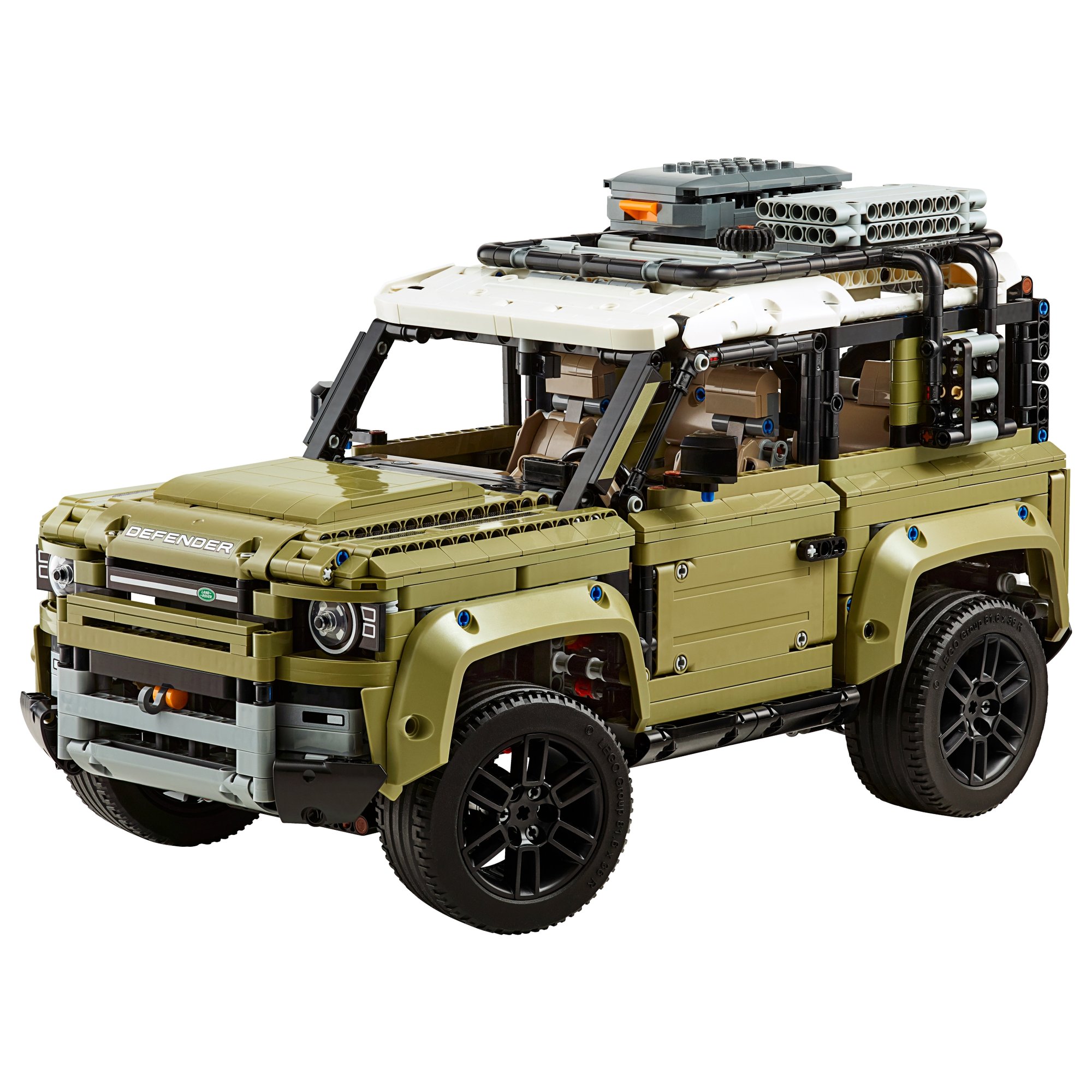

The Zetros Trial Truck is in the library
Technic Fan gets up to 6 kits a year, Master Builder up to 12. Delivery both ways is included and the prepaid return label is in the box.