

4×4 X-treme Off-Roader (42099): the first Control+ set
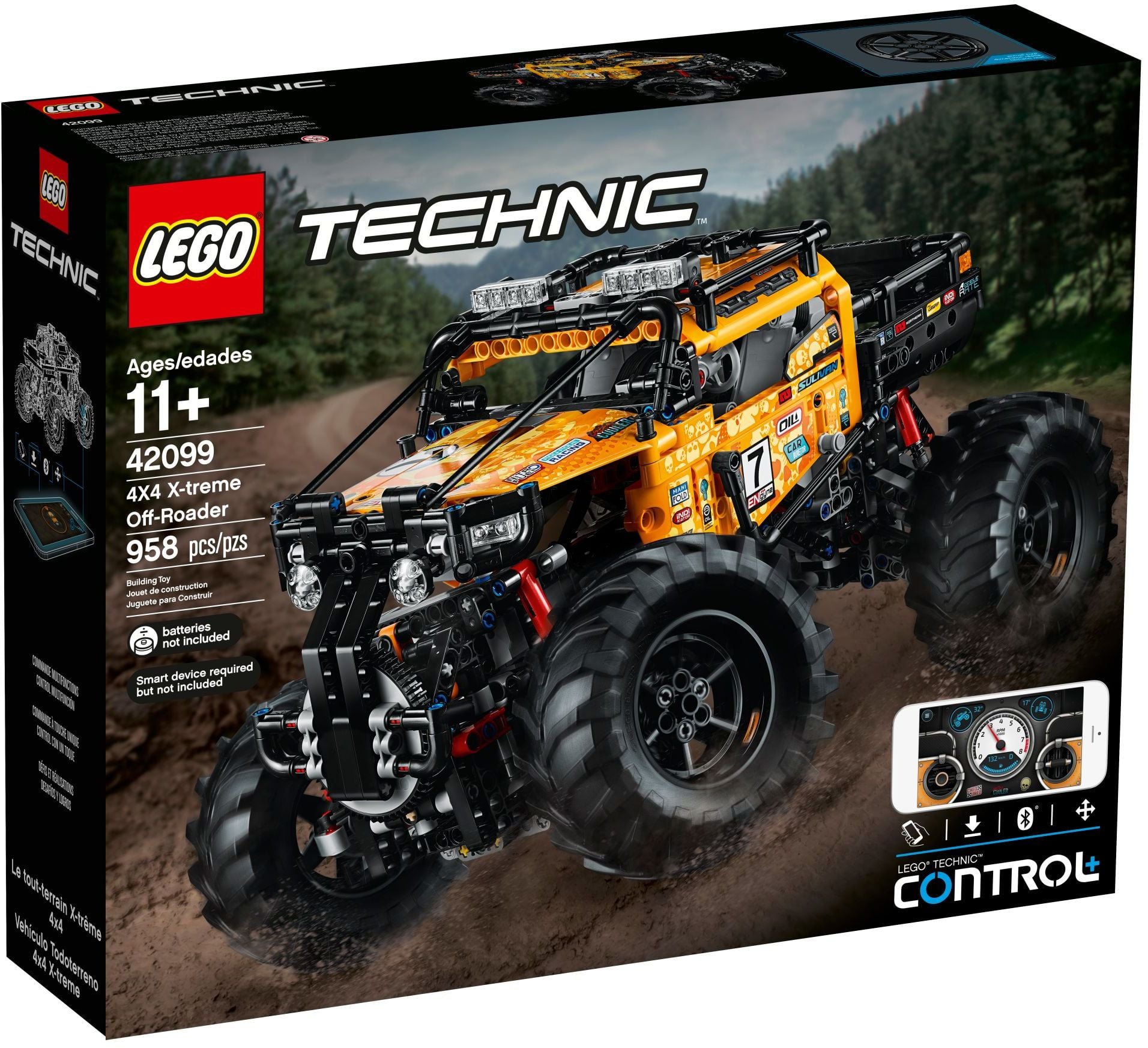
This is the set that brought the phone into Technic. Two XL motors, one L motor and a Smart Hub arrive in their own black box inside the main one, and nothing on the finished truck is worked by hand. You drive it, steer it and read its tilt from the Control+ app over Bluetooth. Finished, it is 33 cm long and sits high on four 107 mm tyres.
It is in the Brick Club library, and it is the one members ask about when they want something that moves under its own power. Below is what the motors actually drive, how the three numbered bags split the build, and where the wires and the app catch people out.

Why this one matters
In August 2019 this was the first Technic set to use Control+, and the electronics are why the price was high for 958 pieces. The hub is battery box and receiver in one, with a processor, a Bluetooth module and a six-axis sensor inside, and because the motors report their position back to it, the L motor can hold a steering angle like a servo.
It also introduced parts that builders have leaned on since: wheel hubs with a planetary reduction inside, which is why a set with almost no visible gears still crawls with real torque; a new universal joint good for about 40 degrees; the small frame most people call the biscuit; and hard shock absorbers in red, then found in only two other sets. The colour was new to Technic too. LEGO calls it Flame Yellowish Orange, and eleven different parts come in it in this box, most of them for the first time.
Be clear about what it is not. There are few gears, no gearbox and no fake engine. New Elementary called the build straightforward and reminiscent of the 9398 4×4 Crawler, and the Brothers Brick put it at four hours at most. The interest is in the drivetrain, the electronics and the app.
What it actually does
Nothing here is worked by hand. Every function runs from the app, through the hub, to a motor, so the paths below start at your thumb.
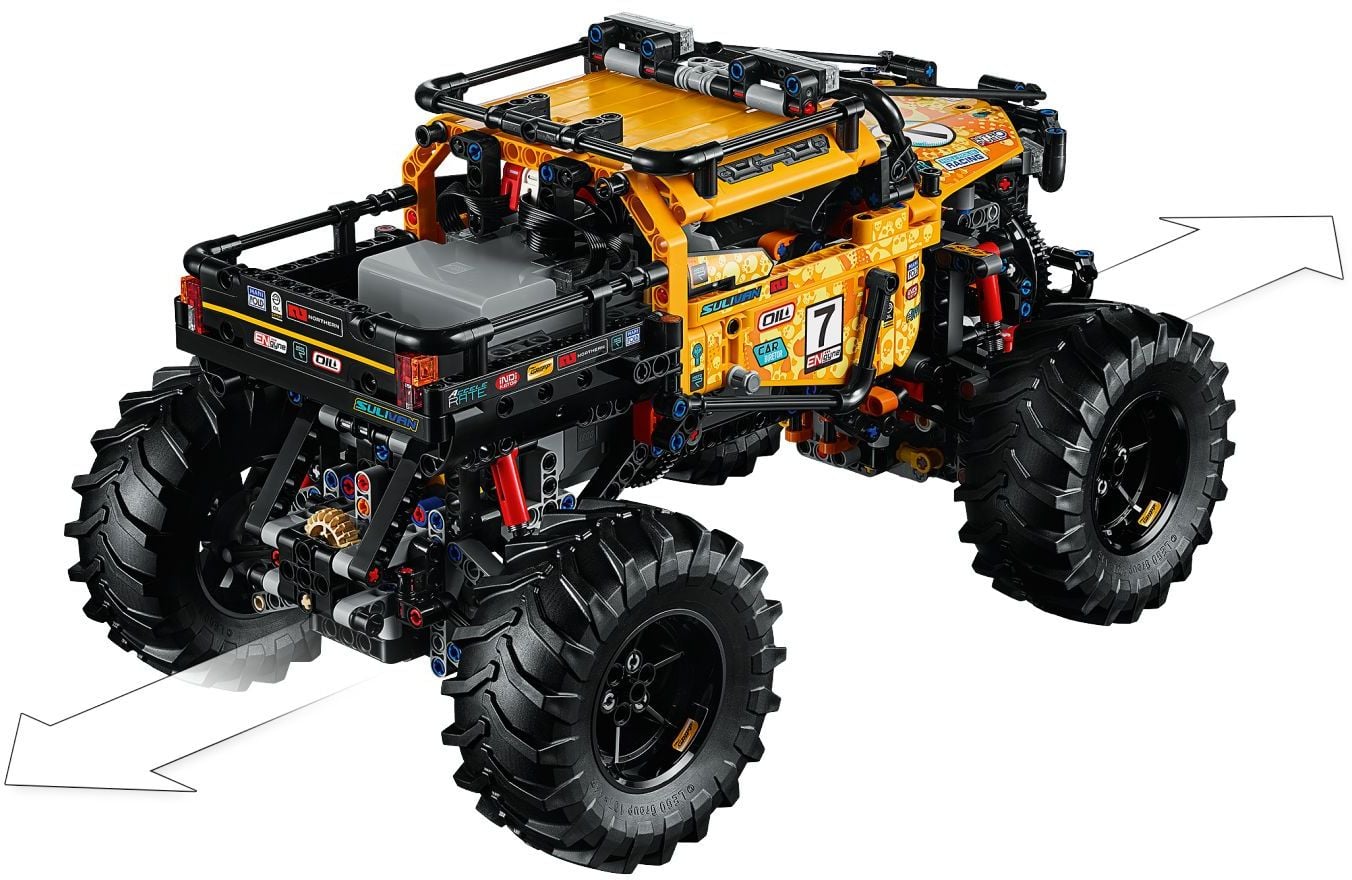
Each axle unit has its own XL motor and its own differential, so it is a genuine 4×4 with no propshaft between the ends. The XL motor is a square-sided block, seven studs long and five wide and high, mounted almost straight onto the axle it drives. The clever bit is at the wheel: each hub has a planetary reduction inside, a round housing full of small gears that hum when you spin the knuckle. The Brothers Brick put it at 1:5, New Elementary at 1:5.5; either way it trades speed for torque. Underneath, the motor bodies are almost exposed, so keep it off gravel.
The L motor sits directly in front of the first XL, making a row of three motors down the chassis. It drives a steering rack, and the hubs hang off steering arms with a link either side to keep the rack in line. Because the motor reports its position to the hub, the app can hold an angle rather than just run the motor, so it behaves like a servo. On first connection the app calibrates the steering motor by itself.
The grey box in the rear bed is battery box and receiver together, with a processor, a Bluetooth module and a six-axis sensor inside. It knows which way up it is, how hard it is accelerating and when it has hit a bump. It has only twelve pin holes, all over its centre of gravity. It takes six AA batteries in a removable tray and sits on tan axles, so it lifts out for a battery change without taking anything apart. Press the button and the light flickers white, then turns blue once the app has it.
The middle of the chassis, front axle included, is mounted on two large turntables, one in the front unit and one joining it to the rear. The front end can roll relative to the back, which gives more travel than the shock absorbers alone. The shocks are the hard red ones, built in bag one and left dangling until the chassis exists. On the bench the bare chassis feels flimsy; the Brothers Brick doubted it would stand up to outdoor testing, then took it outside anyway.
Two levers, steer left and drive right, a tachometer and two tilt indicators. The speedometer is theatre: it reads over 30 km/h on a flat floor while the truck crawls. The tilt gauges are real and warn you past 30 degrees. One-touch control is the surprise. Line the picture of the truck up with the model, tap anywhere around it and it drives that way; tap close and it creeps, tap further out and it goes faster. Rotate the model and the picture rotates with it. There are challenges too, starting with the Hairpin: forward, U-turn, forward.

How the build goes
Six bags for the 958 pieces, but the book splits them into three numbered sections, and the electronics come in a dedicated black box the size of a small set. The Brothers Brick put the whole build at four hours at most.
Front axle and steering
The front wheel unit first. The hubs go on their steering arms with a link either side, the rack between them, and the first XL motor mounts almost straight onto the differential. The red shocks are built now but left loose, and a large turntable goes on the front end. Front and rear units use the same parts in different colours; that asymmetry is your guide to which way round things go.
Rear axle, the row of motors and the hub
A near copy of the front without the steering, with its own differential and XL motor. The second turntable joins the two units, the L motor drops in ahead of the first XL, and you have the row of three motors. Then the hub on its tan axles, the wire clips on a three-stud axle, and the grey panel seats. Stop here, fit the batteries, install the app and pair it. If a plug is in the wrong port the app refuses to see the model, and this is the easy moment to fix it.
Bodywork and the marriage
The orange shell is a short build and most of the sticker work. It drops onto the chassis on a pin at the front and two axles a side, and lifts off the same way. The awkward job is the wiring at the back: the book gives no help folding the leads inside the body and the clips do not hold them. Then the wheels, which change the character of the whole thing.
Calibration and first drive
Download the Control+ app before the kit arrives; it is over 400 MB. On first connection it calibrates the steering and runs a short tutorial. Levers first, then one-touch. On six fresh rechargeable AAs the Brothers Brick got about 45 minutes of hard driving before the power dropped off.
A subscriber build has come back with photos, and both full reviews hit the same snags. These are the points to slow down for.
- Motor ports. The app is locked to this model and will not connect unless every motor is on the right port; with one missing it reports the model as out of reach. Match the sticker colour on each motor to its wire clip, and check each plug is in the port the book shows, before the body goes on.
- Wires at the back. Both reviewers struggled here. The clips are more decoration than restraint and the book never shows how to fold the leads. Leave slack for the turntables to swing.
- Stickers, more than thirty. Long narrow ones for the liftarms, panels almost fully covered, and even the motors and hub get them. If the kit arrives with them on, leave them alone.
- Front and rear look alike. The two axle units share most of their parts. Use the colour differences the designers built in rather than the shape.
- Batteries. The hub takes six AAs and the truck is hard on them. Have a spare set of rechargeables and expect under an hour of real driving between changes.
On the shelf
It is 33 cm long, 22 wide and 19 tall on its tyres, so it needs depth rather than length. The look divides people: the roofline is chopped so hard the side windows are slots, and the seats look odd in something this tall. The front guard is the best bit, and it does a job protecting the panels behind it. It is modelled on a petrol RC truck rather than a real vehicle, so do not expect a badge.
Turn it over and the exposed motor housings remind you this is a machine with the bodywork as an afterthought, which for a crawler is the right way round. There is nothing under the bonnet, which New Elementary called the biggest downside, and no panels behind the cab, so the hub is easy to reach and the wires are bare if it rolls onto its roof.
Members who have built it
One subscriber build has come back through the door with photos, the finished truck and the workbench before it started. The diary is linked under each picture.
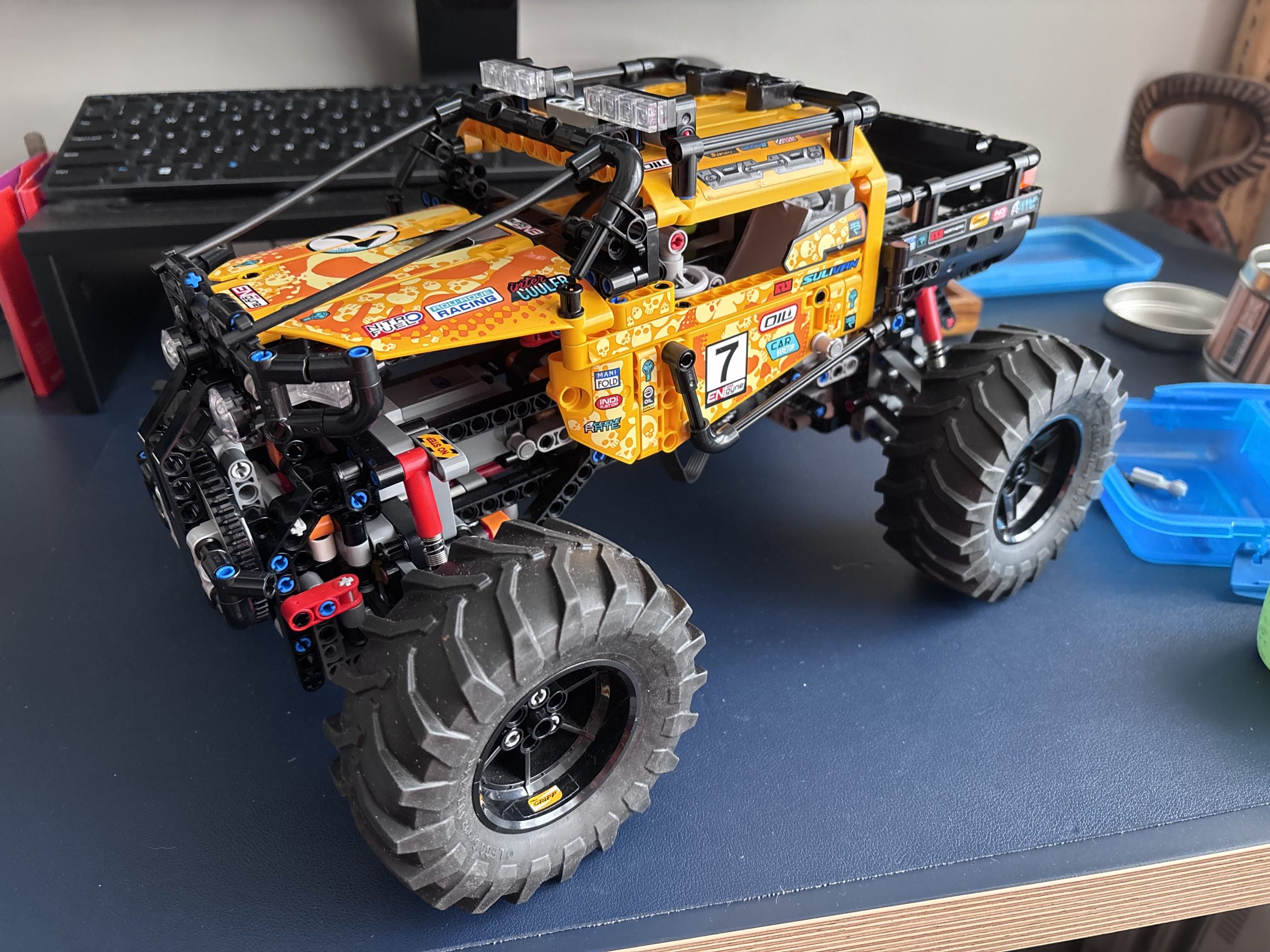
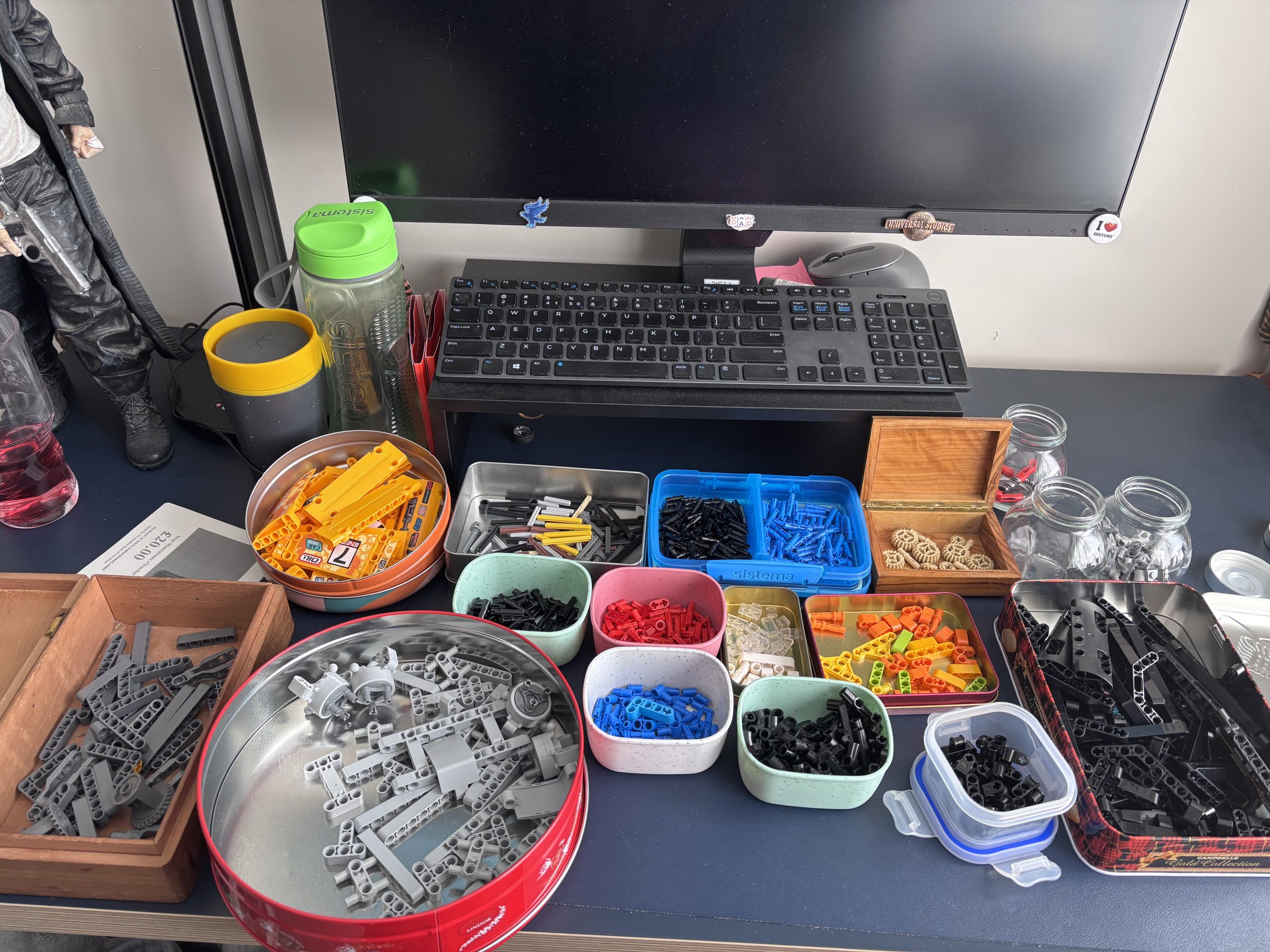
It is the one for you if you want a Technic build that ends with something you drive rather than something you look at, or if there are children in the house who lose interest in a hand-cranked model. It is three or four hours, not a weekend, and the build itself is simple; the interest is in the drivetrain, the hub and the app. Check your phone or tablet has room for the app, put six AAs on the list, and pair it at the end of bag two while everything is still open. If you want gears and a gearbox, this is not that set; the Zetros (42129) is the Control+ 4×4 with more mechanism in it.
If you like this one, try
The other off-roaders in the library. The Zetros and the Audi are the later Control+ models, one a trial truck and one a Dakar rally car; the Defender is a hand-worked replica of a real vehicle; the Extreme Adventure is the older one with a trailer and ATVs.


The 4×4 X-treme Off-Roader is in the library
Technic Fan gets up to 6 kits a year, Master Builder up to 12. Delivery both ways is included and the prepaid return label is in the box.