

6×6 Volvo Articulated Hauler (42114): the first Technic automatic gearbox
This is the Technic set that changes its own gears. Drive it forward from the Control+ app and a small motor clicks the gearbox up through first, second and third as the truck picks up speed, the way a real automatic does. Stop, and it drops back to neutral so the same drive motor can lift the tipper instead. Three motors, a hub, six driven wheels and 2,193 parts, finished at 60 cm long and heavy with it.
It is in the Brick Club library. Below is what the motors actually drive, how the four sections of the book split the build, and where reviewers went wrong. Three hands-on reviews cover this one (Brickset, The Brothers Brick and The Lego Car Blog), plus shorter notes collected on Brick Insights, so most of what follows comes from people who built it. Where a point rests on LEGO’s description or Brickset’s data, I say so. No member has written this one up yet.

Why this one matters
Huw at Brickset called it a first for Technic, a motorised automatic gearbox, and said it works rather well. The trick is the orange rotary shifter from the Bugatti Chiron (42083), turned there by paddles and here by a second motor, with the app deciding when, presumably from the drive motor’s speed feedback. The Lego Car Blog calls it automated rather than automatic, because software makes the decision, and it has quirks a mechanical box would not.
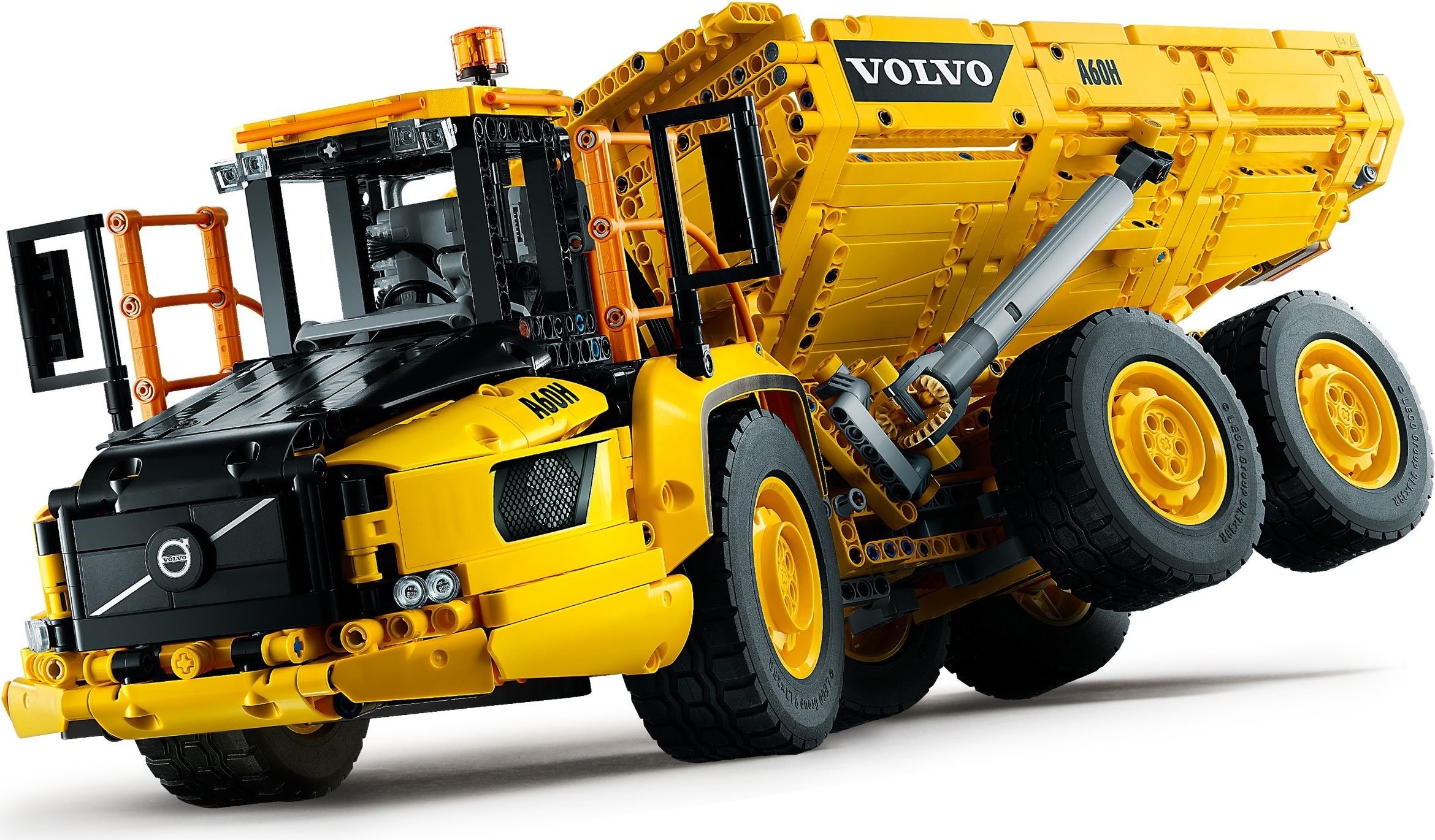
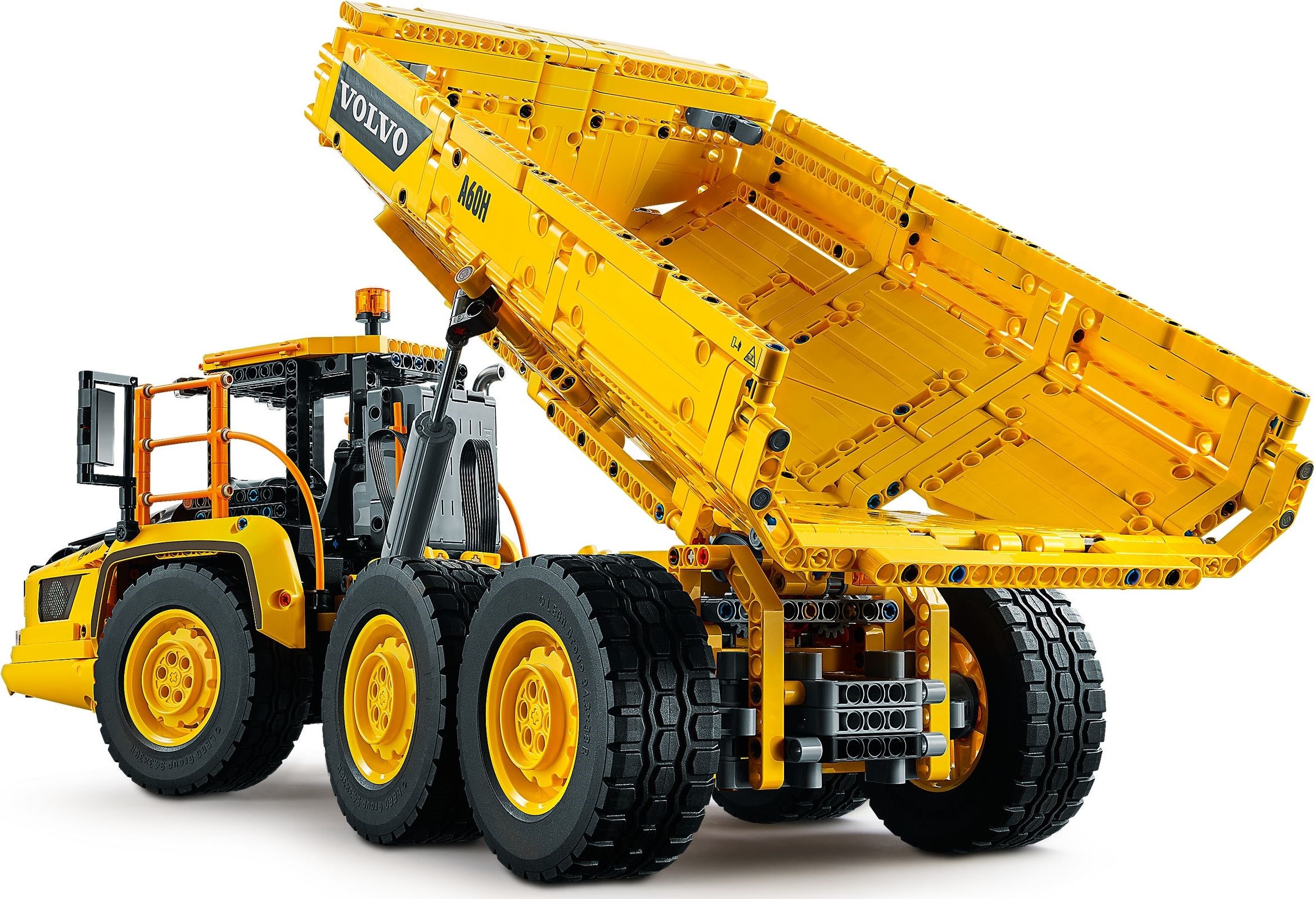
The real machine is a Volvo A60H, a 55-tonne quarry hauler. Brickset measured the model at about 60 cm by 18 cm and put it at roughly 1:20; our product page says 1:12, which looks wrong against Brickset’s tape measure. The cab section and the rear section are separate assemblies joined by a turntable and a universal joint, so the truck bends in the middle to steer and the halves twist against each other on rough ground. That is what makes it articulated rather than just long.
What it is not is a set you can play with by hand. Without the app the wheels are locked to the motors and the tipper will not lift; The Brothers Brick called it a hit as a remote-control build and a miss as a standard Technic model, which is right. This is a kit for building and then driving from a phone or tablet, not for turning knobs on a shelf.
What it actually does
Three motors do everything: an XL for drive and tipping, an L for the gearbox, a large angular motor for steering, all worked from the app through the hub behind the cab. The only thing you operate by hand is the bonnet.
The XL motor drives the wheels through a gearbox with four positions: neutral and three forward speeds. The L motor beside it turns the orange shifter directly, so the app changes gear for you. Pull away and it clicks up through first, second and third. Stop, and it returns to neutral. It shifts the same way in reverse, so there are three reverse gears, and you can hold first or second from the app. Two caveats: under heavy load the software drops straight back to first, and one owner on LEGO’s site found it loses torque badly in third.
Both rear axles and the front axle under the cab are connected to the gearbox, so all six wheels are driven, each axle through a differential built in the round housing from the Top Gear rally car, which Huw found compact and sturdy. It is not quick. It moves along cleanly, but the turning circle is massive, around two metres by Brickset’s estimate.
There is no steering rack. The angular motor sits under the driver’s seat and turns the whole front section against the rear one at the turntable, and a gear on top turns the steering wheel to match. It reports its own position, which is why it was chosen and why the app calibrates when you first pair the hub.
In neutral the XL motor’s output is diverted to two of the new long linear actuators on the sides of the bed. The Lego Car Blog reads that as a fourth gear, a power take-off, and notes a one-way clutch that acts as a parking brake while the bed moves. Lowering is the motor run backwards. It lifts smoothly, though not as steep as the real machine’s 70 degrees, and the gear train is on show from underneath and with the bed up.
The one manual feature. Pull a yellow pin (an axle in a rubber connector) out of the front and the bonnet lifts; the pin then props it open. Inside is a six-cylinder engine with yellow bushes as piston tops, rising and falling in turn as the truck moves, and nine drum-lacquered silver parts across the engine and exhaust stack. You need the bonnet open to see the pistons, which means driving it from the app while you crouch beside it.
The hub stands upright behind the cab and takes six AA batteries, not supplied. Its button is hard to reach, so the orange beacon on the roof sits on a knob: twist it and an arm presses the switch. Reviewers disagree on battery access: The Lego Car Blog found it fairly easy, The Brothers Brick found it took real effort to snap back together, and the only way to reset the hub is batteries out. The app has two screens: one finger in a square, where the truck stops if your finger leaves it, or two fingers on a circle, which worked much better for Huw. Manual or automatic, a pretend load, sounds from the phone, quests. First-time calibration can take two minutes and can fail; once it has worked, it holds.
How the build goes
One 456-page book in four sections. Section one’s bags sit in a white inner box with the tyres, the stickers and a smaller box holding the motors and the hub; ten more bags cover sections two to four. Nobody gives hours, and Huw said it does not take long. Our estimate is two or three evenings, the first almost entirely on gears.
Rear chassis, gearbox and motors
The first 173 steps and 109 pages: the two driven axles with their differentials, the gearbox and the orange shifter. The L and XL motors go in from page 85, and from then on they lock the gearing and nothing can be tested by hand or by plugging in the hub. So test the gearbox before page 85: every position, both directions.
Cab section and steering
The front section: the third differential, the cab frame and the steering. The angular motor goes in around page 140, step 221. The dashboard is a grey wheel arch, the seat a single curved panel, the only instrument a gear-shift sticker. Three more piles of pins; there are around 850 in the set, so a sorting tray helps.
Engine, hub, bonnet and detail
Finishing the cab section: the engine with its silver parts, the hub behind the cab with the beacon knob above it, the two-part bonnet (wobbly during construction, solid once closed up), handrails, mirrors and stickers. Pair the hub, calibrate and run all three motors here, the last point where the electronics are easy to reach.
Bed, actuators and wheels
Most of the set’s 35 yellow panels. Solid but not exciting; Eurobricks found the end repetitive, and there are gaps towards the rear, so no real dirt. Page 432, step 687, adds the lift arms, then the bed goes on with an axle at the back and the two actuators at the sides, then six wheels and the last hubcap at step 691.
No member diary for this one yet, so these come from the reviews.
- No test point once the motors are in. From page 85 the motors lock the gear train, and the hub runs nothing until the app has calibrated it. Rebrickable’s reviewer said there are multiple places where a mistake causes a lot of redoing, and calibration is where you find out. Check every gearbox position before the motors go in.
- The hub is buried. A reset means batteries out, which The Brothers Brick had to do a couple of times while testing, and closing the hub back up gets harder once the bed is on. Fit fresh AAs at the end of section three.
- Handrails and tail lights. The orange railing was fiddly to assemble and the tail lights are easy to knock out of line. Both are the first things to check when a kit arrives or goes back.
- Wires under the bed. The cables from the hub run to the rear section in the open and can get squashed when the bed comes down. Take up the slack towards the hub before you tip it.
- Volvo stickers. Huw applied the Volvo name stickers on the wrong sides and only noticed in a photo. If the kit arrives with them on, leave them; if not, check the box art first.
On the shelf
Brickset lists it at 60 cm long and 20 cm wide and tall, and at 3.62 kg boxed it is one of the heavier kits we send. The designer used tan pins at the front so there are no blue ones on show. The Brothers Brick passed on complaints from people who know the real A60H that the cab is at least a stud too tall and the bed shape is off; from across a room it reads right.
Without the phone it is a static model. The bonnet opens and props, the gearing shows from underneath and with the bed raised, and Huw thought the slack cable behind the hub looked untidy until he remembered the real truck has flexible pipework there too.
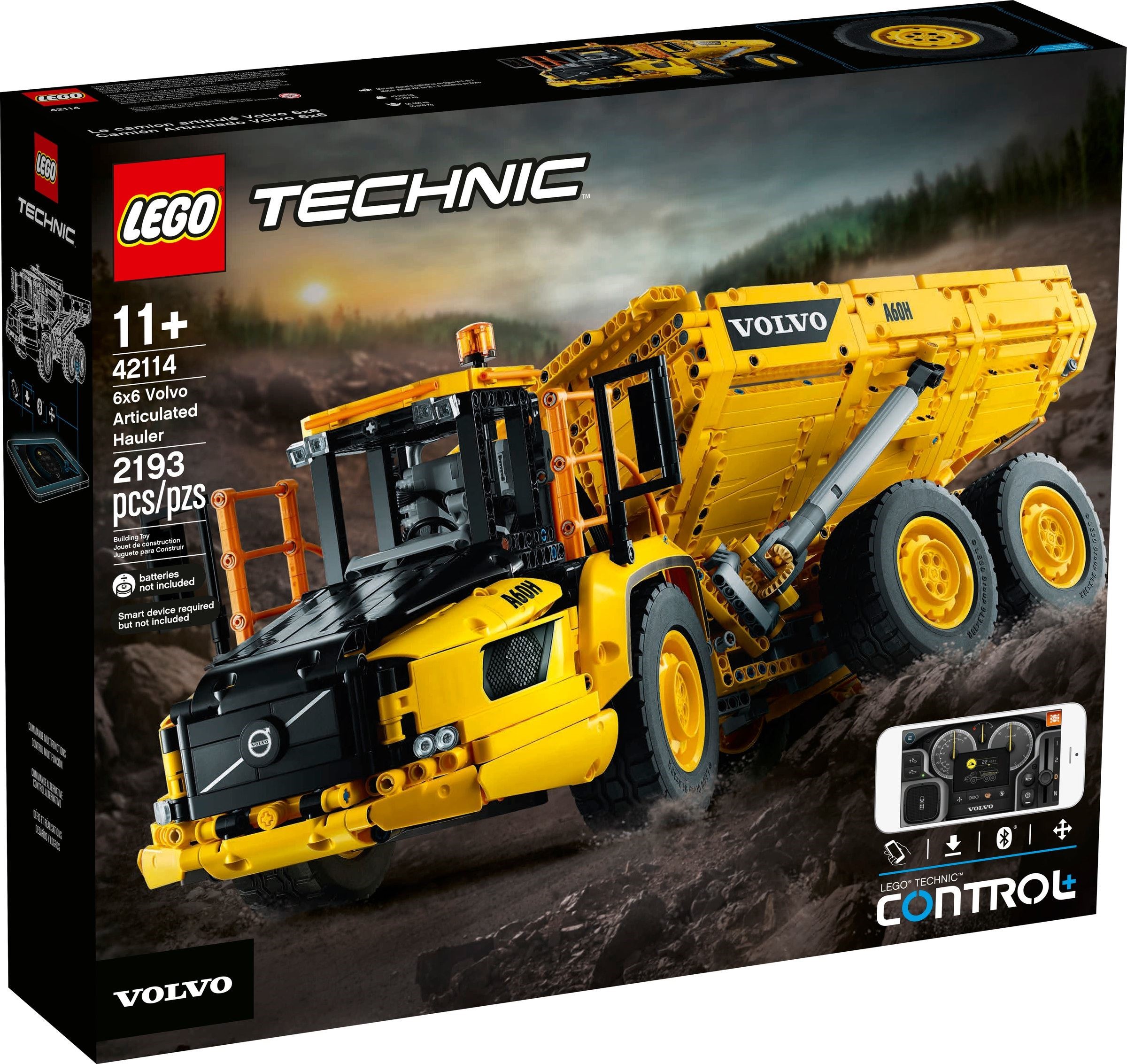
This is the one for you if you want to build a drivetrain and then watch software use it. The gearbox is the point, and it was the best Control+ model of its time by Brickset’s reckoning and the best way into Control+ by Eurobricks’. Do not want it if you want something to push around the floor. Allow two or three evenings, download Control+ before the box arrives, put six AAs on the list, test the gearbox before page 85, and find two metres of clear floor. It is very technical in the first two sections and much less so in the rest.
If you like this one, try
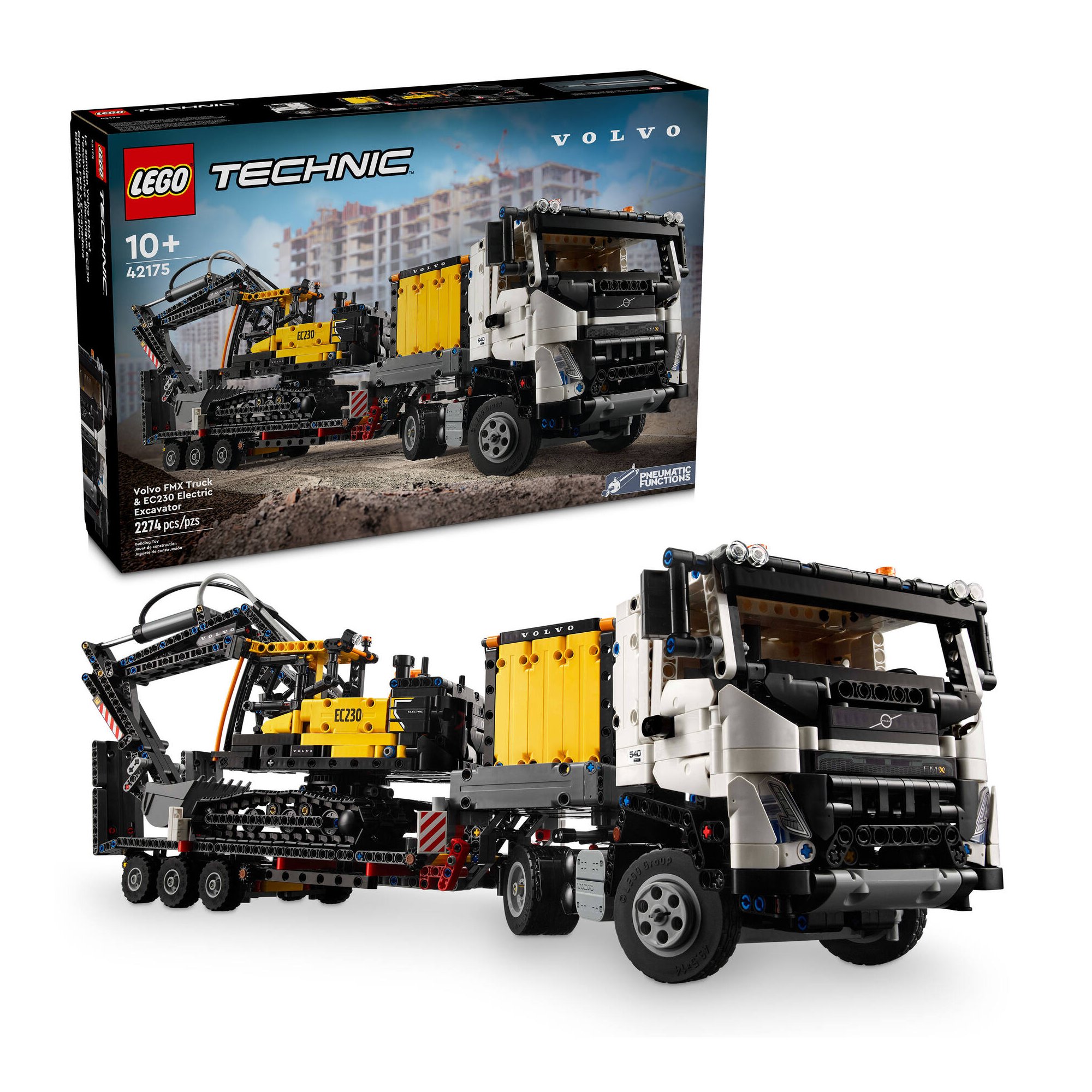
The other big trucks in the library. The FMX is the newer Volvo pair; the Arocs is the Power Functions construction truck with a crane; the 6×6 tow truck is the other six-wheeler, with a motorised winch; the Heavy-Duty Tow Truck is the pneumatic one.
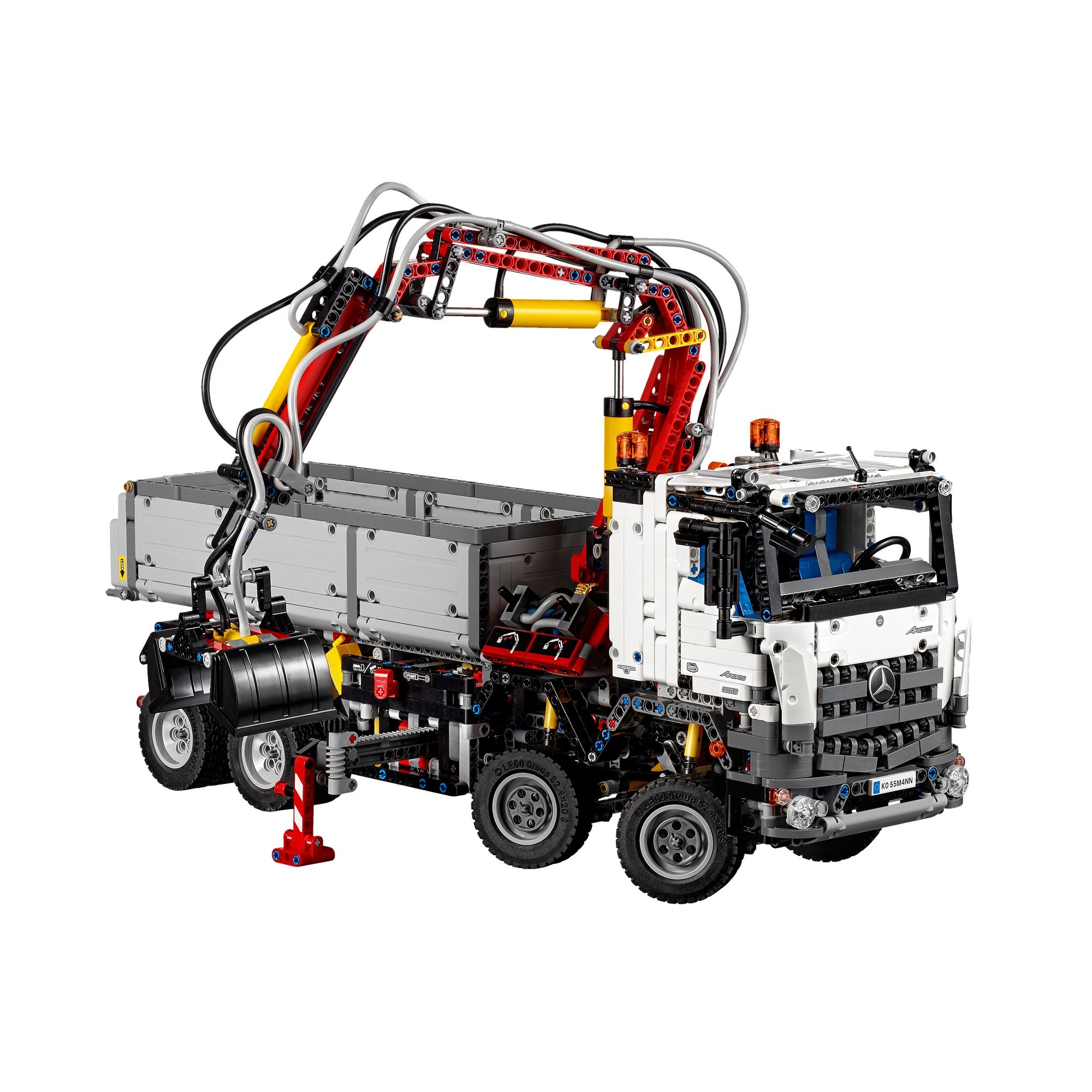


The Volvo Articulated Hauler is in the library
Technic Fan gets up to 6 kits a year, Master Builder up to 12. Delivery both ways is included and the prepaid return label is in the box.