
App-Controlled Transformation Vehicle (42140): the Control+ set that flips
Drive this one at a wall and it climbs until it falls over backwards, and when it lands the other body pops out of the top of the tracks. Blue racer one way up, orange flatbed truck the other. It is a 772-piece tracked vehicle on two L motors and the Control+ hub, 26 cm long, and the app knows which side is up and redraws the controls to match.
It is in the Brick Club library. Below is how the flip actually works (springs and a rubber band, not a button), how the bags split the build, and where the reviewers got stuck. One correction up front: our product page says the panels fold automatically at the touch of a button. They do not. You flip it against a wall or by hand and the springs do the rest.

Why this one matters
LEGO had done a tracked RC racer before: the RC Tracked Racer (42065) from 2017 ran on Power Functions and looked a lot like the blue side of this set. What was new was the flip, a tracked vehicle that drives whichever way up it is and turns itself over against a wall, and Brickset could not recall LEGO making anything like it. It was also the best value Control+ set to that point, double the parts of the Off-Road Buggy (42124) for the same money.
Three new parts matter. The black 19 by 3 frame, shared with the McLaren Formula 1 car (42141), is nineteen studs long, the longest beam LEGO had made. The 12 and 20-tooth gears are new in blue and azure with plain teeth instead of bevels, and nobody could work out why. And the neon yellow, which Brickset found fresh and slightly cheap at once.
Be clear about what it is. No gearbox, no engine; each motor turns one track and that is the drivetrain. Eurobricks gave the build 5 out of 10 and the playability 9, and said it should have been called the Flip Vehicle. For a rental that is a useful split: a short build, then a toy that gets driven for weeks.
What it actually does
Drive runs from the app through the hub to the motors; the body movement is purely mechanical. The reviews disagree on how reliably it flips and on one detail of the spoiler, and I have said so.
Both motors sit at the back and each drives one track through a short step-down on the new plain-toothed gears; Eurobricks called it almost direct drive, with nothing you would call a geartrain. In the app the left and right sliders work the tracks independently, so you steer by running one faster than the other. The Brothers Brick found the turns tight and the speed decent, if not quite as fast as they had expected. With the weight at the rear, the nose is light enough to climb.
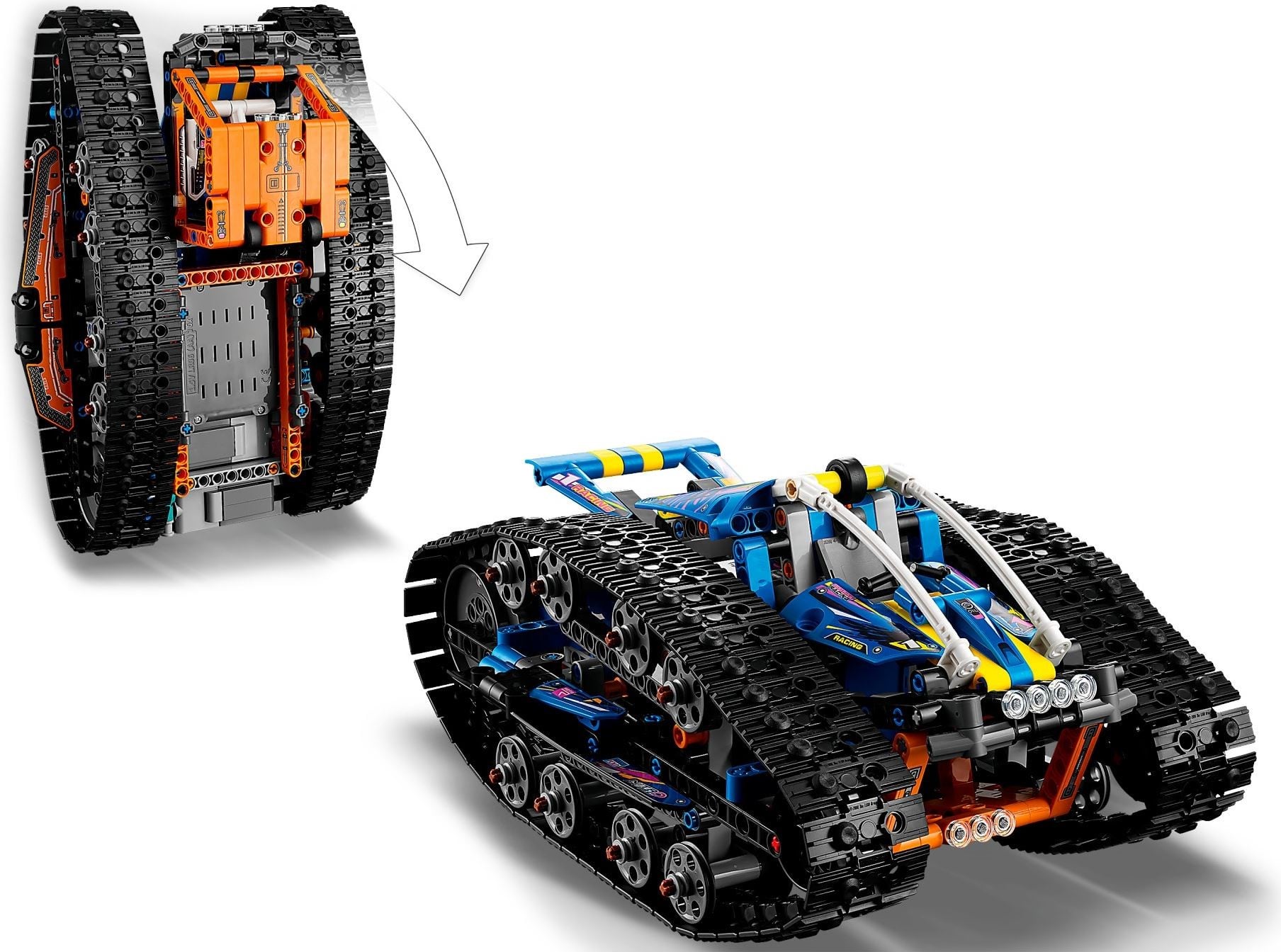
Point it at a wall and hold both sliders forward. The rubber studs grip, the front climbs to vertical and it falls over backwards onto the other side. Here the reviewers part company. Hothbricks said it worked every time provided the batteries were strong enough. Brickset had two problems: the light cluster between the tracks caught on the top of a skirting board and stopped the climb, and sometimes the landing was not hard enough to pop the body through, so it bumped along with the tracks half in the air. Taking the lights off helped, and it was fine against a door.
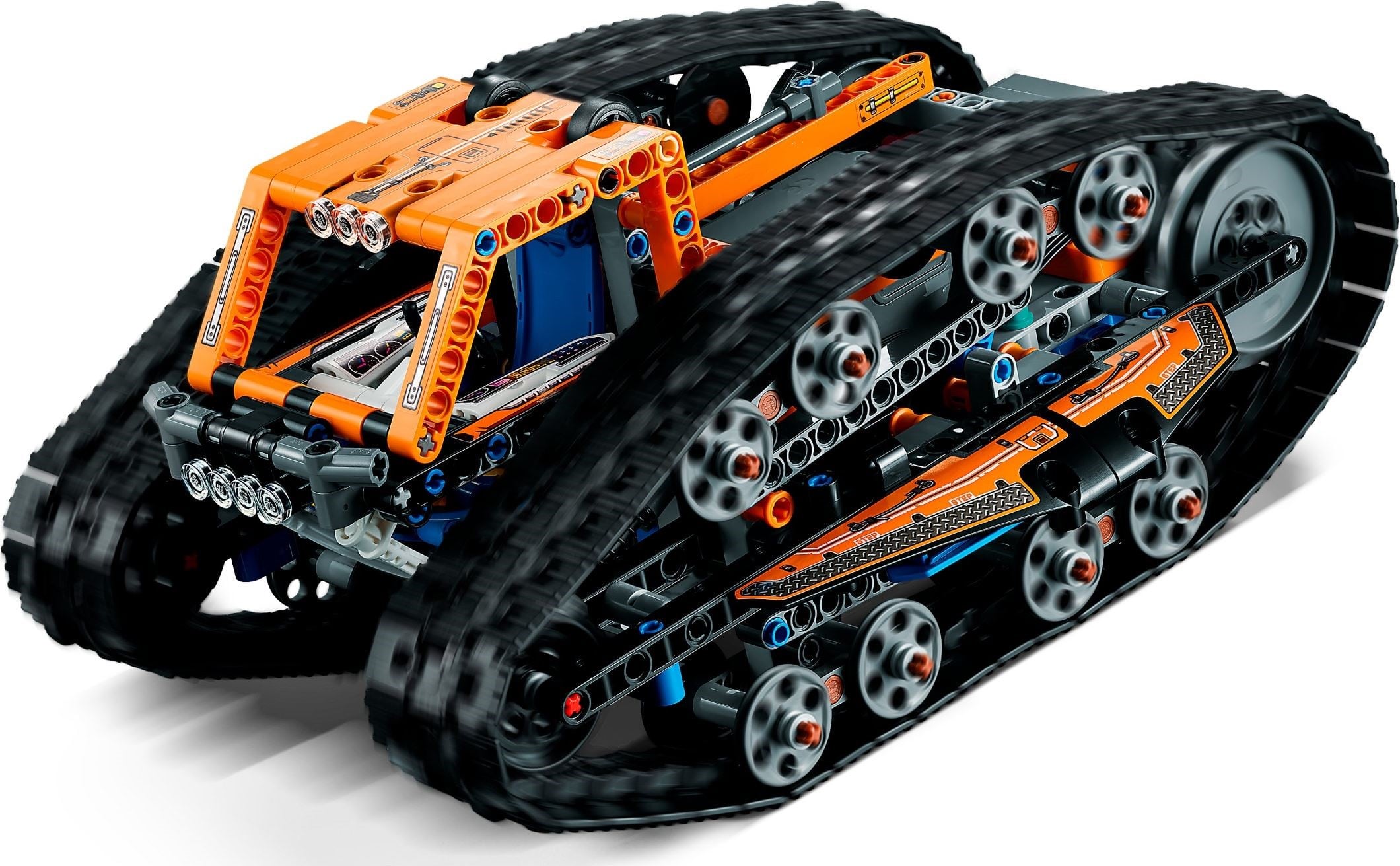
Both bodies are one assembly, pivoted at the back of the frame and held at the front by a shock absorber each side. The body has to sit inside the height of the tracks on the underside or the vehicle could not move, so when it lands the springs snap the whole unit through the frame until the new top stands proud and the old one is tucked away. The Brothers Brick said the springs give exactly enough resistance that it never shifts on its own. Small free-spinning wheels on each cab roof push the body into position as it lands and stop it scraping when you flip it by hand.
Racer up, the rear wing stands; truck up, it lies flat so the body fits inside the tracks. Eurobricks describes a dark grey liftarm pressing against the hub to push the wing up, and a rubber band round two red ball joints pulling it flat on the next flip. Brickset credits the band with raising it. Either way a small elastic band is doing the work, so check it first if the wing sits at half mast on a returned kit.
The hub’s flat underside is the floor of the truck bed, so the battery door stays reachable and the orange side looks plain. It is the revised hub whose cover is held by four small screws instead of clips, which Eurobricks found a pain, and because its button is buried a green lever at the back presses it. Six AAs, and it is fussy about them: Hothbricks found higher-voltage Ansmann NiZn rechargeables made it noticeably faster, and warned that weak batteries leave it struggling to climb the wall.
The hub’s tilt sensor tells the app which body is up and the screen changes colour and layout to suit. Two sliders for the tracks, plus arrows to spin it on the spot. Each side has a game: the racer hunts invisible gates on a radar, the truck collects power cells with a warmer-or-colder readout, which the Brothers Brick found far easier. It needs a phone or tablet on iOS or Android, prefers a tablet, and there is a firmware update before the first drive.
How the build goes
The Brothers Brick counted five bags numbered 1 to 4, with two number 2s, and called it a fairly fast build; Eurobricks called it short, with over a quarter of the pieces in the tracks. None of the launch reviewers timed it, so one evening is our estimate. The reviews do not always say which bag they are on, so the stages follow their order.
Hub, motors and the core frame
The hub goes in the middle with the two L motors behind it, then the 19 by 3 frame ties the sides together. Pink biscuits one side and teal the other tell you which way the model is facing; watch them, because it gets confusing later. Leads clipped flat, the swinging track guides on either side, and the bag ends with the front sprockets.
Neon yellow and the racer body
First taste of the neon yellow: beams, tiny panels and the blue fairings, plus the white flexible axles that become the roll bars. Then the small stuff, including the green lever that reaches the hub’s power button.
Truck cab and the flip step
The orange cab gets a yoke steering wheel, stickered gauges and a little wheel in the roof. This is where the Brothers Brick built the truck frame backwards after missing a step where the model is turned over. Slow down and check the pink and teal markers; it looks wrong until the halves meet.
Marrying body to frame
The dual-cab body drops onto the motor frame, pivoted at the back, and the two shock absorbers and the rubber band go on at the front. Test now: press the body through the frame and let it snap back. It should hold firmly either way and the racer’s wing should rise. Then the racer’s panels and stickers.
Truck bed, side panels and eight bogies
A simple flatbed around the exposed hub, the heavily stickered side panels, then eight identical guide-wheel bogies, the most repetitive stretch of the build.
Tracks
Ninety-six links, 48 a side, and a rubber stud pressed into every one. Brickset called it tedious and Eurobricks reckoned just under two hundred pieces of the count sit here. The rubber is what lets it climb, so do not skip any. Pair the app, take the firmware update, then find a door.
No member build of this one has come back with photos yet, so these come from the four reviews. They are the points to slow down for.
- The turned-over step. The Brothers Brick missed a step where the truck frame is flipped and built it backwards, and Brickset thought 9+ was right, with some stages too fiddly for younger children. Follow the pink and teal markers.
- Cable slack. The motor leads run right under the tracks. If they are not seated in their clips the track or the body will catch them. Check before the tracks go on and before it goes back in the box.
- Ninety-six rubber studs. Each link takes one plug and Hothbricks advised checking that none have gone missing. On a rental, count them when the kit arrives and again before you return it.
- Over thirty stickers, including one on a motor. Several side panels are stickered on both faces. If the kit arrives with the stickers on, leave them.
- Skirting boards. The light cluster on the nose can snag on the top of a skirting board and stop the climb. Use a flat door, and clear a decent patch of floor, because the games need space.
On the shelf
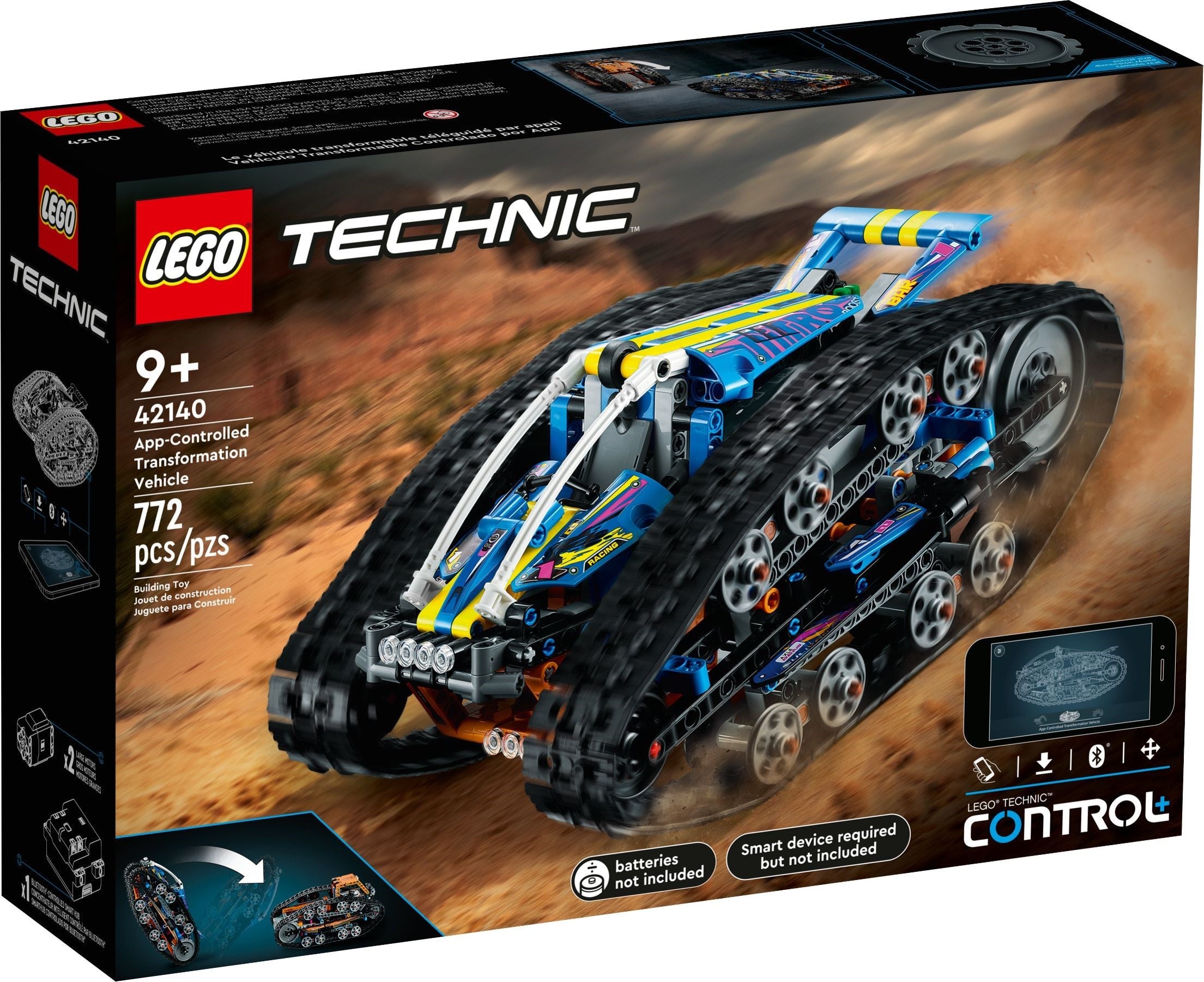
It is 26 cm long, 20 cm wide and only 12 cm tall, so it takes shelf depth rather than height. The tracks dominate; Brickset said they swamp the racer, which only just shows above them, while the truck stands out more. Blue side up you get neon yellow stripes, white roll hoops and four clear light pods. Orange side up it is plainer, a Unimog-style cab with a yoke wheel and, for no reason anyone could explain, one yellow and one pink lamp on the back.
The neon yellow divides people: Eurobricks said think of a highlighter pen, Brickset found it fresh and slightly cheap at once, and it fluoresces under UV. It can just about balance on its spoiler as a party trick.
It is the one for you if there is a nine-year-old in the house, if you want something driving round the kitchen this week rather than a weekend’s build, or if you want the Control+ set with the most play per hour of building. Allow one evening. Check your phone or tablet runs Control+, buy six good AAs, and pick a door or a clear wall. For the longer Control+ build, the Cat D11 Bulldozer (42131), where Hothbricks says the grippier track plastic first appeared, is a far bigger machine; for the earlier tracked racer without an app, the RC Tracked Racer (42065) is below.
If you like this one, try
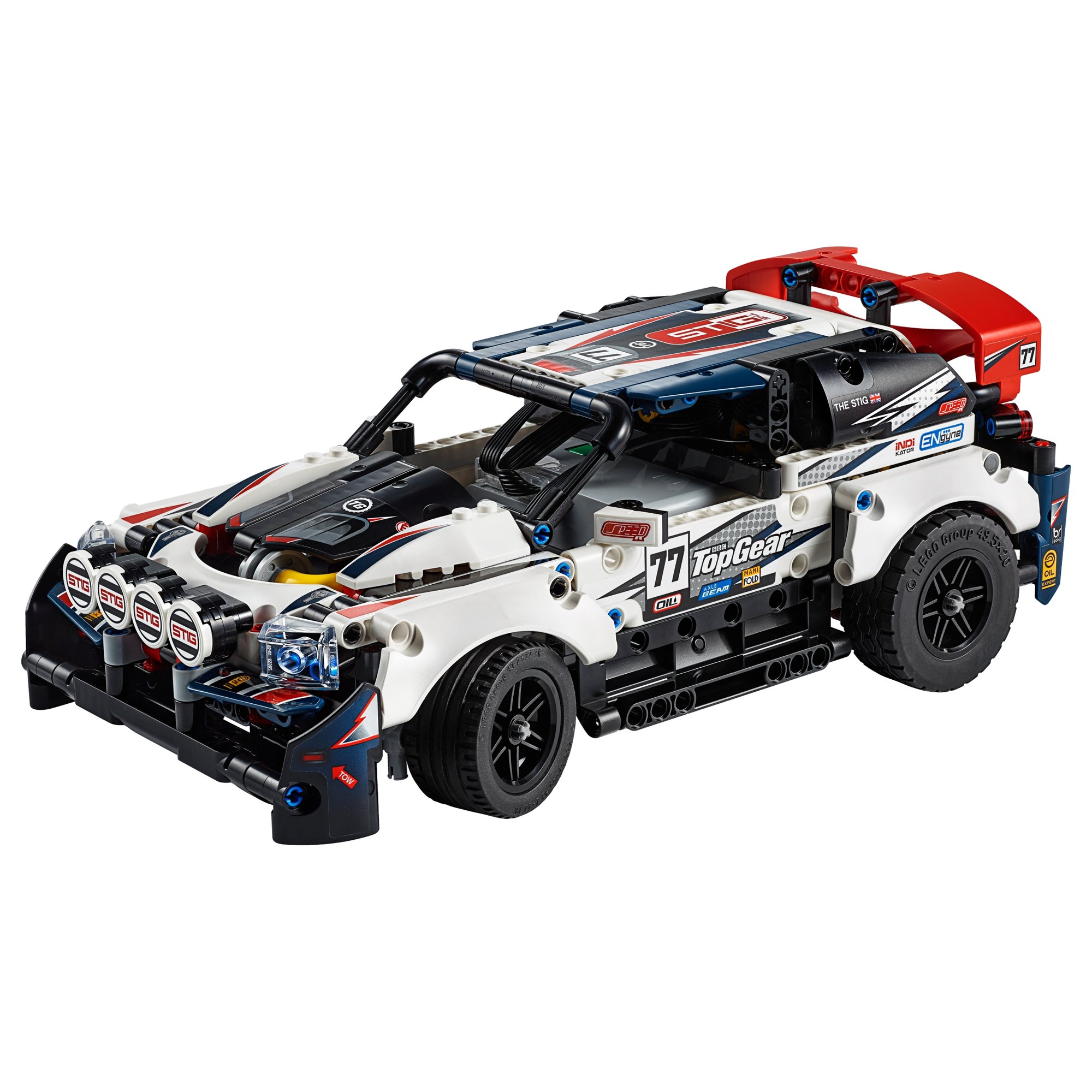
The other remote-controlled sets in the library. The Tracked Racer is this set’s Power Functions ancestor, the Off-Road Buggy is the Control+ set it was priced against, and the other two are the remaining ways into the same hub and motors.



The Transformation Vehicle is in the library
Technic Fan gets up to 6 kits a year, Master Builder up to 12. Delivery both ways is included and the prepaid return label is in the box.