

BMW M 1000 RR (42130): the first of the big bikes
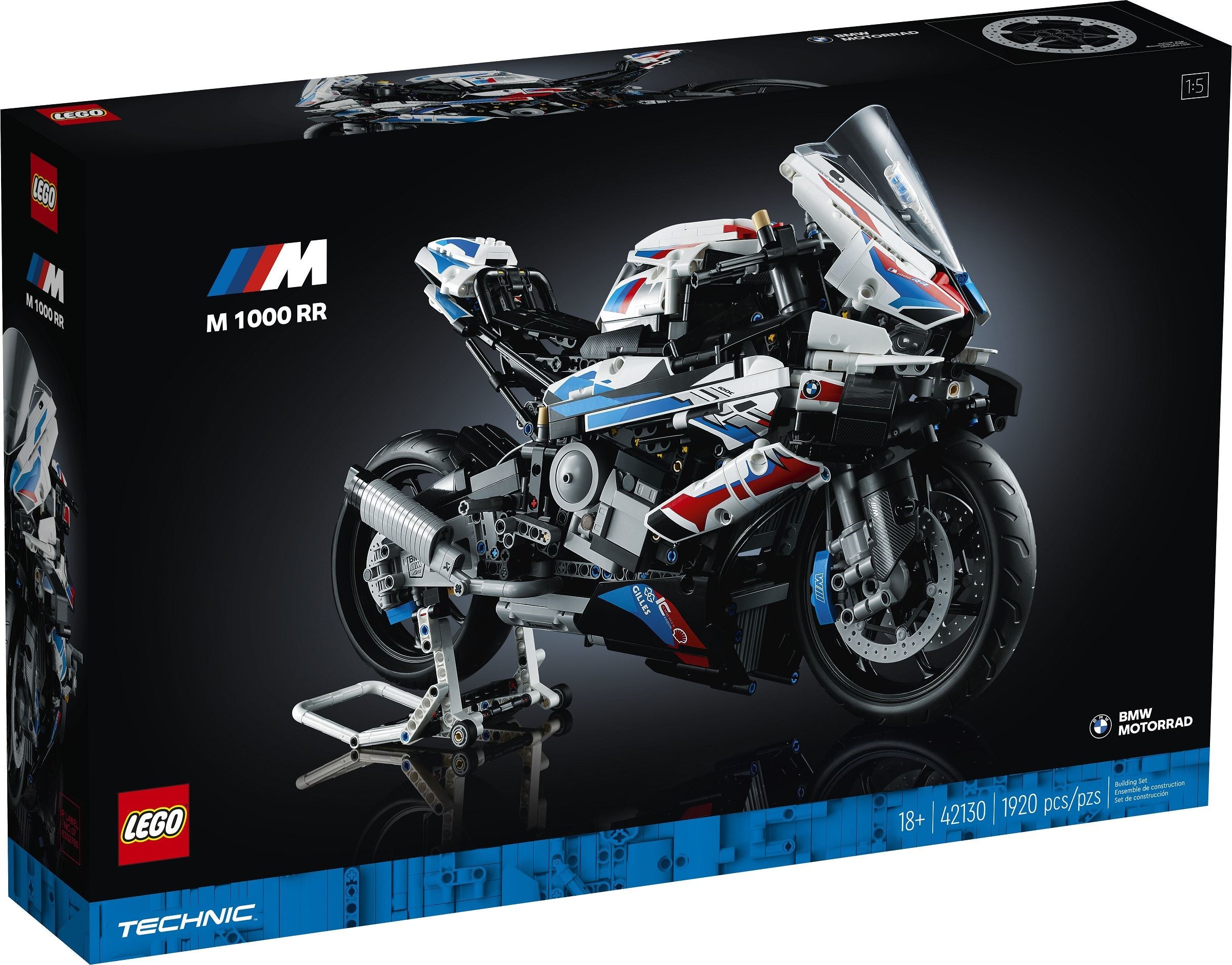
When this went on sale on 1 January 2022 it was the largest Technic motorbike LEGO had made: 1,920 pieces at 1:5 scale, 45 cm long, with a three-speed gearbox that LEGO called new, suspension at both ends, steering from the bars and a gold chain to the back wheel. It is the bike the later 1:5 machines in the library, the Yamaha MT-10 SP (42159) and the Ducati Panigale V4 S (42202), were built on top of.
It is in the Brick Club library and one member, Alan, has built it and sent photos. A word on sources before we start. The two write-ups on file for this set are launch announcements, not builds, so the function list below is LEGO’s own and the numbers are Brickset’s. Where I am reading from the official photos rather than from a review, I say so.
Why this one
The real M 1000 RR was the first motorbike BMW’s M division had ever put its badge on, and LEGO made a point of that at launch: the set came out of the existing partnership between LEGO Technic and BMW Motorrad, and and LEGO said the build was laid out to follow the way BMW assembles the real bike, with designer Samuel Tacchi calling it the largest Technic bike yet. That is the pitch. If it does, that means engine and frame first, then the running gear, then the bodywork, with the mechanical parts in your hands before a single panel goes on. Nothing on file confirms the order, so treat that as my reading.
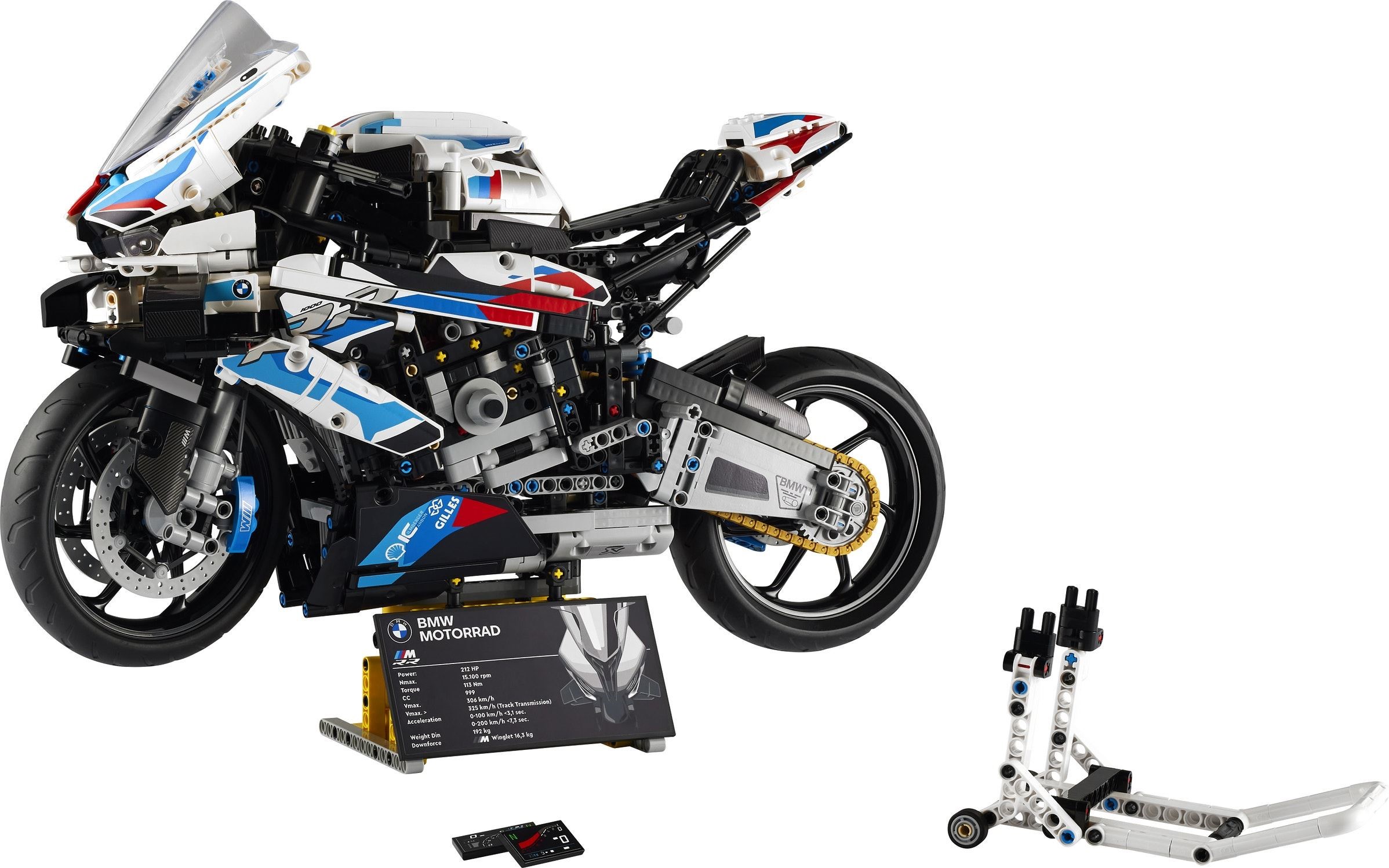
You also get more than the bike. There is a racing stand, the paddock type that lifts the rear wheel by the swingarm, and a separate display plate carrying a black plaque printed with the real bike’s figures. In the official photo the plaque reads 212 hp, 15,100 rpm, 999 cc, 306 km/h and a weight of 192 kg, and it is the part visitors read first. There are three different dashboard tiles to choose between, and the windscreen is printed rather than stickered. LEGO gave three sets of dimensions at launch: 45.5 cm long and 27.7 cm high on its wheels, 32.6 cm high on the display stand, and 46.9 cm long on the racing stand.
Price is worth a line. It launched at £174.99. By the time it retired at the end of July 2026 Brickset had it at £214.99, and it is now out of production, so the library is one of the few ways left to build it without paying secondhand prices. Brickset’s members rate it 4.1 from 132 ratings.
What it actually does
Nothing here is motorised. LEGO’s own list is a three-speed gearbox, front and rear suspension, front steering, a gold chain, three dashboard options and a printed windscreen. No review on file describes how any of it is driven, so I have left the drive paths off wherever I would be guessing, and I have said where a detail comes from the photos.
LEGO described this at launch as a new and fully functional three-speed gearbox, and it is the reason the set is 1,920 pieces rather than the 646 of the first Ducati (42107). What we do not have is a review that says where the selector sits or how the ratios are picked, so I am not going to draw you a path. LEGO says three speeds. Go through the clicks yourself before the fairings close it in.
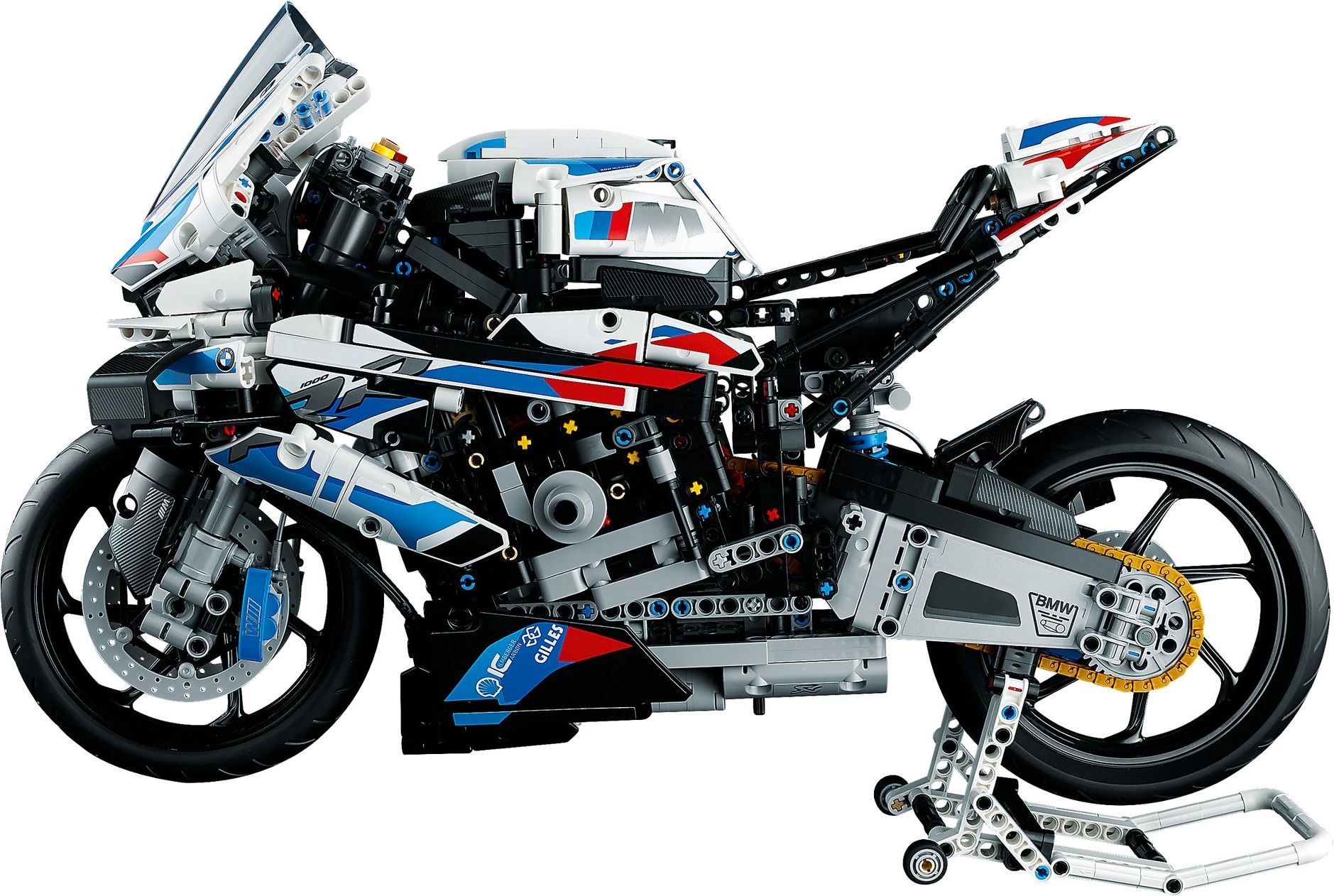
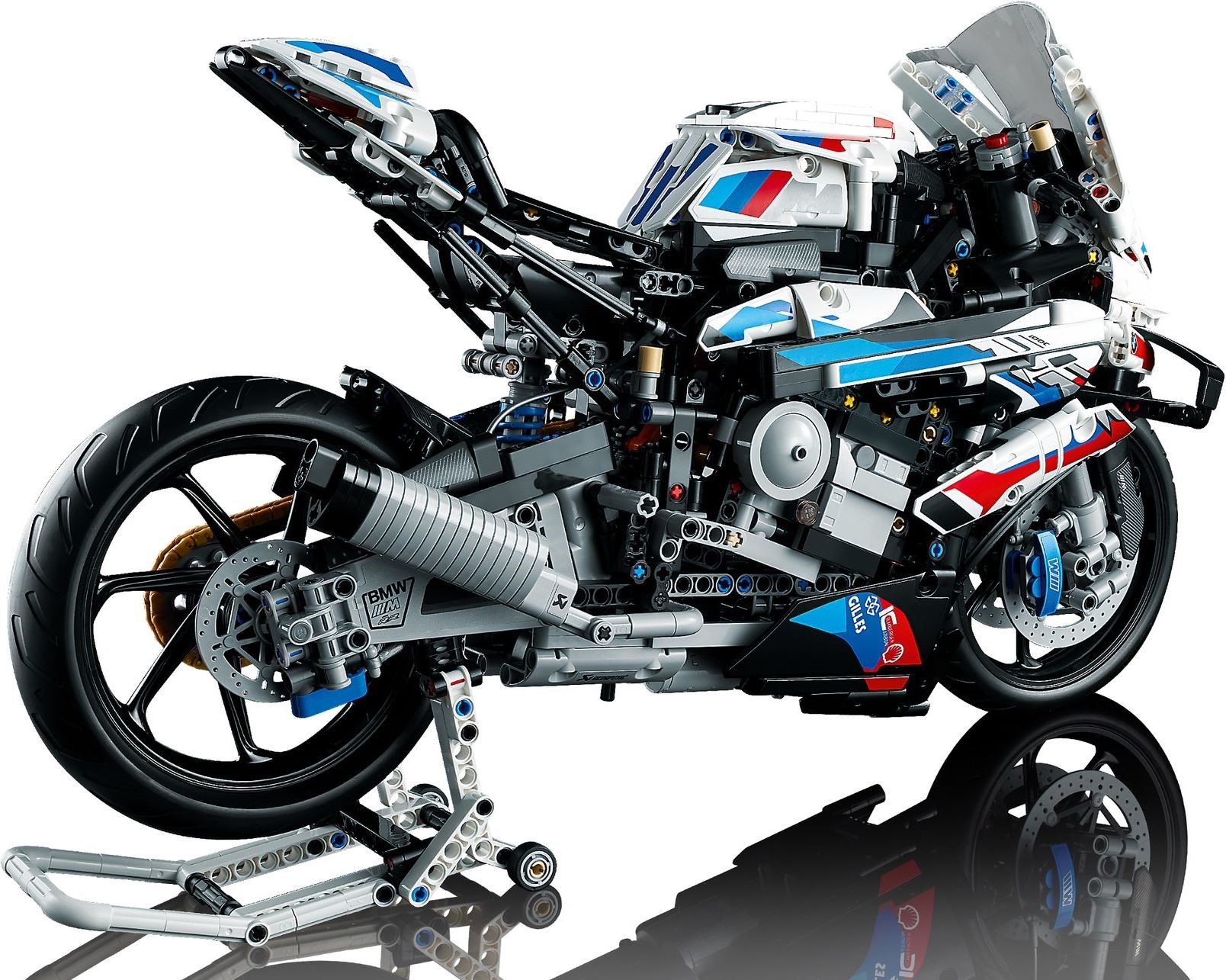
Our product copy has it as an inline-4 with moving pistons and a chain drive, and Brickset tags it the same way. In the official left-side view the engine sits behind the blue side panel, black cylinder block with a round grey engine cover, and the gold chain runs along the swingarm from the gearbox to the rear sprocket. Nothing on file for this set says whether pushing the bike along is what turns the pistons, so no path here either, only the parts you can see.
Working front forks and rear suspension are on LEGO’s list and in our product copy. From the photos the front end is a pair of black upper fork legs on grey lowers, with two brake discs and the blue M-branded calipers hung off them and a carbon-look mudguard between. At the back the swingarm carries the BMW M sticker and a single disc, with the shock tucked behind the engine above the swingarm pivot.
Front steering is on LEGO’s list. The bars are clip-ons below the top yoke, as on the real bike, and they turn the front wheel through the forks. There is no knob on top, and on a bike none is needed.
The racing stand is a white and black paddock stand with two small wheels; in the official photos it sits under the swingarm and lifts the rear wheel clear. The display plate is a flat yellow and grey base that holds the bike upright with the plaque on the front, which is how Alan has his set up. You pick one of three dashboard tiles for the cockpit; the other two go back in the box, and with a rental kit they need to come back to us. The windscreen is a printed clear piece, so there is no sticker to line up on a curve.
How the build goes
No review on file goes bag by bag, so I cannot give you bag numbers. LEGO’s own line is that the build follows the real bike’s production process, and Alan logged five to six hours. What follows is the order the finished model implies, read from the official photos, not a numbered list from a box I have opened.
Engine, gearbox and frame
The inline-four and the three-speed gearbox, with the frame built around them. This is the stretch LEGO means when it talks about following BMW’s assembly, and it is the part you cannot get back to easily. On the finished bike the engine sits behind the side fairings, so whatever the gearbox does, test it here while you can still see it.
Front end
Steering head, the black fork legs and grey lowers, the clip-on bars, then the front wheel with its two discs and the blue calipers. The carbon-look mudguard goes on between the forks.
Rear end and chain
The swingarm with its BMW M sticker, the rear shock, the rear wheel and single disc, and the gold chain along the left side. The exhaust is the ribbed silver can under the seat, standing in for the Akrapovič system Brickset tags on the set.
Bodywork, stands and plaque
White panels with the blue and red M colours, the sponsor graphics for Gilles Tooling, Ilmberger Carbon and Shell on the belly pan, the printed windscreen and your choice of dashboard tile. Then the racing stand and the display plate with the plaque. This is the part where it starts to look like the box.
One member diary and no build reviews on file, so these are fewer than usual and they lean on the photos.
- Count the gears yourself. LEGO says three speeds. Check the clicks before the fairings go on.
- Three dashboards, one cockpit. Pick one. The other two are part of the kit, not spares to keep, so put them back in the box before the bike goes on the shelf and you forget where they went.
- The livery runs across panel joins. In the official side view the 1000 RR lettering and the blue stripe cross from the upper side panel to the lower one. The graphic only reads right if the two panels sit flush, so get the panel fixed before you worry about the stripe.
- Two stands, two footprints. On the racing stand it is 46.9 cm long; on the display plate it is 45.5 cm long and 32.6 cm tall. Decide which you are using before you clear the shelf, because the racing stand also leaves the rear wheel free to spin.
On the shelf
White, blue and red M Motorsport colours on a black frame, 45 cm long and 17 cm wide, so it takes a shelf about the depth of a paperback. On the display plate it stands 32.6 cm tall with the plaque facing forward, which is the version Alan photographed on his sideboard, and it holds up in ordinary daylight without the studio lighting of the box.
The racing stand is the more convincing pose if you want it to look like a bike in a pit garage rather than a model on a base, and and the racing stand is the pose in which the rear wheel hangs from the swingarm rather than the whole bike sitting on a base..
Members who have built it
Alan’s build went on the blog in December 2025 with two photos. The diary is linked under each picture.
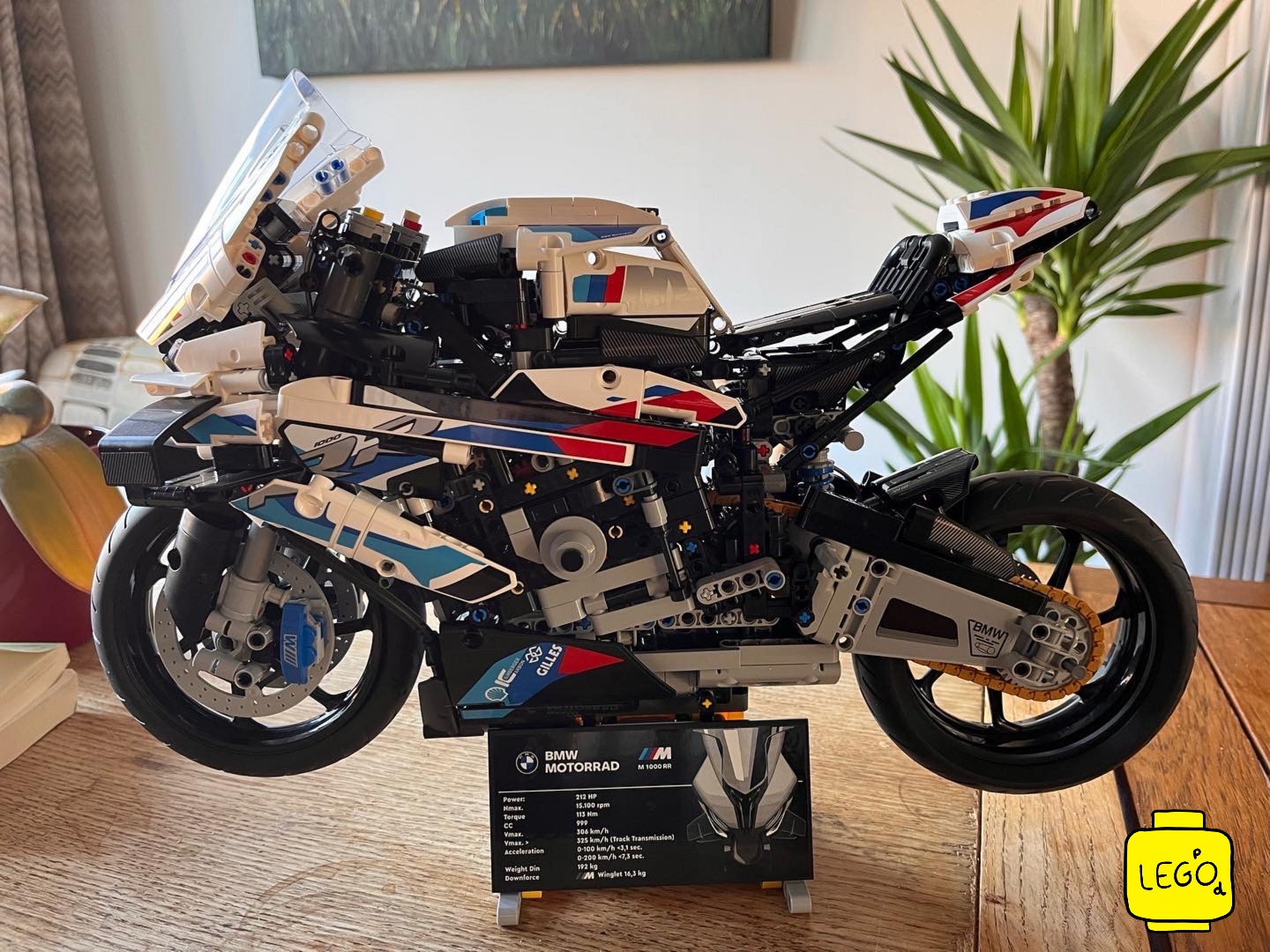

It is the one for you if you want the biggest of the Technic bikes and you would rather build the engine and gearbox than look at a gearbox someone else has cut a window into. It is a five or six hour build on Alan’s clock, so one long evening or two normal ones. Test the gearbox before the panels go on, count the speeds and tell me which of us is right, and keep the spare dashboard tiles with the box.
The other bikes in the library
The BMW was first. The Yamaha and the second Ducati followed at the same 1:5 scale, and the small Ducati is the quick one if you want a bike in an evening.
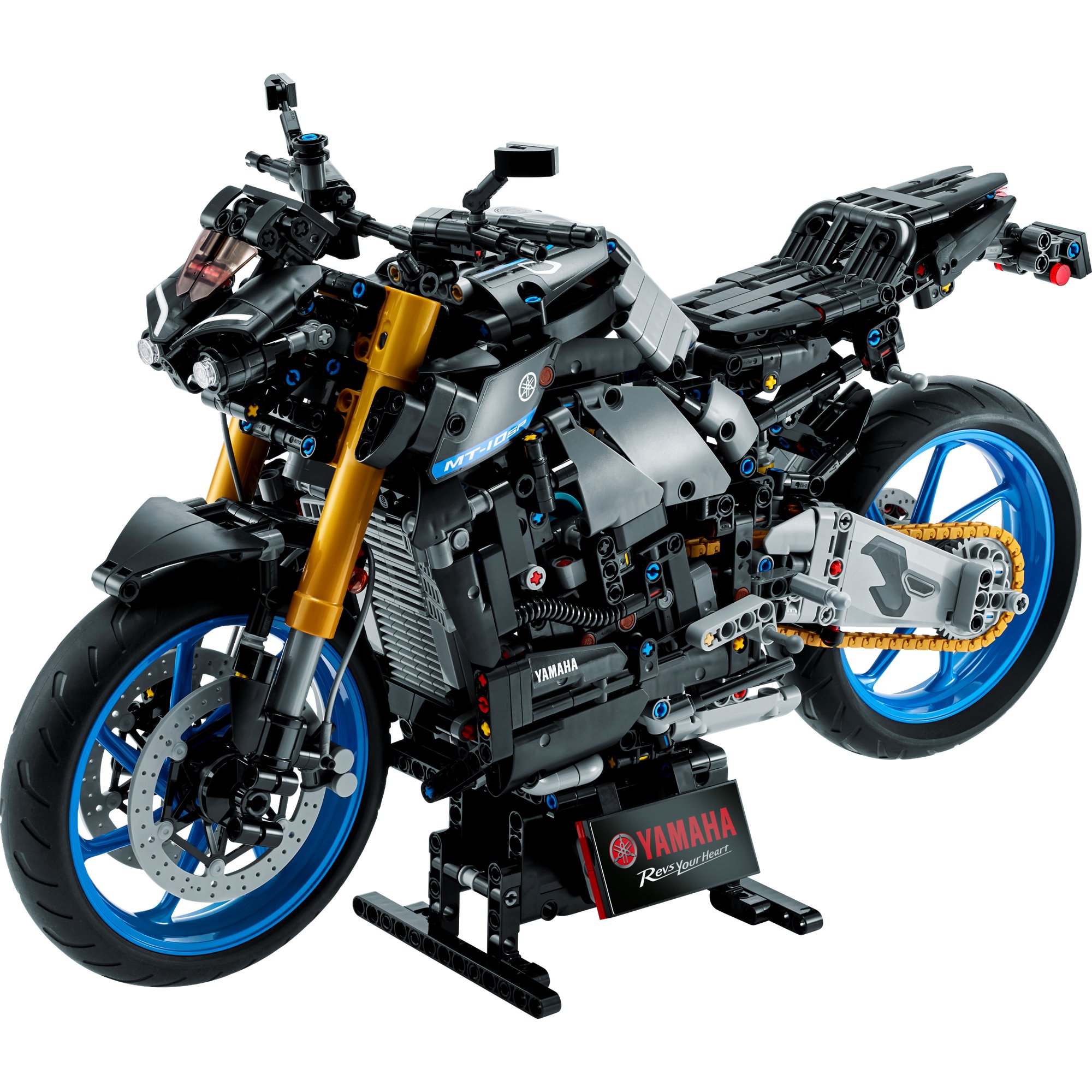
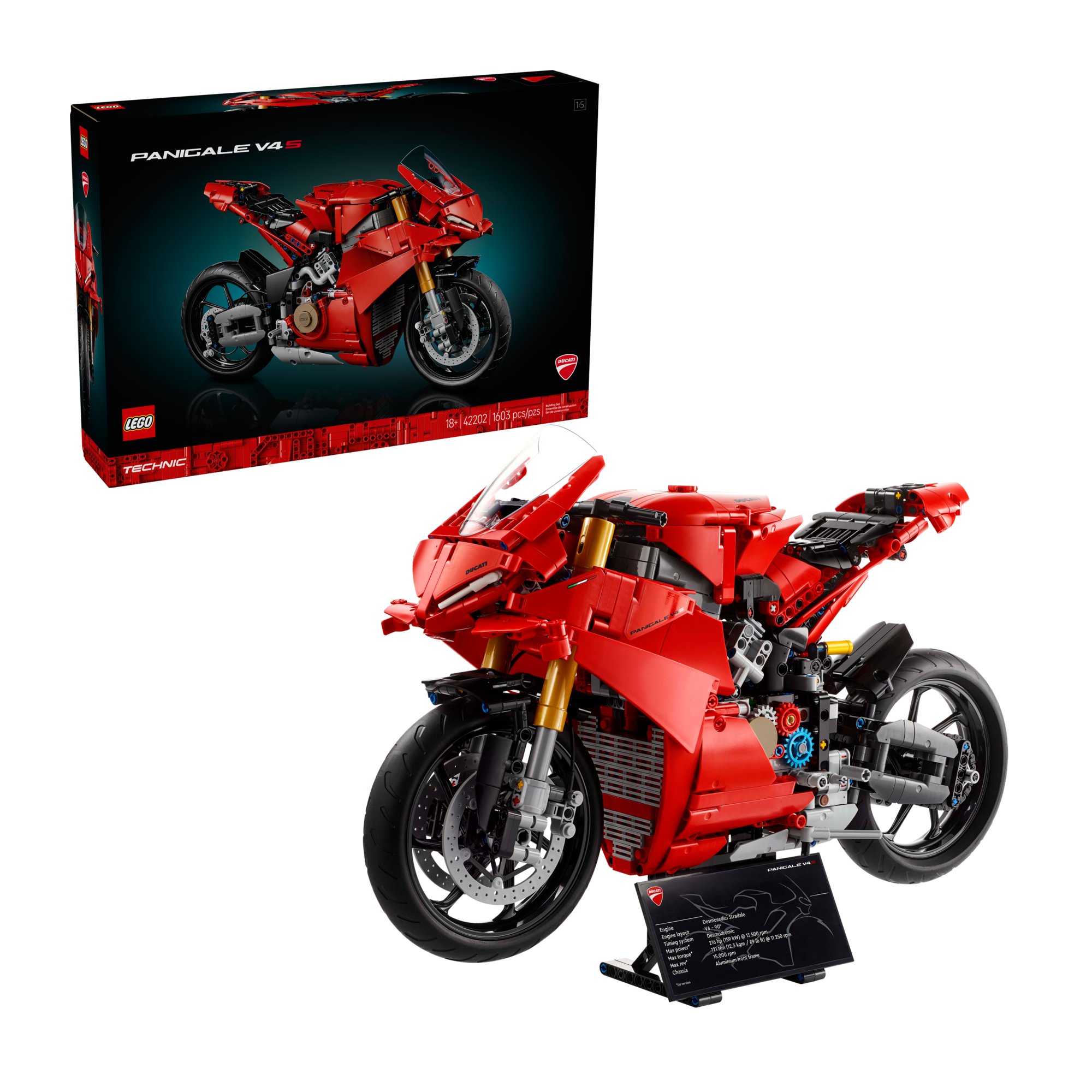

The BMW M 1000 RR is in the library
Technic Fan gets up to 6 kits a year, Master Builder up to 12. Delivery both ways is included and the prepaid return label is in the box.