

Concrete Mixer Truck (42112): the drum that made a Technic mixer possible
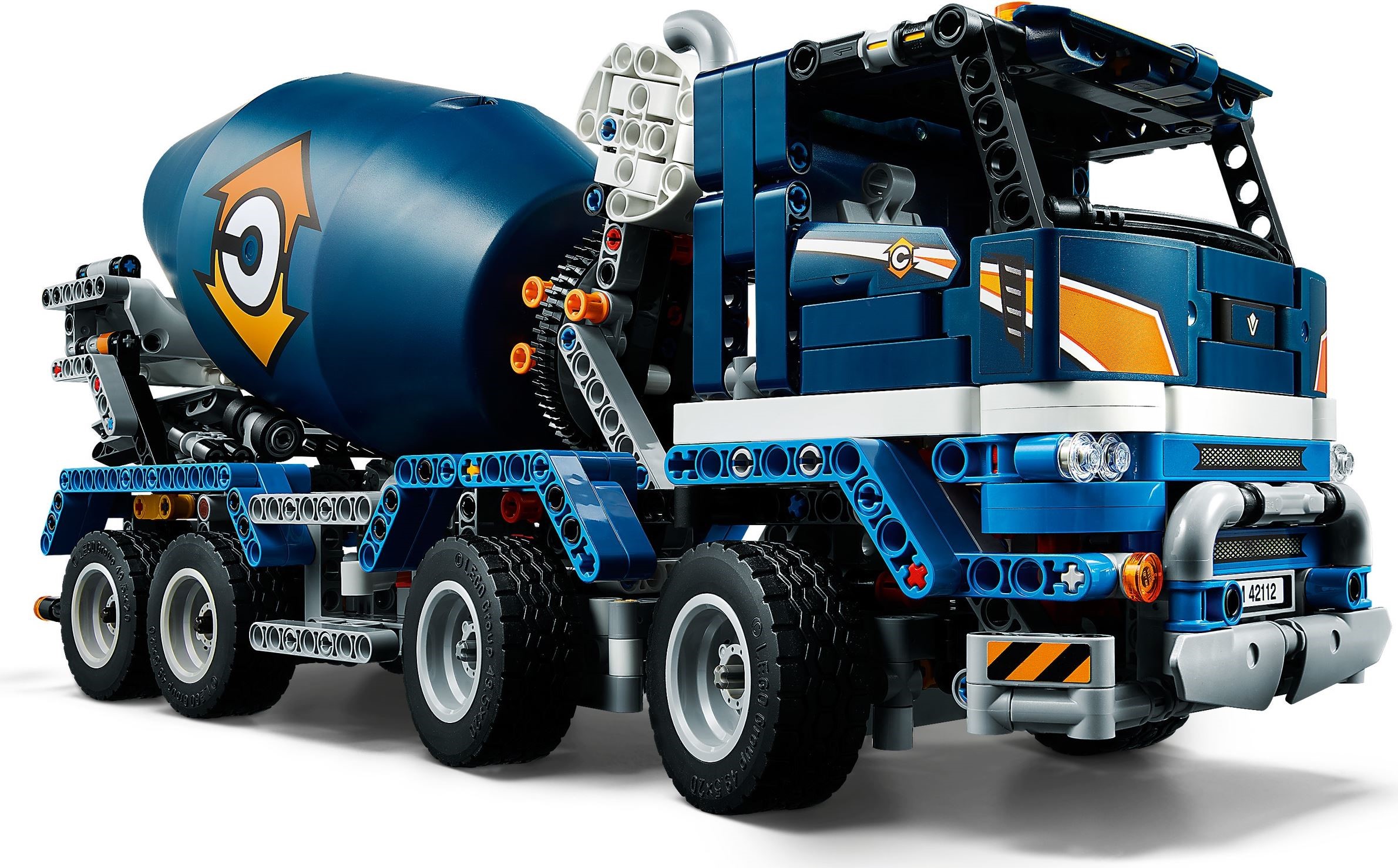
Technic had never done a concrete mixer before 2020, and the reason is the shape. A mixer drum does not come out of liftarms and panels. So for this set LEGO moulded a new part: two identical halves that pin together into a drum about 20 cm long and 10 cm across, with an Archimedes screw inside and the company logo printed on, not stickered. Fill it with the 100 grey pieces of concrete that come in the last bag, push the truck along and the drum turns and keeps the load in. Flick a lever, wind the crank the other way, and it comes out of the chute at the back.
LEGO calls it the Concrete Mixer Truck. Our shop listing says Cement Mixer Truck; it is the same set. It is in the Brick Club library and nobody has sent a build diary in yet, so what follows is built from the reviews and Brickset’s data rather than from a member’s notes. Below is what each control does, how the four numbered bag groups split the build, and the places where people slip up.

Why this one is different
Huw at Brickset said he prefers Technic plant to Technic cars because there is more to do with it, but that there are only so many cranes and diggers anyone needs. This was something new, and it is not yellow. The colour scheme is dark blue over white and bright blue, with orange stickers on the cab, and it brought a handful of parts in dark blue that had barely been seen since the Bugatti Chiron (42083) or older Bionicle sets. He came away calling it pretty much the perfect Technic set: a good size, realistic, not overly complex, and with functions that are fun to use. He also liked that it is a pure Technic build with very few System parts and none of them used for styling.
The Brothers Brick review put the same set in a different light. It was the one set of the summer 2020 wave that did not need a phone or get cancelled, and it turned their reviewer from a casual Technic fan into someone budgeting for more of the theme. Their reservations were about value (over 350 of the 1,163 parts are pins) and a few places that wanted more panelling.
mostlytechnic on Eurobricks was the least impressed of the three, scoring it 7 out of 10. His points are worth reading before you start: the steering barely turns, the gap behind the cab is large, and you have to hold the truck with your other hand while you crank. None of that stops the main function working, and all three reviewers agree the drum and chute do exactly what they should.
What it actually does
Nothing is motorised. Every function is a lever, a gear wheel or a crank on the outside of the chassis, and small stickers on each side tell you which is which. The Brothers Brick pointed out that the hand crank can be swapped for a Technic motor if you want the drum to turn on its own; we do not supply one.
The lever on the right-hand side of the chassis, between the middle wheels, sets how the drum is driven. Push it to the right and the drum turns as you push the truck along, driven from the rear axles through a drive shaft. Position it to the left and the drum is disconnected from the wheels and turned instead by the crank on the other side of the truck. The middle is neutral. Inside, the lever slides a selector that engages one of two gears or neither, and the drive shaft to the drum carries one of the new white clutches, until then found only in the Liebherr excavator (42100) and, by The Brothers Brick’s account, the Volvo hauler (42114). The drum sits on a large turntable driven from that gearing, and rides on angled rollers that keep the rotation smooth.
The two halves of the drum join with four pins and the only connection to the truck is a pair of pin holes at the closed end. Inside is a moulded screw, the same idea as the real thing. Turning one way pulls the load deeper into the drum; turning the other sends it spiralling towards the open end. With the lever in the wheel-driven position the drum turns clockwise as the truck rolls forward and the concrete stays in. To empty it, flick the lever across and wind the crank anticlockwise. Huw found nothing spilled where it should not and that the 100 pieces make a satisfying rattle as they go round. The Brothers Brick noted one quirk: with the drum in gear, pushing the truck backwards also sends the concrete out.
The V-shaped chute at the back sits on a pivot, so it swings up out of the way for transport and swings round to direct the pour where you want it. Huw put the swing at 90 degrees or so. mostlytechnic, who had complaints about most of the truck, called the chute a very clever design and the definite plus of the set, with the one wish that the V were a little deeper because the pieces come out fast and bounce.
The front two axles steer, and they are meant to turn through slightly different angles the way a real eight-wheeler’s do. You steer from the black gear wheel on the yellow axle standing up behind the cab. The mechanism works, but expect two things: the difference between the two axles is barely visible, and the turning circle is poor. mostlytechnic found the truck barely able to turn at all. He also noticed that each axle is pushed by both a gear rack and a small orange liftarm, and could not see why it needs both.
Both rear axles have a differential and both connect to the drive shaft, so rolling the truck turns a small four-cylinder engine at the front. Where it sits is what Huw and The Brothers Brick both pick on: uncovered, between the driver and passenger seats, where a centre console would be. You can watch the pistons go up and down, which is the upside. The cab doors open and close, which Huw did not mention but The Brothers Brick counted as a nice bonus.

How the build goes
Nine bags grouped into four numbered stages, plus a loose bag of tyres, two instruction books and a small sticker sheet. Book one covers bags 1 and 2, book two covers 3 and 4. Huw says it can be built in a few hours. Two evenings is comfortable, and the mechanical work is all in the first two bags.
Chassis, steering, differentials and engine
The chassis with most of the gearing in it: the proportional steering on the front two axles, the two differentials on the rear axles, and the drive shaft forward to the four-cylinder engine. The two differentials have to face opposite ways, and the instructions go as far as putting a white round connector in one back corner as a landmark, because the structure is otherwise symmetrical. Turn the rear axles by hand before bag 2 and check the pistons move.
Gearbox, drum mounting, chute and wheels
The three-position gearbox goes into the middle of the chassis, the drive shaft with the clutch runs back to the turntable, and the drum’s mounting bracket, rollers and the chute are built at the rear. The wheels go on now rather than at the end, which both The Brothers Brick and mostlytechnic found odd. By the close of this bag every function is in place, so work the lever through all three positions and turn the crank before the bodywork hides anything. This is also the stage where Huw put a red axle through the wrong hole of an L-shaped beam and did not notice until later.
Cab, mudguards, water tank, drum
The cab in dark blue with the engine between its seats, the mudguards, the white water tank behind the cab and the stickers. Very few System parts turn up. The last step of this stage is to pin the two drum halves together and drop the drum onto its mounting.
The concrete
One bag of 100 dark grey 1×1 round connectors. Tip them into the drum and the build is finished. Count them back into the bag before the kit comes home to us; they are the easiest parts in the set to lose under a sofa.
No member diary for this one yet, so these come from the three reviewers, one of whom made a mistake of his own.
- The two rear differentials. They must face opposite ways or the drive will not work correctly. The instructions flag it clearly and give you the white connector as a reference point. Check it before the gearbox goes in over the top.
- The red axle in bag 2. Huw ran it through the wrong hole of the L beam and only noticed later. When you reach the gearbox, compare your L beams with the picture before pressing on.
- Hold the truck while you crank. There are no outriggers or chocks, and mostlytechnic found it bounces all over the bench if you crank one-handed. Steady the cab with your other hand.
- Backwards in gear empties the drum. With the lever in the wheel-driven position, pushing the truck backwards turns the drum the discharging way. Put it in neutral before you reverse it off the table edge.
- The grille stickers. mostlytechnic dislikes the grille stickers, though he says they are not too bad here because a grey bar divides them, and found the curved panel stickers on the cab do not follow the white curves below them. Huw and The Brothers Brick both said the truck looks fine with the stickers left off, and only the small function arrows on the chassis earn their place.
On the shelf
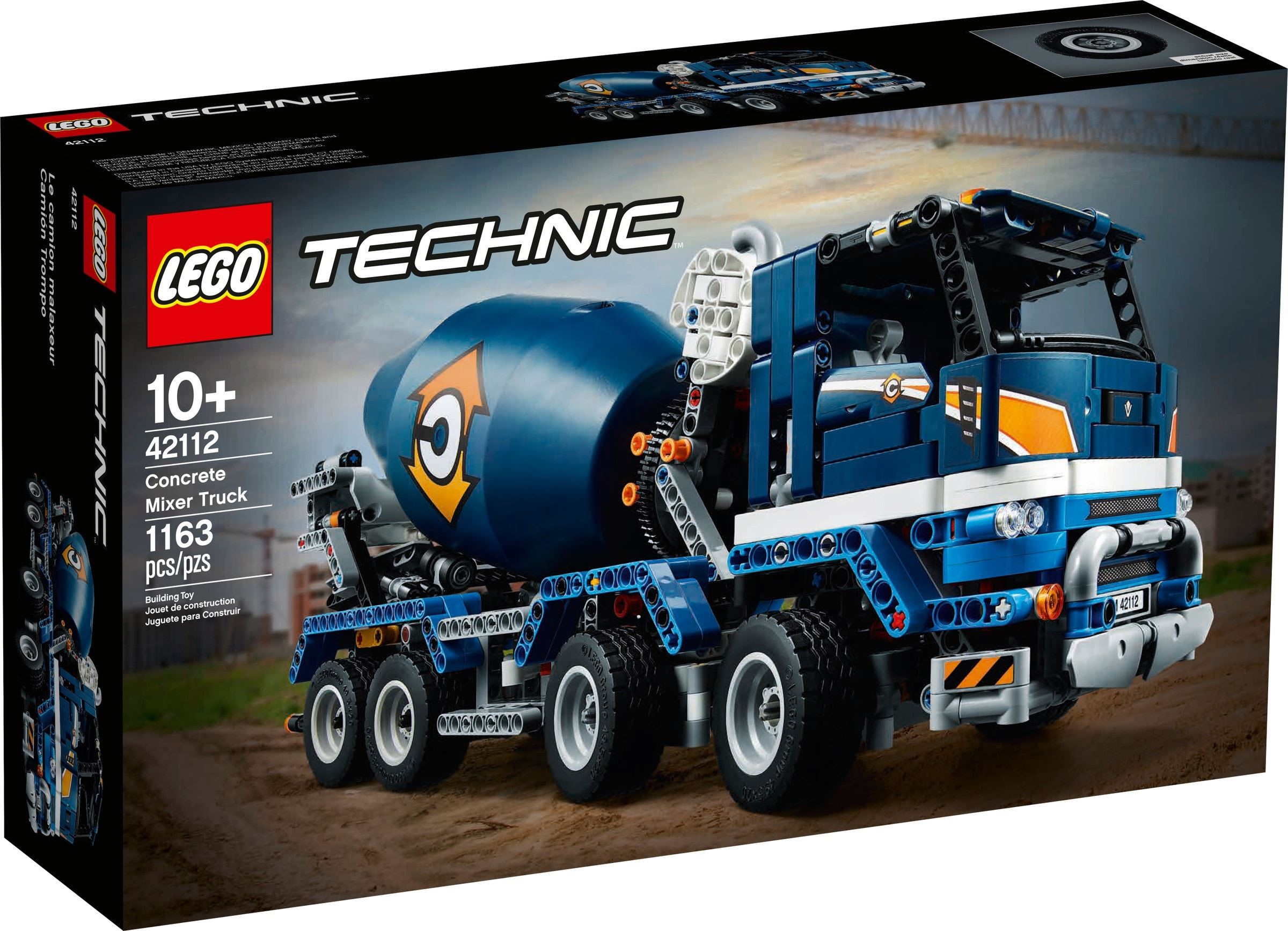
Finished, it is about 42 cm long, 12 cm wide and 19 cm tall to the top of the drum, so it takes a normal shelf without trouble. Dark blue, white and bright blue with orange accents photographs well and looks like a European mixer rather than a toy. The number plate reads CM 42112, and the water tank carries a large sticker that says Water in case there was any doubt.
Two things to know before you turn it side-on. There is a large open gap between the back of the cab and the drum, with the yellow steering axle standing in it, and the exhaust stacks stop halfway down the cab. The Brothers Brick and mostlytechnic both flagged the gap, and all three reviewers disliked the yellow axle. From the front three-quarter, which is the angle LEGO chose for the box, none of it shows.
This is the one for you if you want a Technic set that does one thing properly and can be finished in a couple of evenings. The drum, the screw and the chute are the point of it, and they work: load it, roll it, flick the lever, crank it out. It is a good first big Technic set for someone who has done the small ones, because the gearing is simple enough to follow while you build it. Check the two differentials in bag 1, test all three lever positions at the end of bag 2, and keep the 100 pieces of concrete in their bag when you are not playing. If you want complex gearing to feel or a steering lock to admire, this is not the truck.
If you like this one, try
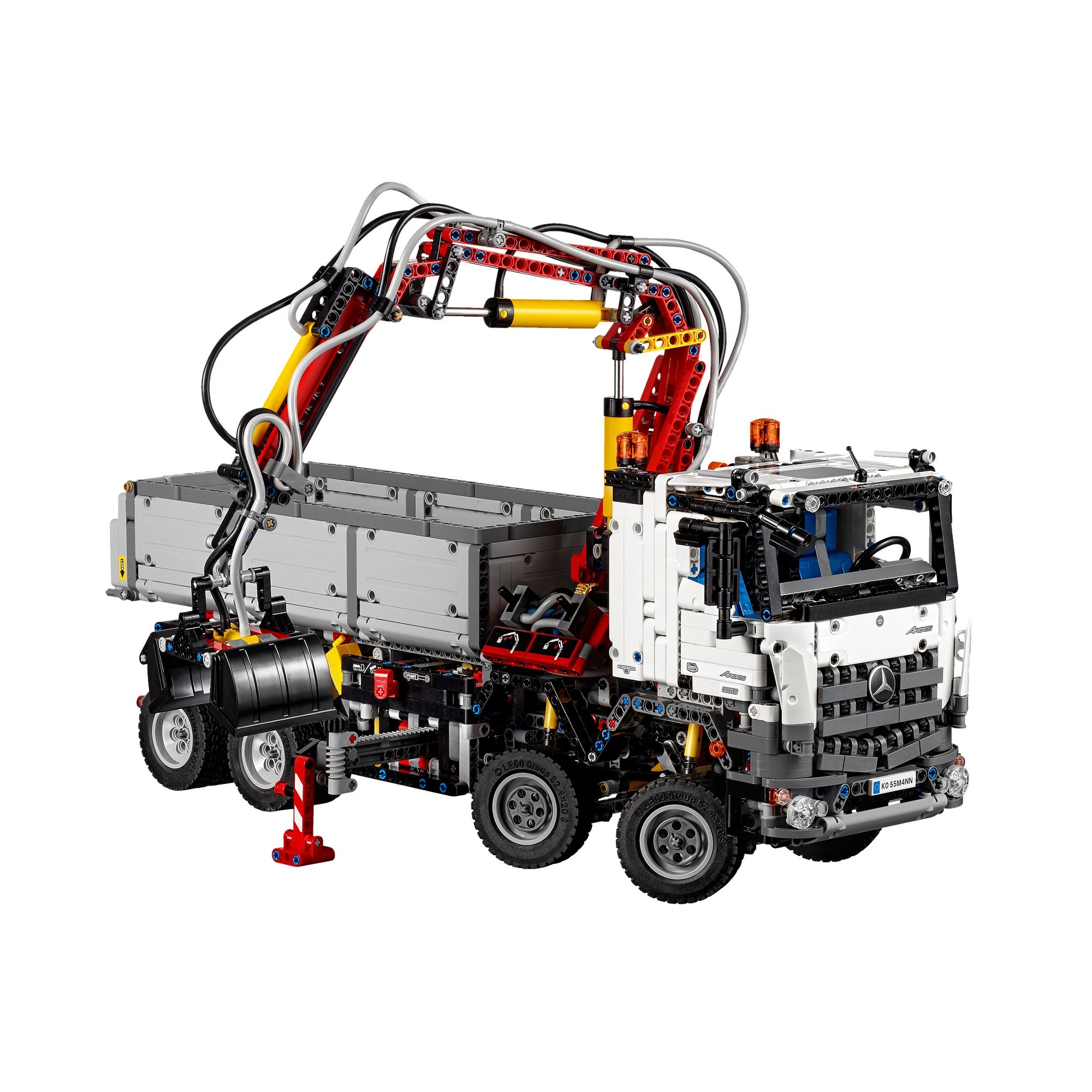
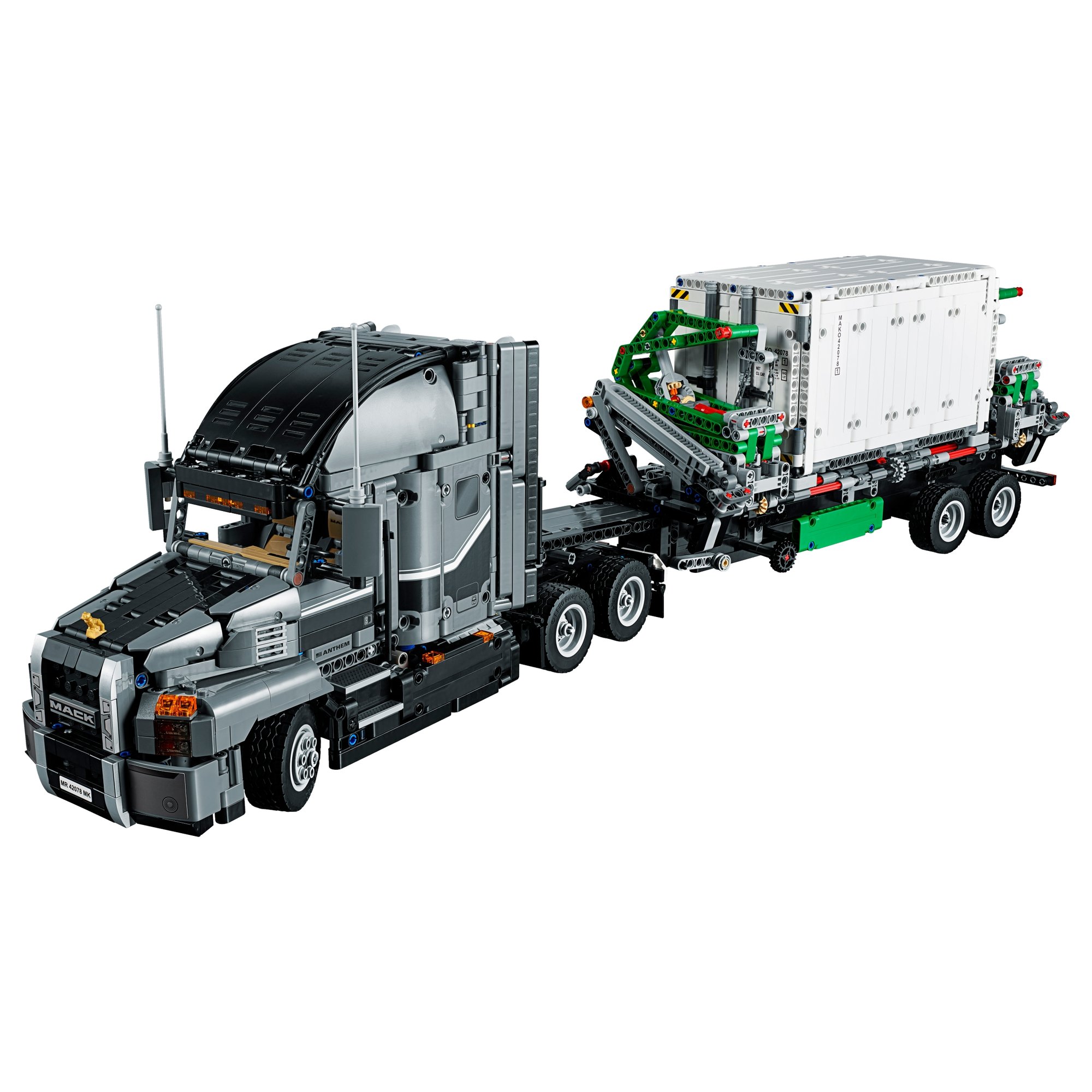
The other trucks in the library. The Heavy-Duty Tow Truck (42128) is the natural next step, a year newer and with pneumatics on top of its gears; the Arocs is the big motorised construction truck.


The Concrete Mixer Truck is in the library
Technic Fan gets up to 6 kits a year, Master Builder up to 12. Delivery both ways is included and the prepaid return label is in the box.