
Alan builds Dom’s Dodge Charger
Alan sent in these build diary photos from when he was working through the 42111. They show the Charger coming together from the sub-assemblies up, which is actually a better way to see what this kit involves than a photo of the finished model. You get to see the V8 engine block before the hood closes over it, and the chassis before the bodywork goes on.
The 42111 was significant when it came out in 2020. LEGO licensing a Hollywood franchise for a Technic set was new territory. The subject is Dominic Toretto’s 1970 Dodge Charger R/T from the Fast and Furious films, and LEGO took it seriously. The proportions are right, the engine bay detail is there, and at 1,077 pieces it sits comfortably in the library as a solid evening project.
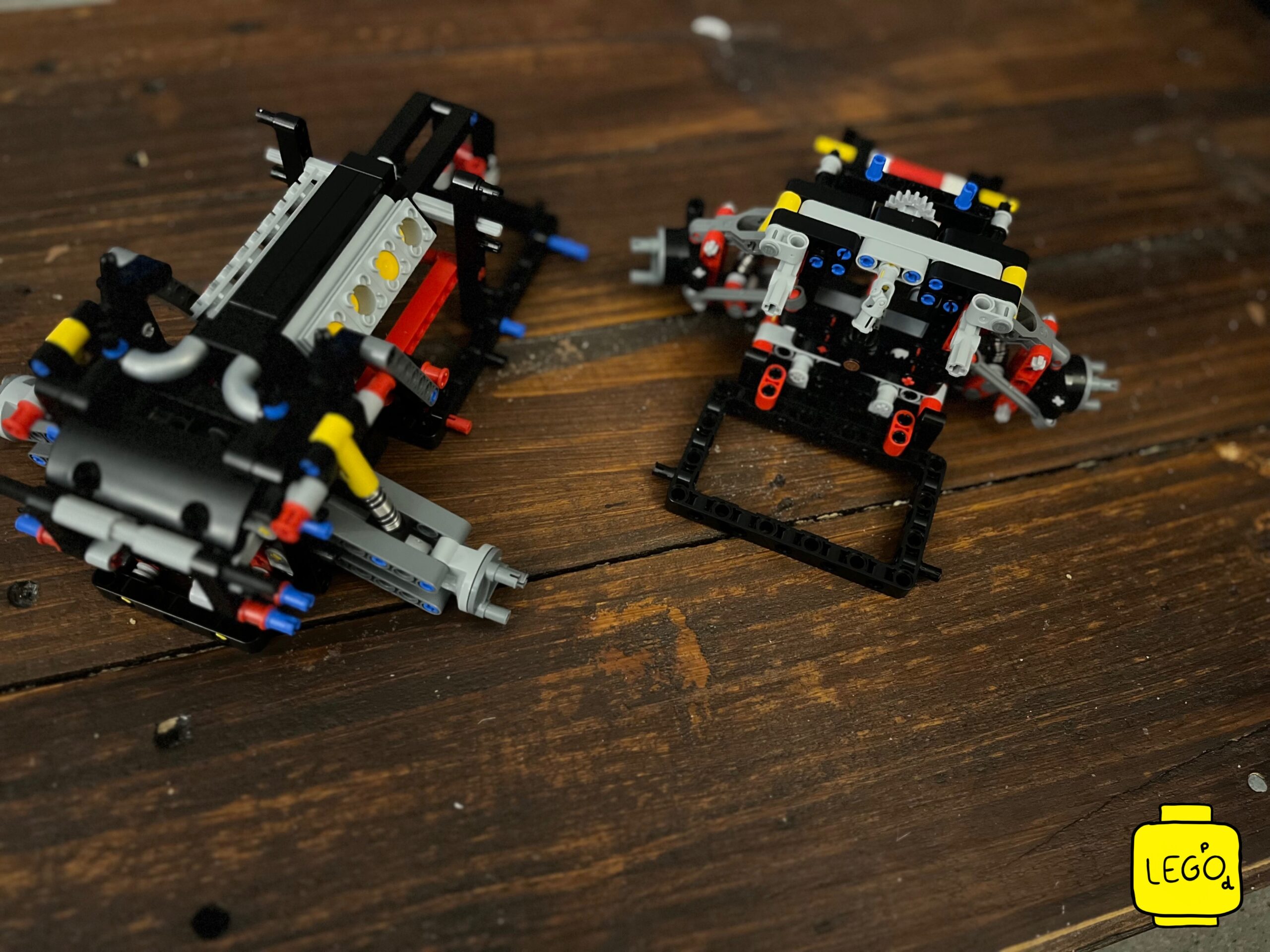
The build splits into two main parallel assemblies that come together at around the halfway point. The left-hand sub-assembly is the powertrain: engine block, gearbox, and suspension components. The right-hand one is the chassis frame. When you bolt them together the whole structure becomes rigid and the scale of the model is suddenly obvious. It is a big car.
The V8 engine is the reason to build this kit. Eight pistons move as the model rolls, visible through the opening hood. Red valve covers, grey headers, rubber hose details running across the top of the block. LEGO did not cut corners here. It is the best thing about the 42111 and it is genuinely a good piece of engineering in miniature.
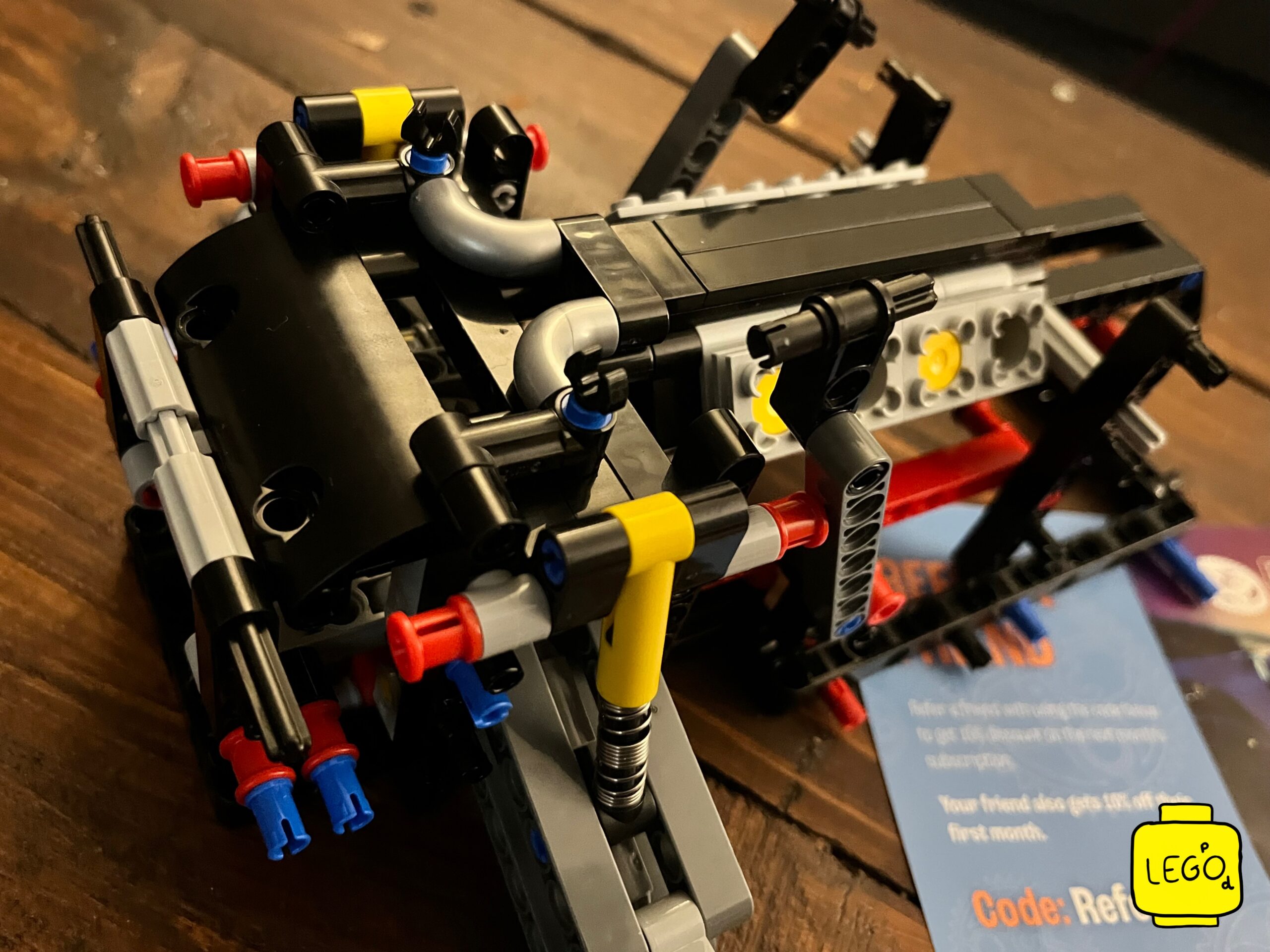
The hood opens on a hinge and stays open, which means the engine sits on display. This is the right call for a kit where the engine is the main mechanical feature. The Charger’s bonnet is already distinctive in the real car, and the LEGO version captures the flat, long shape of it reasonably well.
Steering is functional via the front wheels, and the suspension at both ends compresses and rebounds with a bit of weight on the chassis. Nothing unusual for this level of Technic, but it feels right given the source material. The film version of this car takes a beating and it is appropriate that the model has some give in it.
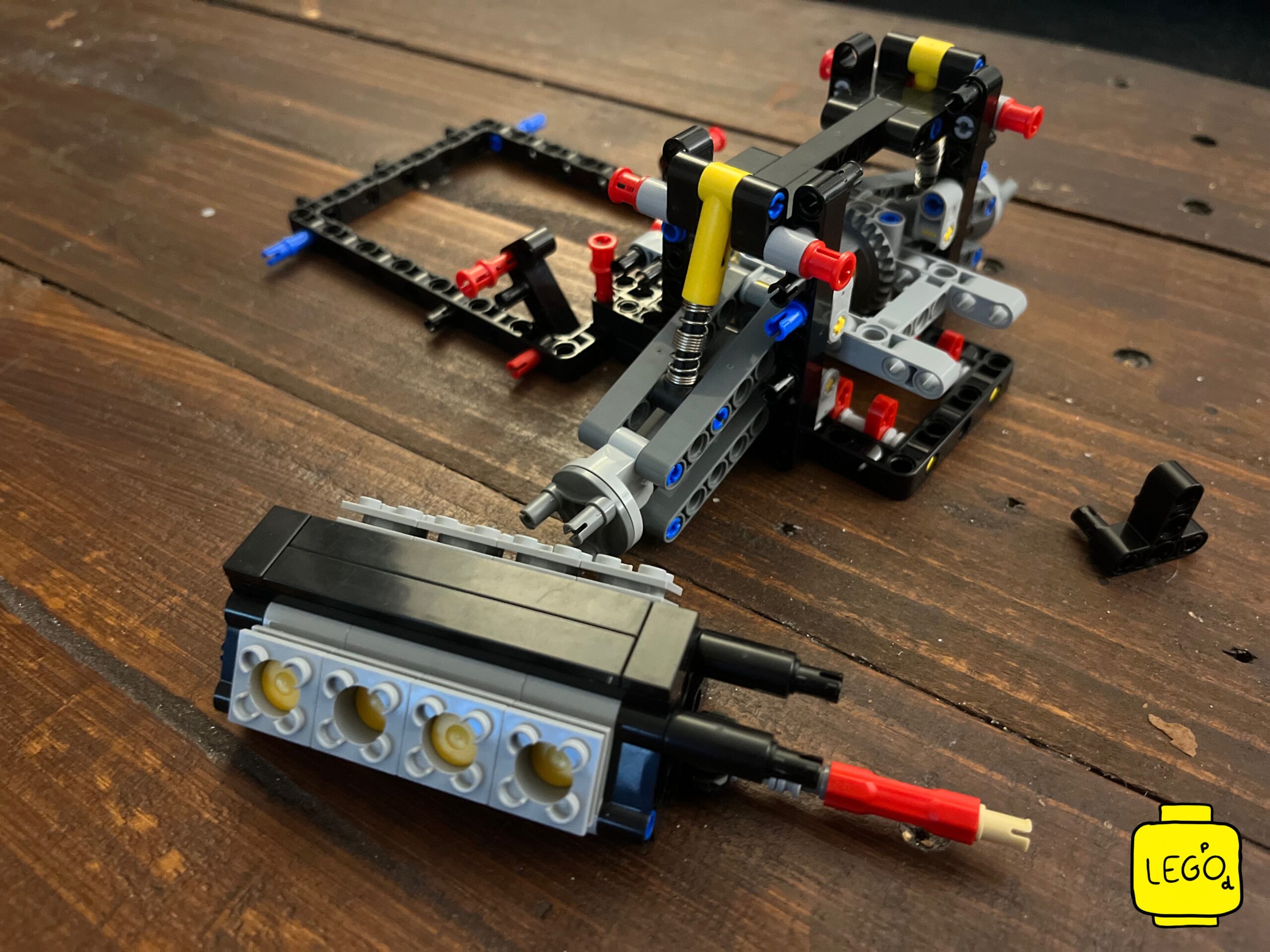
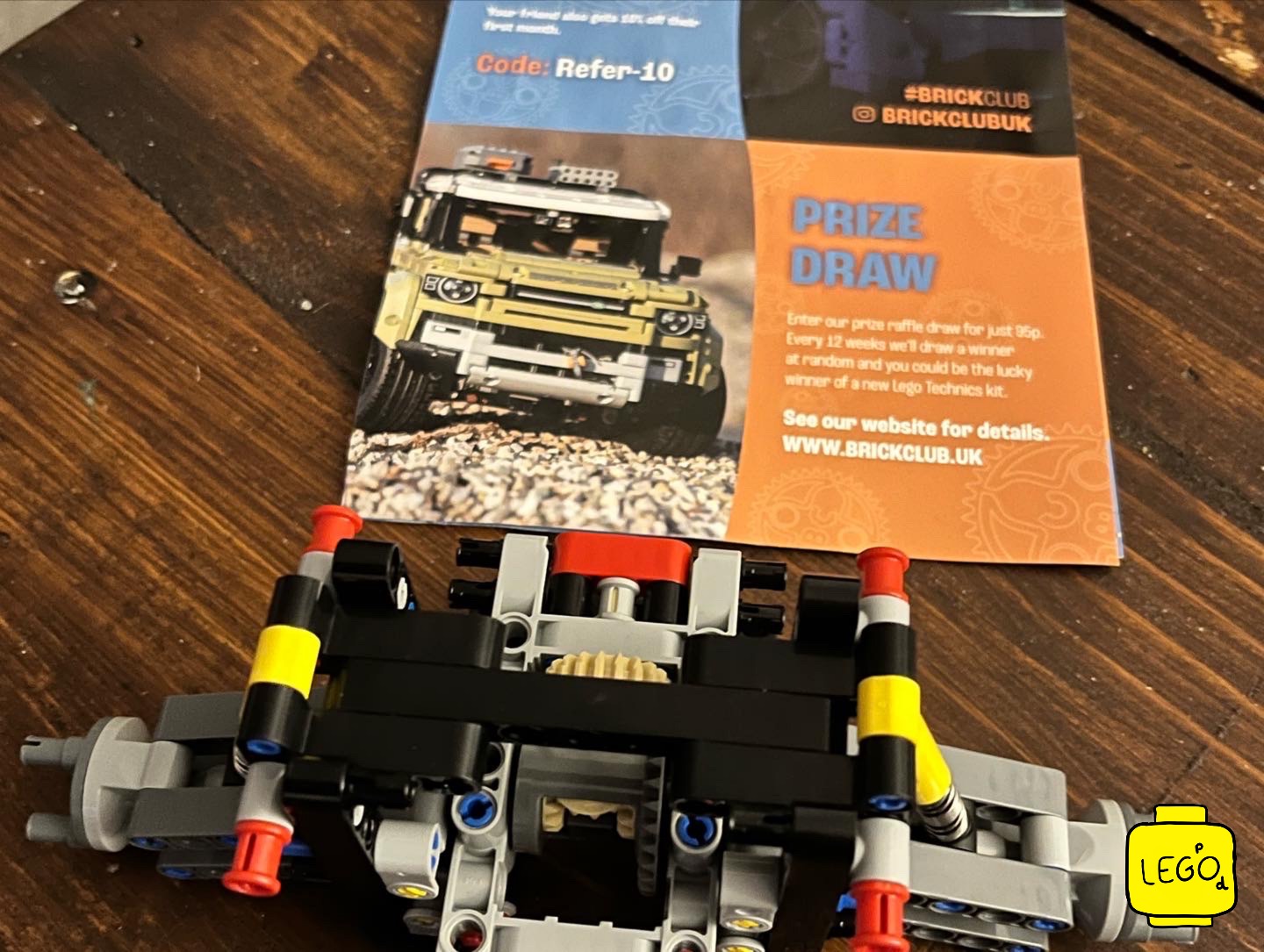
If you are a Brick Club member and you have been photographing your build, track your build progress and upload your photos in your members build account. Alan’s build diary photos are a great example of what we like to see.
Alan build diaries are useful because they slow the kit down. A finished Charger photo tells you the shape worked. The progress shots show where the time went: the V8, the rear axle, the frame, then the black bodywork closing around it.
That is exactly the sort of member content I want more of. It helps other builders decide whether a kit is their kind of evening, and it shows the library being used by someone who actually cares about the build rather than just the box.
Ready to build something?
Pick your subscription below and get your first kit out within days.