

John Deere 948L-II Skidder (42157): three air functions and a hand pump
No motor, no app, no battery box. Everything the arm on the back of this machine does, it does because you set a switch behind the cab and pump a plunger up and down with your thumb. Two pairs of pneumatic cylinders lift the boom and fold the second stage, and a single cylinder closes the yellow grapple, and the pump that feeds them is disguised as the exhaust stack. Huw at Brickset put it well: there is something tactile about operating pneumatics that is sorely lacking from sets controlled by an app, and this is the set he called his favourite Technic set of 2023 so far.
It arrived on 1 June 2023 at £169.99 for 1,492 parts, the second John Deere machine LEGO had put into Technic and the fourth licensed set to carry the compressed air system. It is in the Brick Club library alongside the older Forest Harvester (42080). Nobody has sent a diary back on it yet, so what follows comes from Huw’s review, LEGO’s own description and the Brickset data: what each control does, how the four bags split the build, and the tubing, which is the one thing every builder fights with.

Why this one is worth an evening or three
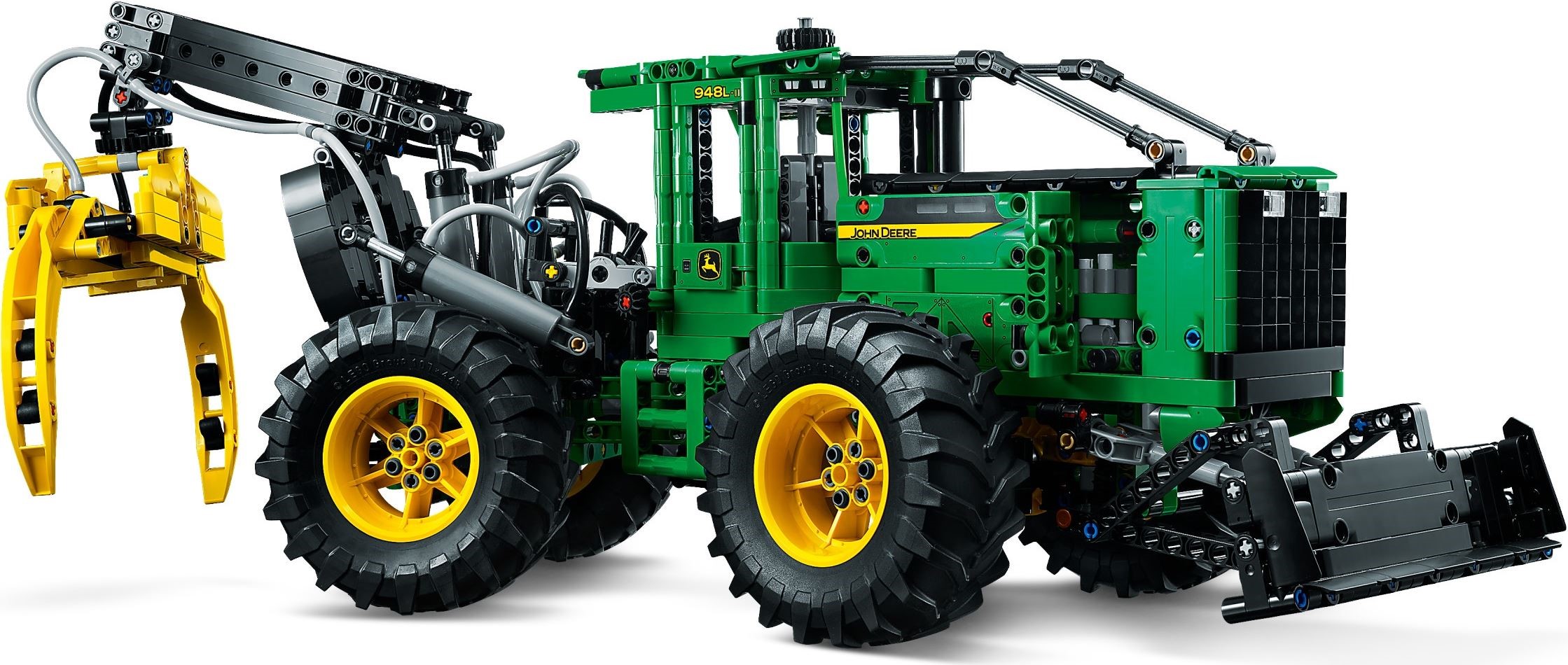
A skidder drags felled trees out of a forest, and the real 948L weighs 22 tonnes and costs around 200,000 dollars. LEGO’s version is bigger than the box suggests: Huw found it over 50 cm long and about 20 cm wide, and Brickset lists it at 53 by 19 by 21 cm. It is articulated in the middle on two large turntables, the axles float so all four wheels stay on the ground, and the grapple on the back is a pair of gripper claws moulded specially for this set.
The reason to want it rather than the Forest Harvester is that this is pneumatics done by hand. There is no compressor and no air tank. You pump, the arm moves, and when you stop pumping it stops. Huw’s summary line was that it is a superb realistic Technic set that works well and is fun to play with, and his only real complaint was the tubing.
It is also, in his words, an excellent green Technic parts pack: 200 or so green elements among the 1,500, many of them in green for the first time, including the 3 by 19 frames. One frame makes its debut here, and Huw suspects it was designed for the Liebherr LR 13000 crawler crane (42146) first. Brickset members give it 4.4 out of 5 from 59 ratings.
What it actually does
When LEGO announced it, the description promised pneumatic functions operating the three movements of the gripper, the blade and the rotating seat, and the Eurobricks thread spent two days arguing over whether that meant five air-driven functions. It does not. Two pairs of cylinders move the arm and a single cylinder works the claw. The blade is on linear actuators, the seat turns with the steering, and the engine runs off the wheels. Everything is worked by hand.
The rear arm and claw run on three sets of pneumatic cylinders controlled by switches behind the cab. You set the switches the way you want, then plunge the pump up and down. One pair of cylinders tilts the entire arm assembly and a second pair moves the second part of it up and down, so with two switches you can reach up, out and down. Huw thought the range of motion a little too extreme: it is possible to extend the claws below ground level.
There is no air reservoir. A small amount stays in the system, so after vigorous pumping you can often make several movements in succession, but the honest rhythm is set a switch, pump, watch it move, reset, pump again.
A single cylinder at the top of the yellow claw opens and closes it. The claw can also be rotated by hand on its mount, though the tubes running up the arm restrict how far it will swing. The gripper claws themselves are new parts developed for this set, and they are what makes the machine read as a skidder rather than a tractor with a crane.
Steering is a gear on top of the cab. Turn it and the machine bends in the middle, on two large turntables between the two halves of the chassis, and the operator’s seat inside rotates slightly as it does, which the real one does too. Turn it over and you can see the turntables, the floating axles mounted on the smaller Technic turntables so the wheels follow rough ground, and differentials built with the newer, sturdier bevel gears. LEGO lists it as 4WD.
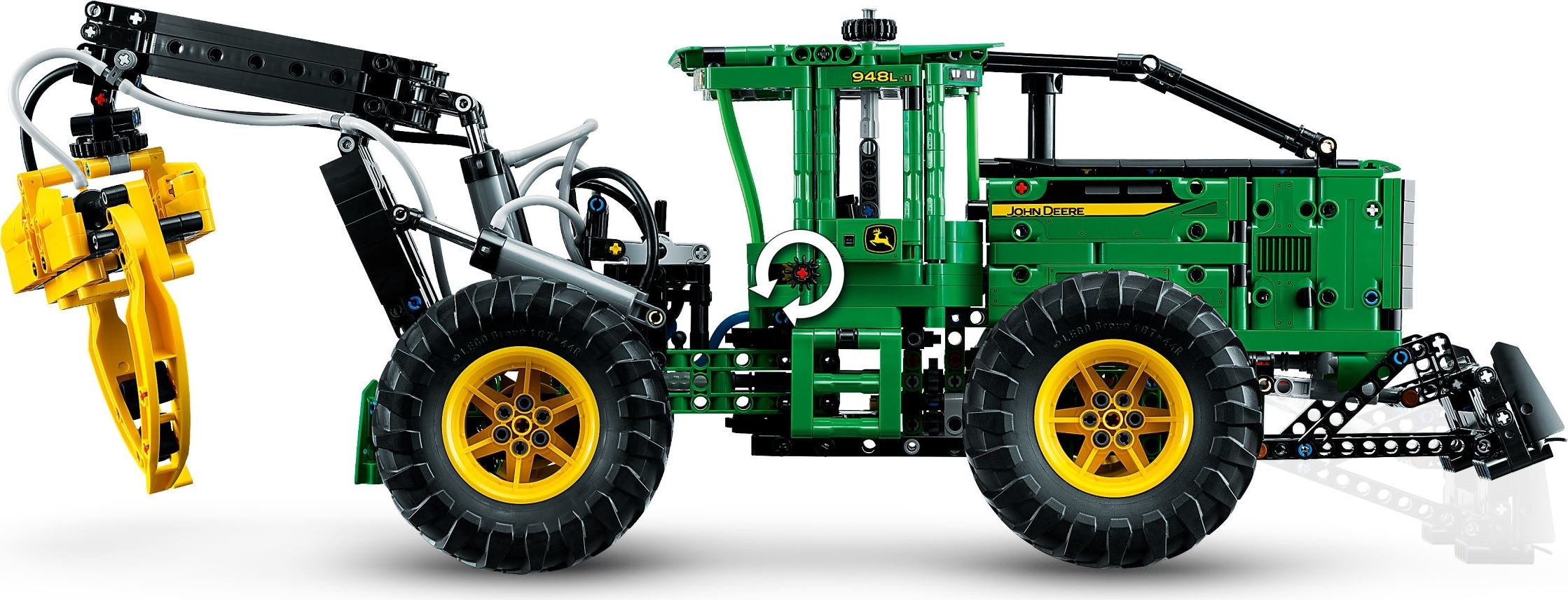
The blade at the front is raised and lowered by a wheel on the right-hand side of the cab, working through small linear actuators rather than air. LEGO’s side-view render puts a circular arrow on exactly that wheel with a ghosted blade below it, which is the clearest picture of the function you will get.
A pretend 6-cylinder engine sits under the cowling, connected to the drive shaft, so the pistons move up and down as the machine is pushed along. You can just about see them by opening an engine cowling door and peering in. The cab doors open too. Most of the stickers, around 20 in all, go on the engine cowling and on labels for the controls.
How the build goes
Four numbered bags, with the pneumatic tubes packed in a paper bag and everything else in plastic. Huw does not give a build time and no member has recorded one, so the five to seven hours above is our estimate for 1,492 parts with a slow finish. The one thing worth knowing before you start is that nothing pneumatic happens until part way through the last bag.
Chassis and front of the machine
Construction begins with the chassis and the front of the machine. Huw does not list the contents of each bag, but the chassis is where the two large turntables, the floating axles and the differentials live, so check that everything turns freely before the bodywork closes over it.
The middle of the build
Huw’s review does not itemise the middle bags, so we will not pretend to. What it does say is that the pneumatics at the back do not arrive until part way through bag four, so everything before that is dry building: green frames and panels, with very few System pieces beyond the front grille. It is straightforward Technic, and a good deal easier than what follows.
Arm, cylinders and tubes
Part way through bag four the pneumatics go on at the back and, in Huw’s words, that is when it becomes a bit fiddly. There are a lot of tubes to manipulate in a small space and every one of them has to be fully home on its switch or it will pop off. Huw says this makes it a more challenging build than many Technic sets. Fit the cylinders, connect the tubes one switch at a time, and pump after each connection so you know which run is leaking before you bury it under the next.
No member diary exists for this one yet, so these come from Huw’s build at Brickset and from LEGO’s own description. Nearly all of them are about the tubing.
- Tubes that are not fully home pop off. Huw’s warning is direct: a tube not pushed fully onto its switch tends to pop off. Push each one on until it stops, then tug it. A tube that lets go inside the arm assembly is a strip-down to reach.
- Routing takes trial and error. Huw could not get the tubes tidy first time, and even then some of them interfered with the switches with the arm fully retracted. Route them before you fix the last panels, and if a switch stiffens when the arm folds, a tube is fouling it.
- Pump hard, expect one move at a time. There is no reservoir, so a lazy pump gives a half-lift. Vigorous pumping stores enough for several movements in succession, then it is back to the plunger.
- The claws will go below the table. The range of motion is a little too extreme and the grapple can reach below ground level.
- Not five air functions, three. If you read the launch description and expect the blade and the seat to run on air, you will go looking for switches that do not exist. The blade is a wheel and small linear actuators, the seat turns with the steering.
On the shelf
Finished, it is 53 cm long, 19 cm wide and 21 cm high, so it needs the length of a big shelf and it will hang the grapple off the end if you leave the arm raised. Huw calls it a very imposing, eye-catching display model, and in daylight the green and yellow is the point. The pump doubles as the exhaust stack and is not quite where the real one sits, the only accuracy complaint he could find. Leave the arm lowered between goes.

This is the one for you if you want pneumatics in your hands rather than a motor doing it for you, and if you can live with a slow, careful last hour. Allow two evenings, leave the tube bag sealed until bag four, and connect and test one switch at a time. If you would rather the air came from a compressor and the build were shorter, the Forest Harvester (42080) is the one to look at instead.
If you like this one, try
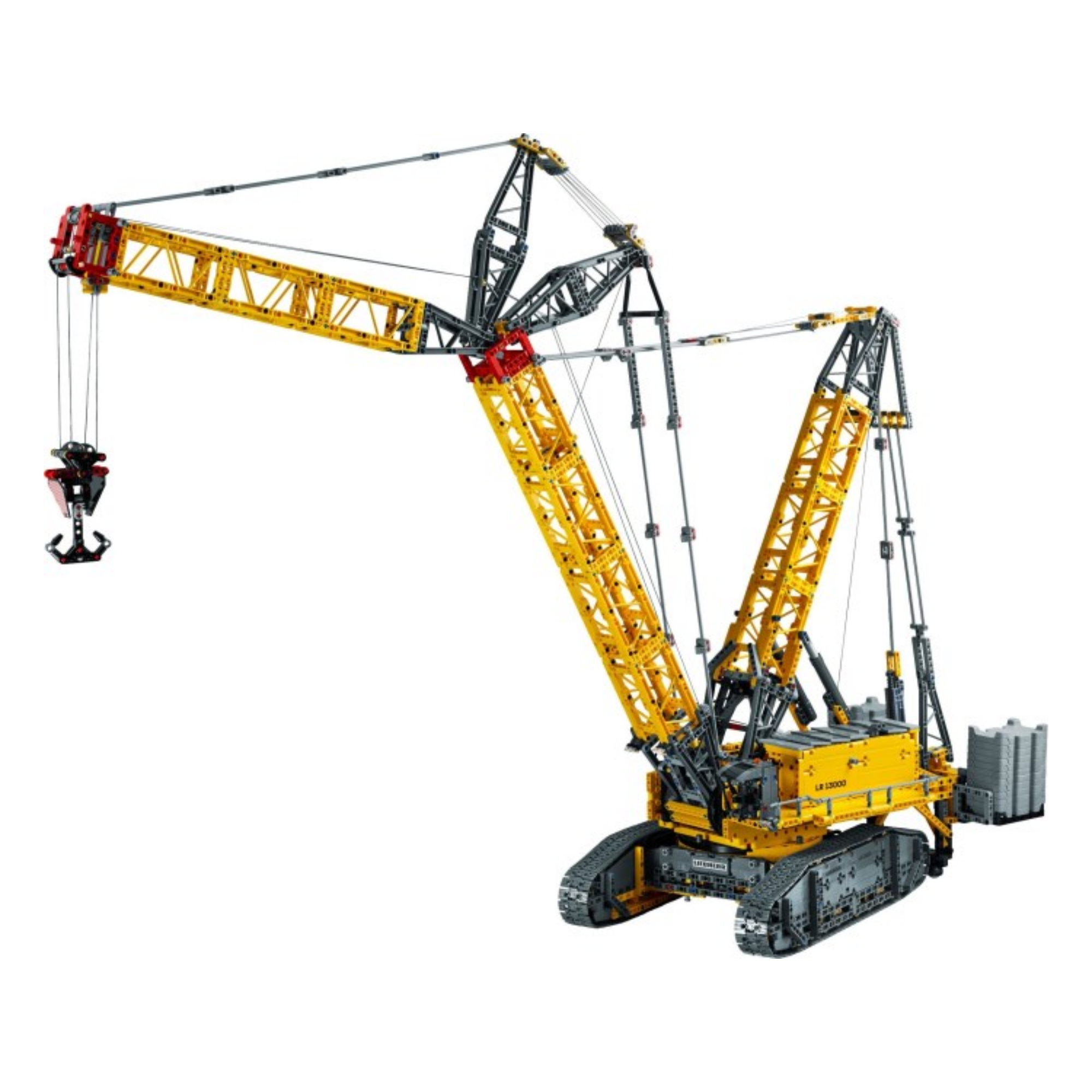
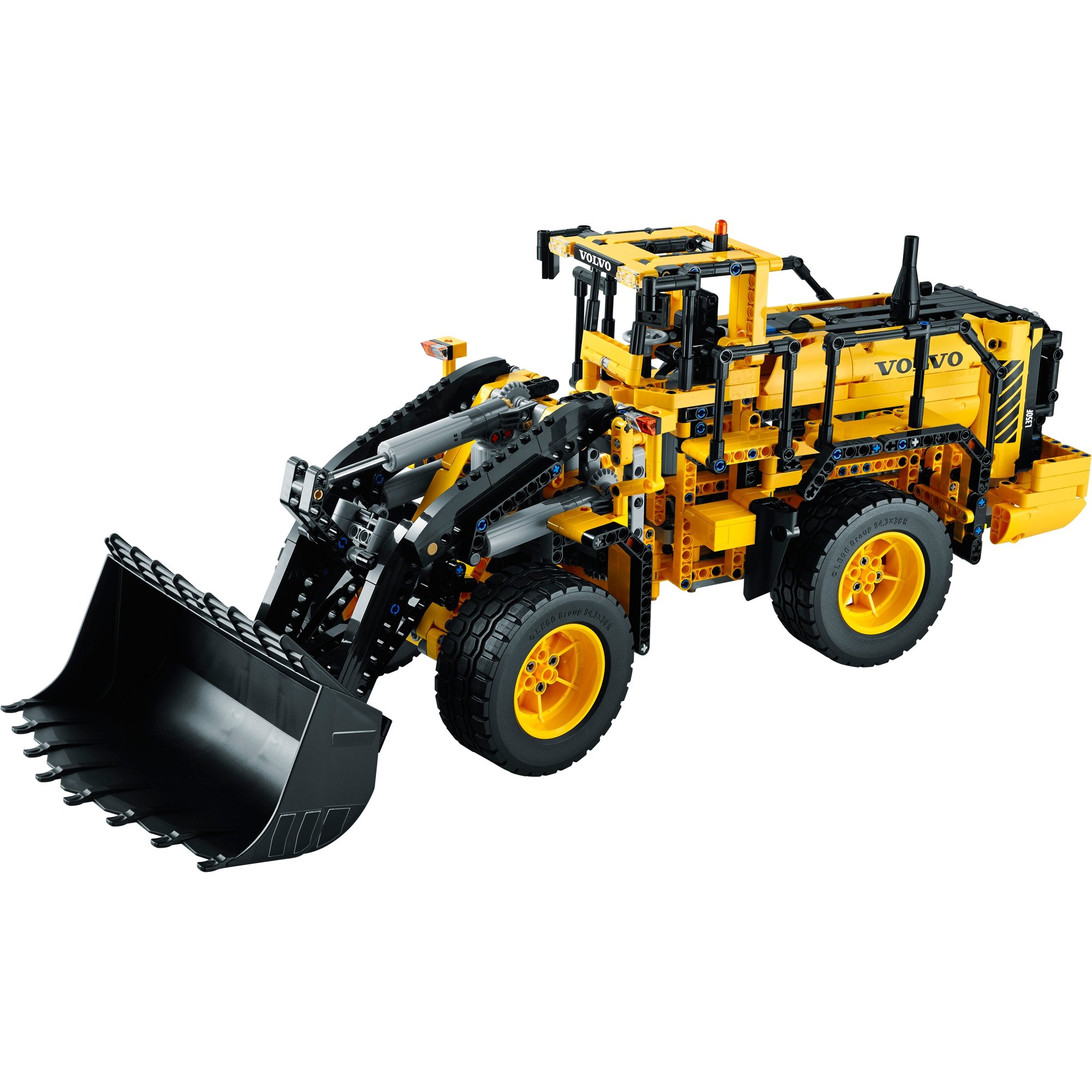
Four more from the construction shelf, from the 569-piece excavator you can finish in an evening to the 4,057-piece crane. Huw suspects a frame that debuts in this set was designed for the Liebherr first.


The John Deere Skidder is in the library
Technic Fan gets up to 6 kits a year, Master Builder up to 12. Delivery both ways is included and the prepaid return label is in the box.