

Liebherr R 9800 Excavator (42100): seven motors, two hubs, nothing by hand
There is not a single function on this excavator you can work with your fingers. The tracks are locked to their motors, the turntable is locked to its motor, and the boom sits on six linear actuators that only move when the app says so. Two Smart Hubs, three XL motors and four L motors do all of it, and the finished machine weighs about six kilograms with its twelve AA cells in. At 4,108 pieces it was the biggest Technic set LEGO had made when it arrived in October 2019.
It is in the Brick Club library. Below is what each motor drives, how the six building stages split the work, and where the wires and the app catch people out. The only full build review in our sources is from The Brothers Brick, so the build notes lean on that review plus LEGO’s own description and Brickset’s data.

Why this one matters
The 4×4 X-treme Off-Roader (42099) brought Control+ into Technic two months earlier with three motors. The Liebherr is the same system at full stretch: two hubs, seven motors, and an app that runs every one of them at once. It had more electrical parts than any Technic set before it. The Brothers Brick review, otherwise glowing, ends by worrying about exactly that: a set that cannot be driven, slewed or dug without a charged phone or tablet next to it.
The parts list is less new than you would expect for the size. The bucket is the headline piece, 20 by 11 by 9 studs and made for this set alone. The linear actuators are a new extra-long version because the standard ones would not reach. And the drivetrain uses a new linear clutch connector in place of the old 24-tooth clutch gear: it looks like an ordinary axle joiner, slips when the torque gets too high, and cracks audibly when it does. That noise is a safety feature, not a fault.
The instructions run to exactly 1,000 steps across two thick books, and the reviewer found mistakes in a couple of them. Keep that in mind when a stage does not go together as drawn.
What it actually does
Every function below runs from the Control+ app over Bluetooth, and nothing can be tested by hand as you build. Where the review describes how a motor reaches its function I have said so; where it does not, the drive path is left out rather than guessed.
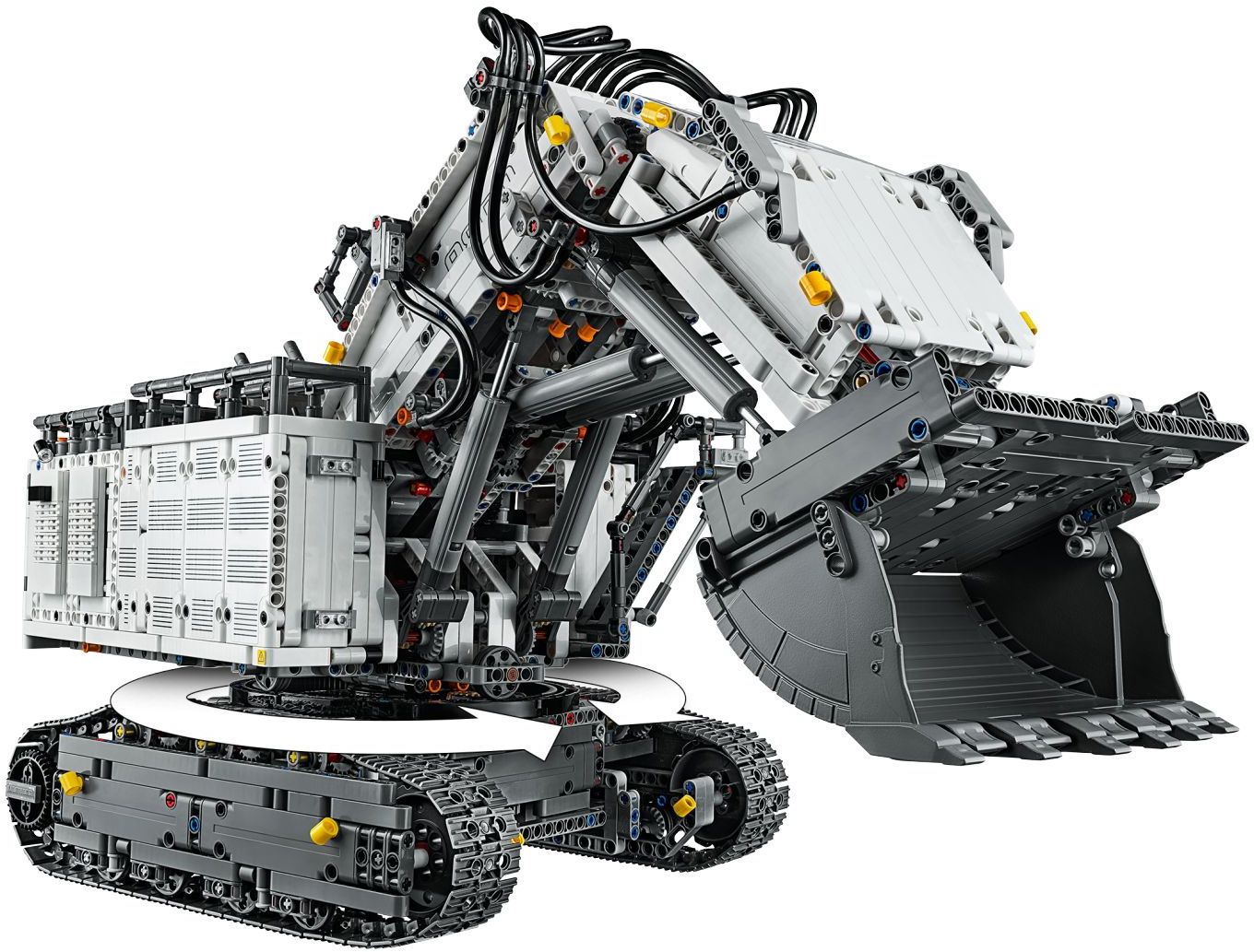
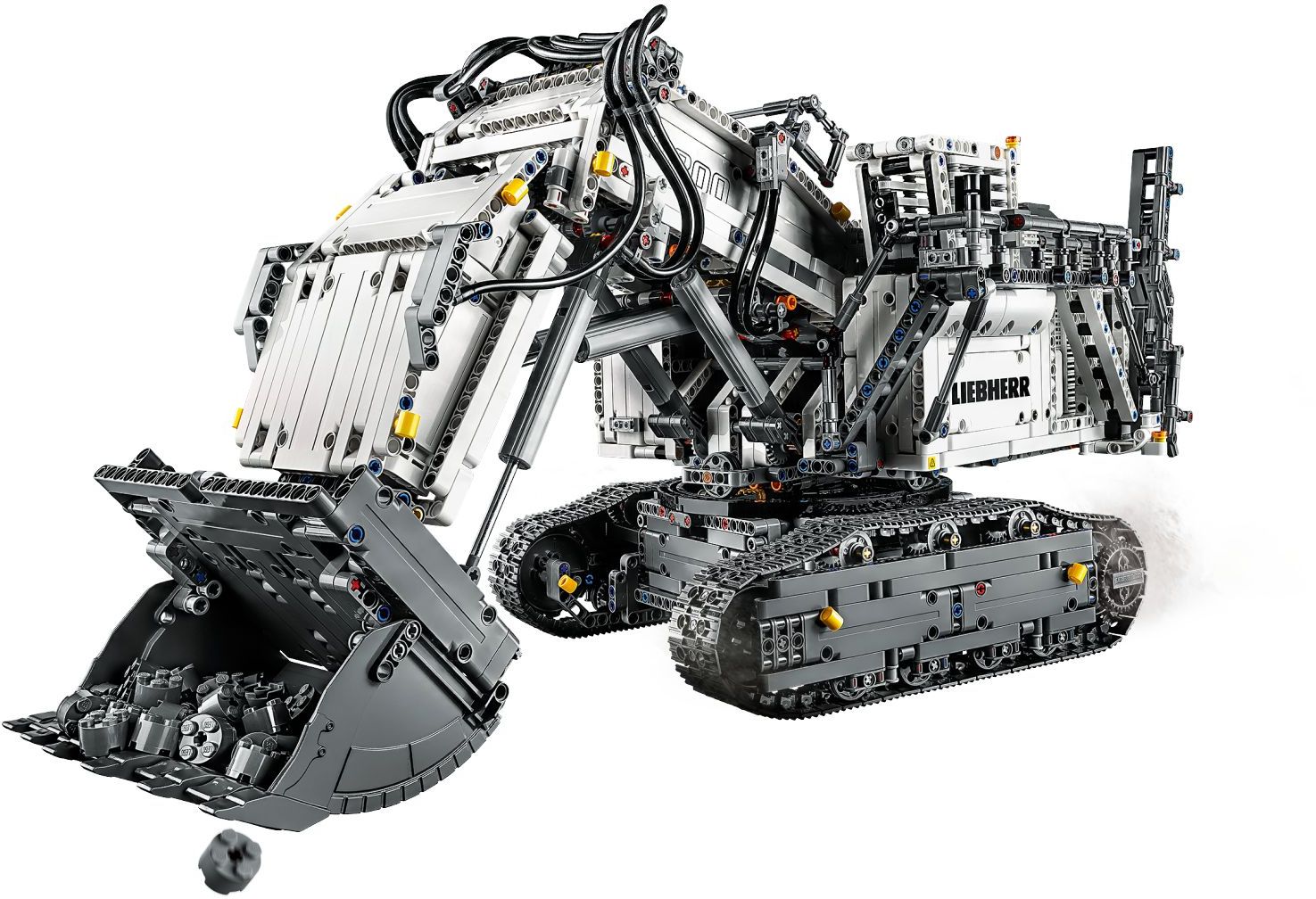
The build opens with the drivetrain, a stack of solid bevel gears arranged to get as much torque as possible to the tracks. The reviewer expected the friction to kill it and was surprised it works; the motors will spin the whole six kilograms through 180 degrees in almost no time. The four extra-large sprockets were the first ever in dark bluish grey. The tracks are locked to the motors, so the excavator will not roll if you push it, and underneath the wires are open to whatever is on the floor.
The middle of the chassis is the turntable drive: thirteen gears and one of the new clutch connectors before the drive reaches the standard turntable ring on top. The clutch is there so that a motor running against a jammed tower cracks and slips instead of stripping a gear. The app reports the superstructure’s position back to you.
The base of the boom holds three motors, and the boom, arm and bucket ride on six of the new extra-long linear actuators. The app extends, raises and lowers the boom and opens and tilts the bucket, and the multi-function screen shows a small diagram of the boom with whichever section is moving lit in orange. The structure is simpler than it looks; most of the bulk is white panel and the black tubes that stand in for hydraulic lines.
One hub sits at the back of the chassis and the other in the tower, and each has four ports, a six-axis sensor and a Bluetooth radio. Getting each motor into the right port is critical, because the app is built for this exact wiring. On the Off-Roader the ports were marked with stickers; here they are marked with coloured pieces built into the structure, which survives a rental better. Twelve AA batteries between the two hubs, not included, and none of it is compatible with the older Power Functions motors.
First connection runs a calibration of about a minute while every actuator finds its limits. Then four screens. Multi-function is the sticks-and-buttons panel for drive, slew, boom and bucket, with feedback on boom position, power use and distance driven, and it takes multitouch, so everything can run at once. One-touch gives you the boom as a diagram with four articulation points: drag a point and the model follows, with a shadow showing where the real boom is. Custom-built movements chains preset commands or records your own sequence as a block, which the reviewer compared to LEGO Boost. The fourth screen is challenges and badges.
How the build goes
Six building stages, the bags for the first three in a white inner box and the electronics in their own Powered Up box, the same style that came with the Off-Roader. Two books, 1,000 steps. The reviewer found it engaging with almost no repetition, and said you always know which part of the machine you are on. No reviewer gives a build time; with 4,108 pieces and a lot of wire folding, I would allow two weekends.
Drivetrain and undercarriage
The bevel gear train for the tracks comes first, then the turntable drive in the centre of the chassis with its thirteen gears and clutch connector, which needs quite a bit of room to fit. The front of the chassis gets a standard panel and the rear carries the first Smart Hub. Nothing here can be tested by hand, so check every gear mesh by eye before the next layer goes on.
Wires under the chassis
This is the first of two places where the reviewer lost a lot of time. Each wire is held by one or two coloured clips, the book gives no clear guidance on routing the rest, and a wire left hanging low sits in the path of the turntable gears and of anything you drive over. Fold the slack now, away from the slewing gears, because the tower is about to cover it.
Tower and white panels
The superstructure frame goes up with a lot of empty space inside it, then the second hub and the motor ports marked with their coloured bricks. Several bags of white pieces close it in: curved Technic panels on some faces, liftarm structures on others, System plates and tiles on the rest. The mix is what makes the body look like sheet metal rather than a Technic frame.
Boom, actuators and bucket
Three motors in the base of the boom, six long actuators, then the arm and the big bucket. Simpler than it looks, but this is where the inside of the tower fills with wires again. The book shows them lying neatly; the real leads are springy and want to twist. Fold them in without kinking.
Detailing, batteries and calibration
Stairs, handrails, exhausts, the pseudo-hydraulic tubes and the stickers. Then twelve AA batteries, the Control+ app, and a first connection that calibrates every actuator over about a minute. Until that moment nothing on the model has moved, so the calibration is also your first test of everything you built.
No member diary exists for this one yet, so these come from the Brothers Brick build and from what the set’s structure makes obvious.
- Wire routing, twice. Under the chassis before the tower goes on, and inside the tower during the boom stage. One or two clips per lead, no guidance in the book, and gears nearby. Route the slack yourself and keep it high.
- Motor ports. Each hub has four ports and the app expects a specific motor on each. The ports are marked with coloured pieces rather than stickers, so match the colour before the panels go on.
- Instruction errors. The reviewer found mistakes in a couple of the 1,000 steps. If a sub-assembly will not sit as drawn, compare it with the next two pages before forcing anything.
- The clutch connector needs space. The Brothers Brick noted it needs quite a bit of room, and the frame around the turntable drive is built to fit it. If the slew mechanism binds, check the connector is seated fully rather than pushed half in.
- Nothing to test until the end. There is no gear you can turn by hand during the build, so every mesh has to be checked by eye. The first confirmation you get is the calibration after stage 6.
On the shelf
It is 65 cm long, 27 cm wide and 39 cm tall, and about six kilograms, so it needs a shelf that is deep as well as strong. The white body is one of the tightest panel jobs in Technic: the reviewer said it feels like one solid piece of plastic, and the only exposed gears are at the top of the boom where the joint has to be open.
Stairs, safety rails, exhaust pipes and sticker detailing carry the Liebherr look, and the black tubes along the boom read as hydraulics from across a room. Because it cannot be posed by hand, park it with the app before you put the phone away.
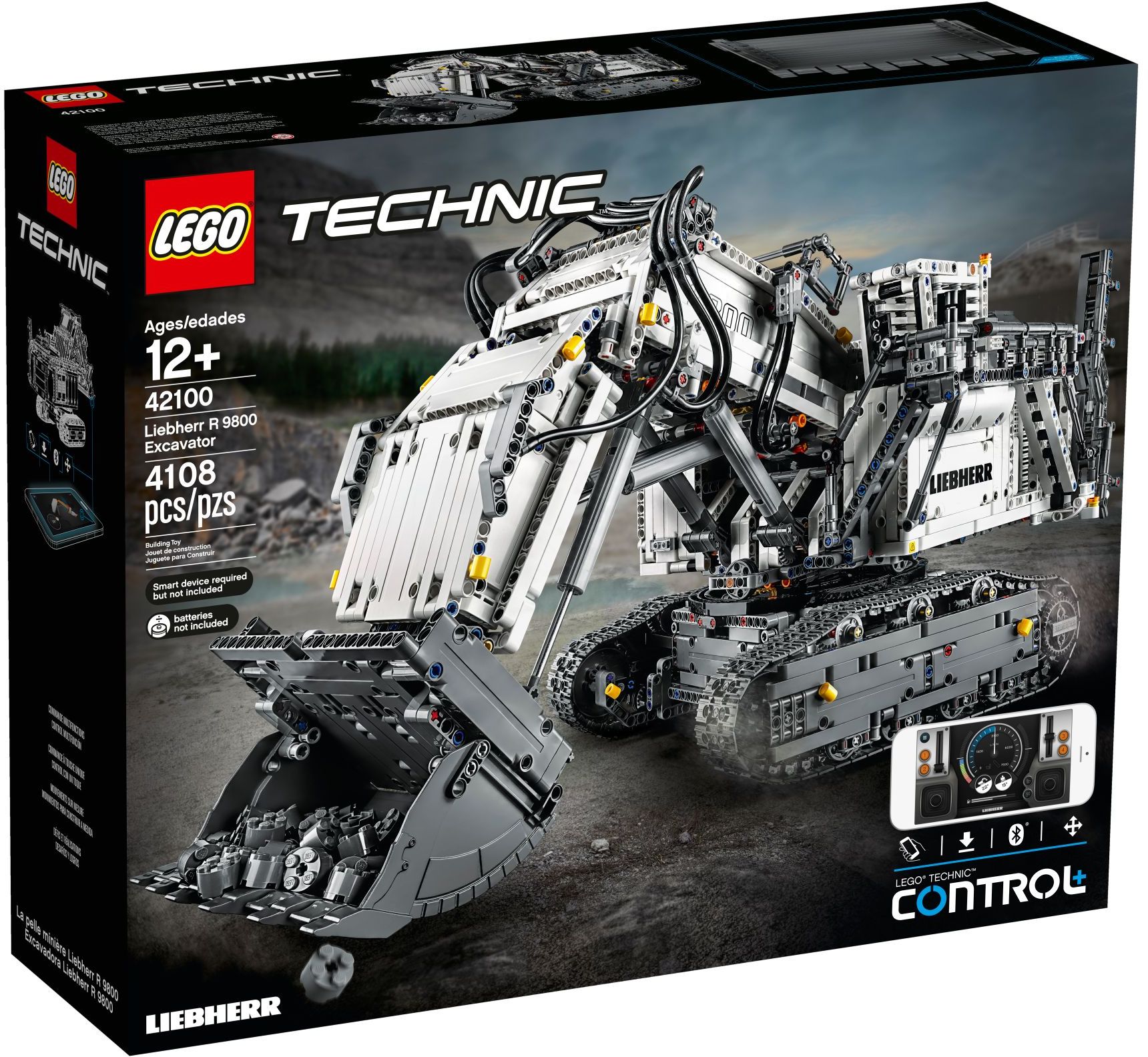
It is the one for you if you want the biggest build in the library and you are happy that the payoff comes at the very end rather than as you go. The build is long, orderly and almost never repetitive, but nothing moves until the batteries are in and the app has calibrated, and that suits some people and frustrates others. Allow two weekends, keep a phone or tablet with room for the app, put twelve AAs on the list, and give the wires more care than the book does. If you want a big machine where you can turn things as you build, the Rough Terrain Crane (42082) is the alternative, and the reviewer rated its drivetrain above this one.
If you like this one, try
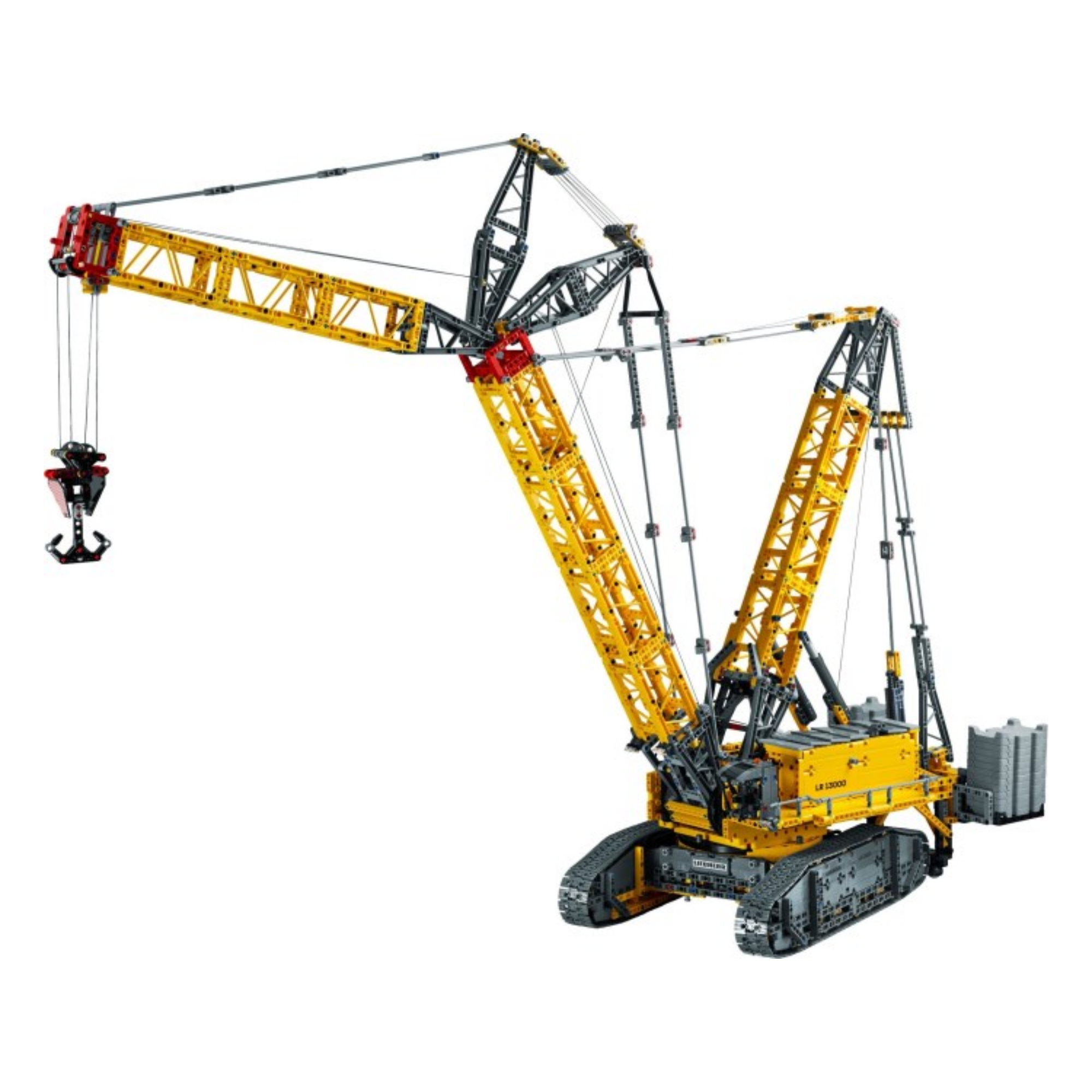
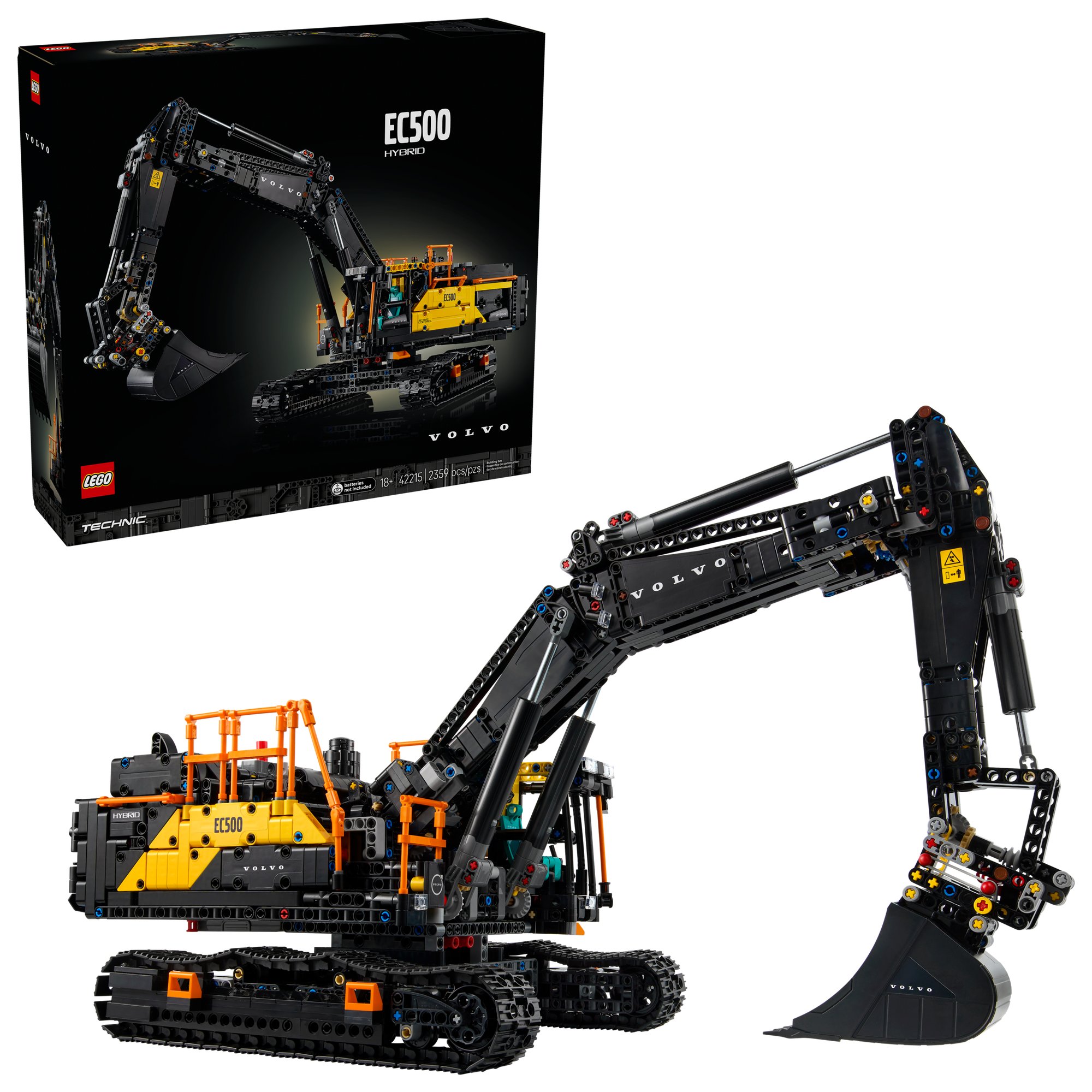
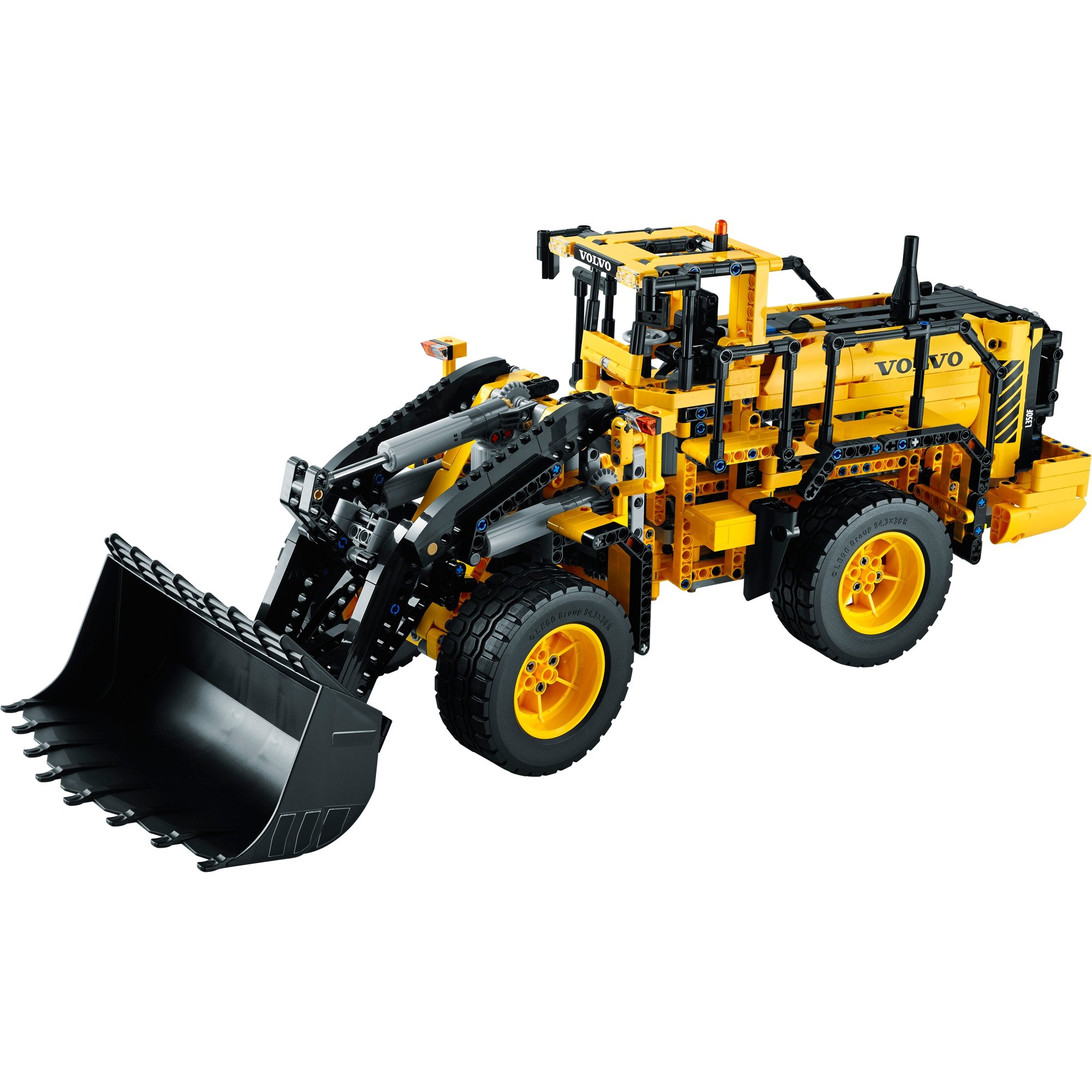
The other big construction machines in the library. The Cat D11 and the LR 13000 are the later Control+ giants; the Volvo EC500 is the newer excavator at a smaller scale; the L350F is the older Power Functions loader you drive with a handset.

The Liebherr R 9800 Excavator is in the library
Technic Fan gets up to 6 kits a year, Master Builder up to 12. Delivery both ways is included and the prepaid return label is in the box.