

Porsche 911 RSR (42096): the Porsche without the gearbox
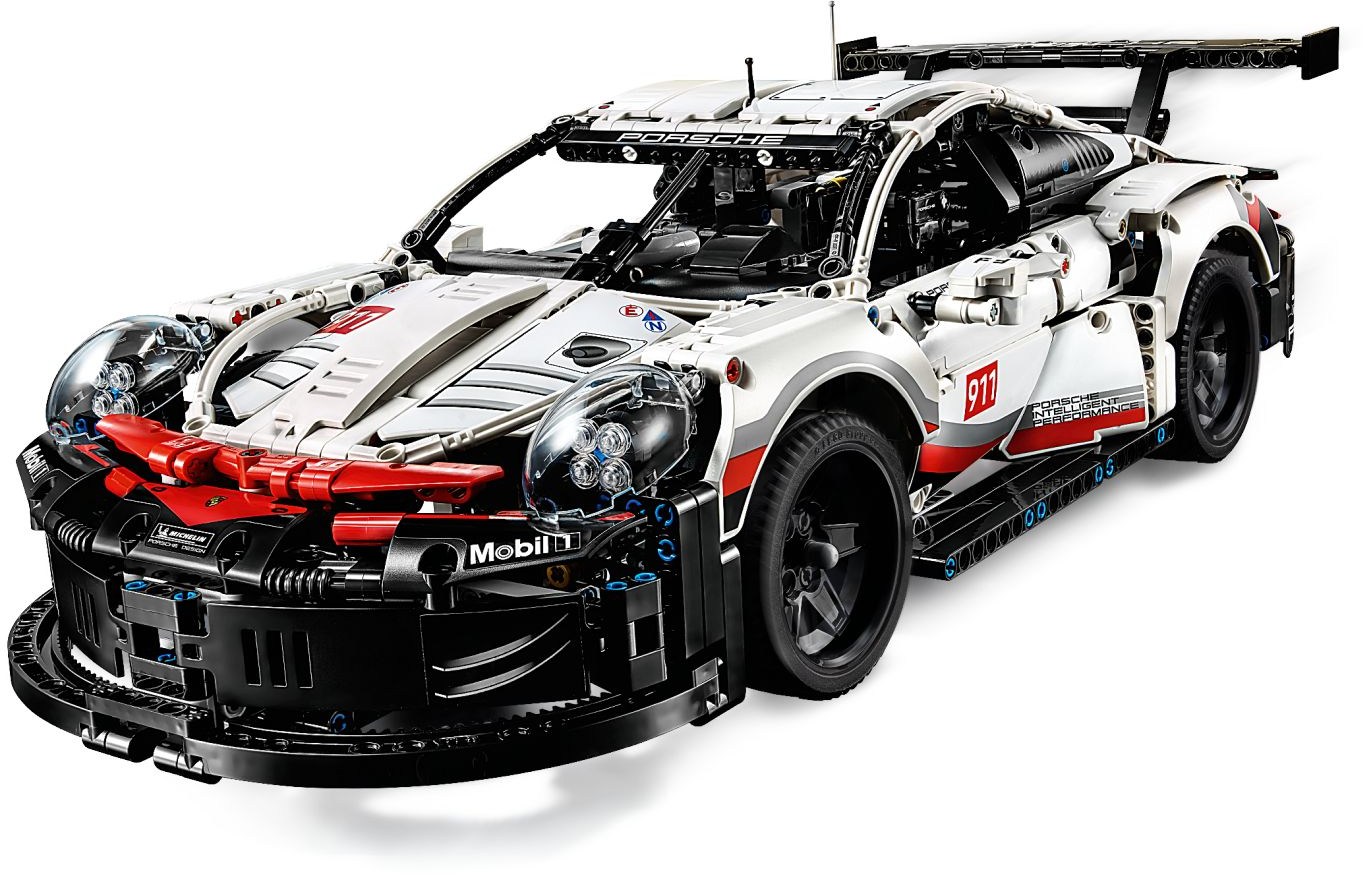
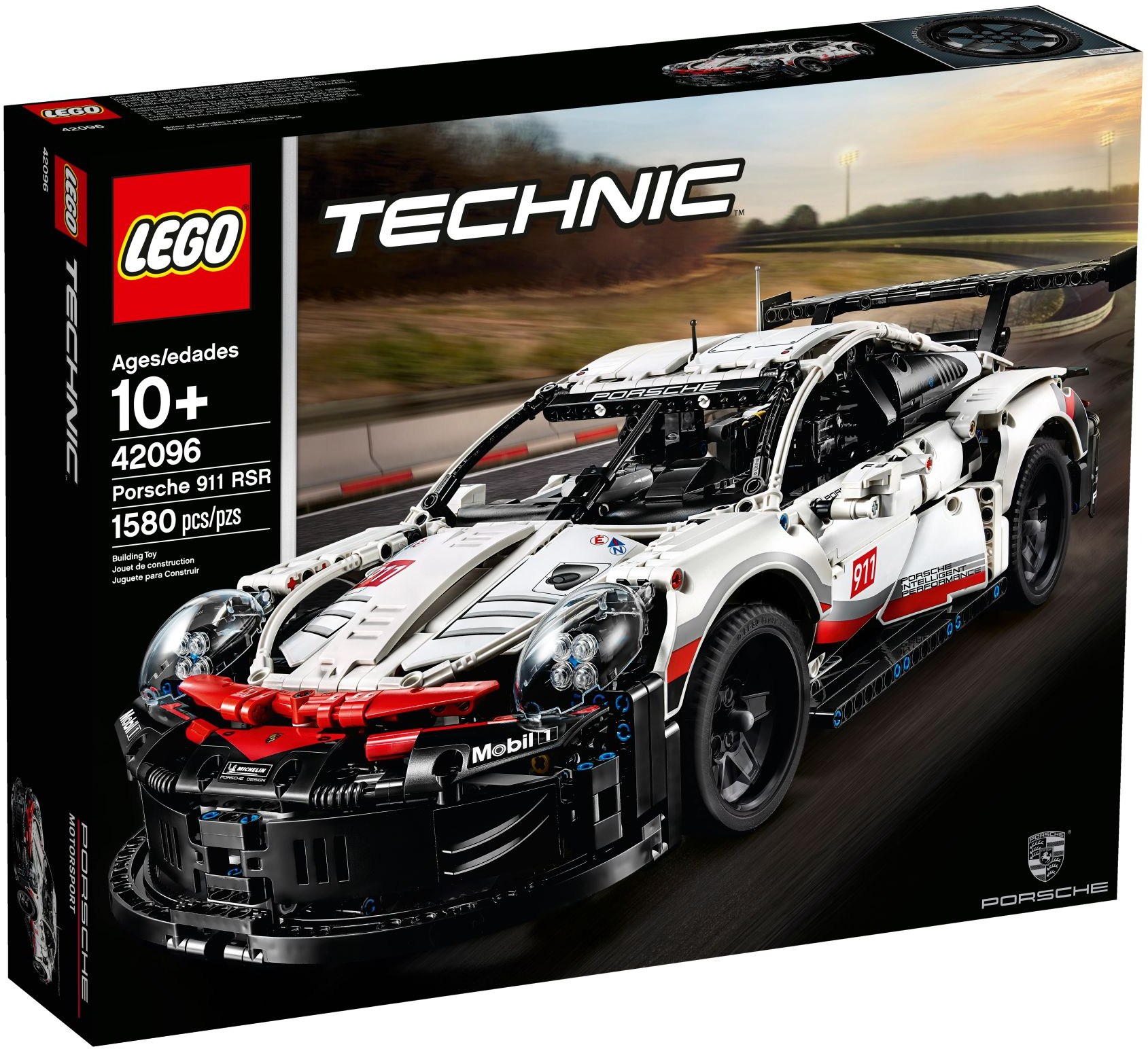
There are no numbered bags. Thirteen bags, 1,580 pieces, a 503-step book, and nothing printed on the bags to tell you which one to open first. That is the first thing to know about the 911 RSR, and it shapes the whole first evening. The second is what it is: a 50 cm Le Mans Porsche in white, black and red, with a flat six turning behind the seat, double wishbones at every corner, and no gearbox at all. It arrived three years after the 911 GT3 RS (42056) at about half the price, and it is the smaller, lighter, quicker build of the two.
It is in the Brick Club library, and a member has built it and sent two photos. Below is what it does, how the build runs when the bags do not tell you, and the places to slow down.

Why this one matters
This is a standard Technic set that happens to wear a Porsche badge. The Brothers Brick put it plainly: it is not the luxury experience of the GT3 RS or the Bugatti Chiron (42083). No inner boxes, no history section in the book, no podcast, and packaging that matches the rest of the 2019 Technic range. What you get is the car for about half the price of those two, and the saving is in the drivetrain. The GT3 RS is 1,100 pieces bigger, almost all of it gearbox, and without one the RSR weighs more than 45 percent less (2.9 lb against 5.3 lb). The two are different scales as well. Brickset lists the RRP at £169.99; The Brothers Brick quoted £139.99 in the UK at launch, and the two sources do not agree.
The other reason people wanted it was the colour. The Technic range of the time was orange, azure and lime, and here was a big model in black, white and red. There are no new moulds. The red tow ball pins are a new colour that sits out of sight, and the curved gear rack turns up in black for only the second time. The only printed parts are the four white wheel arch panels, the piece the orange GT3 RS introduced, each printed differently so the stripes line up. Most of the other large panels take a sticker, from two very large sheets, and one roof sticker is plain white on a white panel.
One fact worth knowing before you build the engine: the real RSR is the first mid-engined 911. The flat six sits forward of the rear suspension rather than behind it, and the model follows the real car, so the engine goes into the frame ahead of the rear axle rather than hanging out the back. The book ends with a spread setting the model against the real car, and the match is closer than the curved page makes it look. LEGO later did the same idea in red with the Ferrari 488 GTE (42125), also in the library, and the two make a natural pair.
What it actually does
Everything here is worked by hand. There are no motors and no gearbox, so the list is short: steering, suspension, the pistons, and the panels that open. The Brothers Brick review is the only full build write-up we hold; their launch news piece, a Brick Fan sale note and Brickset supply numbers, not build experience.
Roll the car and the rear wheels turn the differential, which drives the six pistons through minimal gearing, with nothing in between. The engine is built in the traditional Technic way, a design that has barely changed in thirty years, and it goes in as one unit, slotted into the frame and mated to the differential. Once the body is on you see it by lifting the engine cover, where the pistons sit exposed.
Steering is from the wheel in the cockpit, a plain rack and pinion. There is a lot of slack: about 45 degrees at the wheel before the front tyres start to turn. That is how it left the factory, not a build error, so do not take the nose apart looking for it. The wheel itself is mounted a little high, and The Brothers Brick thought it deserved a better design.
Both ends run double wishbones. The rear pair goes on first, around the differential, and the front pair follows on the base frame. It is one of the tried-and-true designs the review had little to complain about: nicely done, nothing new.
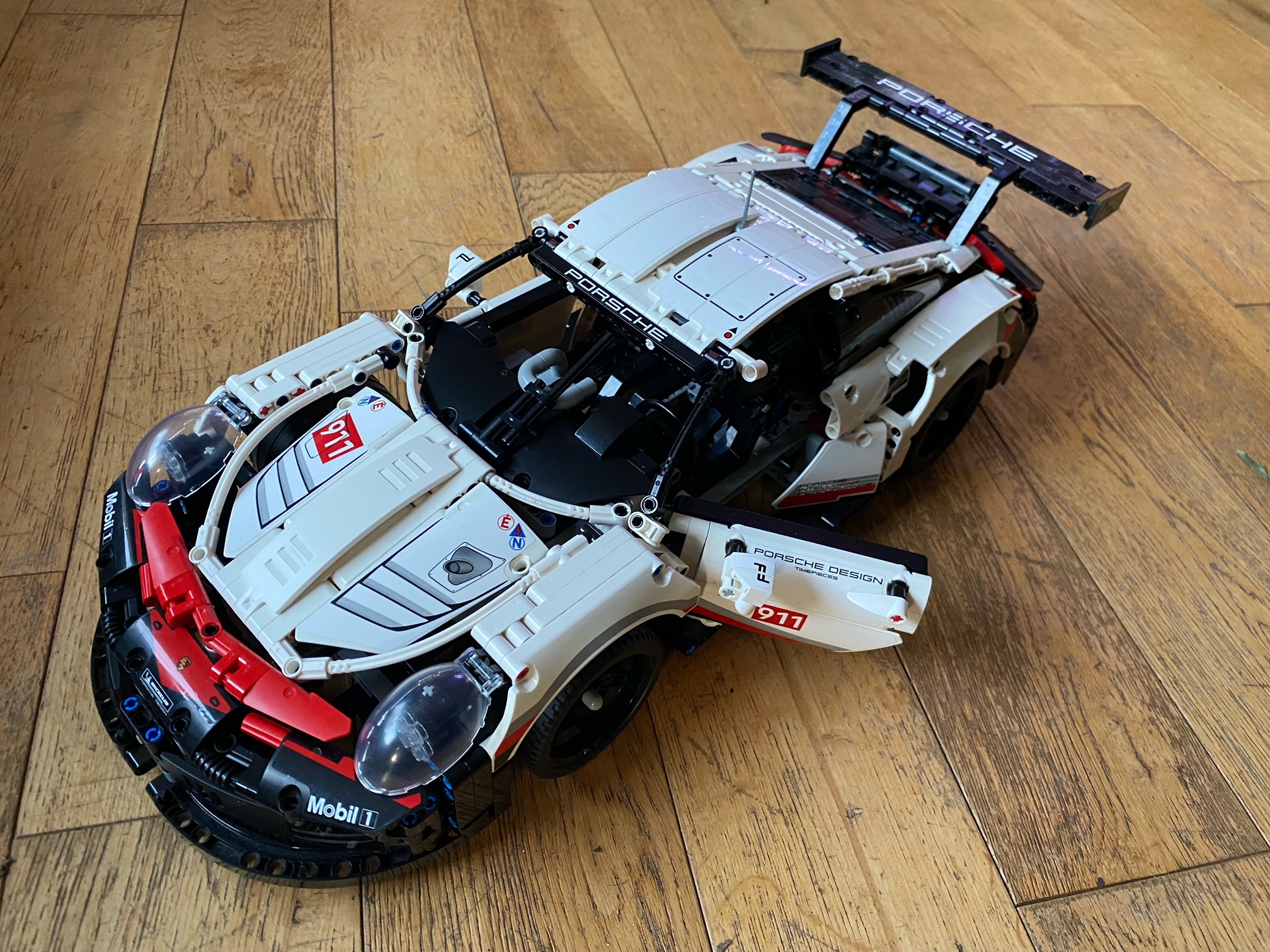
Both doors open, and so does the engine cover. The front hood does not. Inside is one rigid seat built from studless beams, a small map of the Laguna Seca circuit on the driver’s door, a centre console full of brightly coloured buttons, and a small radar screen above it. There is nothing behind the steering wheel. On the other side, where a passenger would be, wires and fuses are stickered on tiles with studs showing between them, plus a long red cylinder meant to be a fire extinguisher. The Brothers Brick called that side frankly hideous. It is the weakest part of the set, and it is hidden once the door is shut.
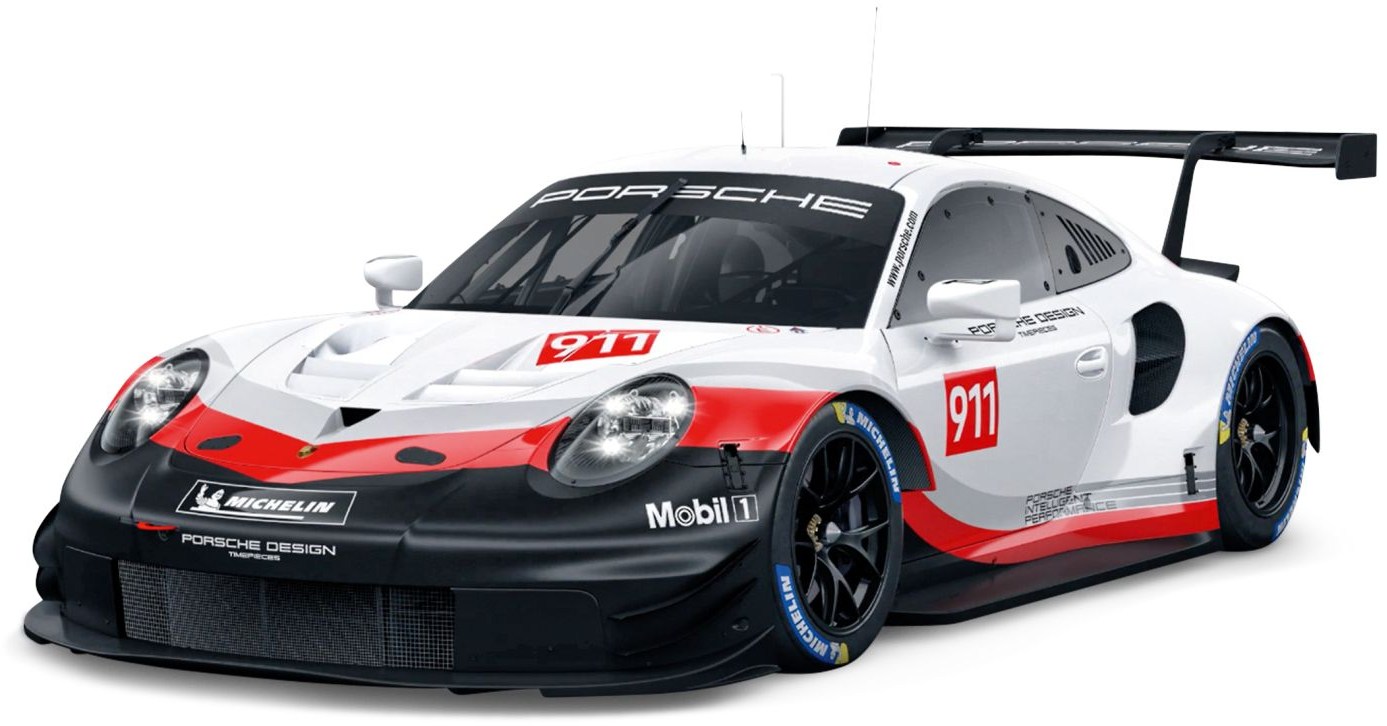
The wing sits on swan neck mounts, the posts that come down onto it from above as on the real car, and the top face carries the PORSCHE lettering on a sticker. Under it, the rear diffuser is an elaborate stack of black fins, the best-looking piece of the exterior. Nothing here moves. The single wiper is the bar down the centre of the windscreen, parked upright, and it is easy to miss what it is meant to be.
How the build goes
Thirteen bags, none of them numbered, a sealed bag with the book and the two sticker sheets, and the four tyres loose in the box. The Brothers Brick’s build ran through 503 steps and they say to allow a good few hours. We would call it two evenings, the first of them partly sorting.
Sort before you build
With no bag numbers you cannot open one bag at a time and trust it. The Brothers Brick tipped each bag into three large sorting trays and filtered the parts down by type. Do the same, or the hunt for parts takes longer than the building.
Rear axle, then the base frame
The rear differential and its double wishbones come first. Then the base frame and the front suspension, also double wishbones. Nothing new here, in the review’s words: nicely designed, without much innovation. Spin the differential by hand before the frame closes around it.
The flat six
The engine is built as a unit, six pistons in the traditional Technic style, then slotted into the frame and mated to the differential with minimal gearing. This is the place to test: turn the rear wheels and every piston should move before anything else is built around it.
Bumpers, steering and seat
The frame is extended front and back to carry both bumpers, then the steering and the seat go in. It still does not look like a car at this point; the review says as much. Turn the wheel here and you will feel the 45 degrees of slack straight away.
Panels and stickers
Everything from here is cladding: the white panels, the printed arches, the black diffuser, the wing. Most of the larger panels take a sticker, so have the sheets flat beside you and apply each one with the panel off the car where you can. The Brothers Brick found a mistake in the printed instructions on page 174 and did not say what it was, so read that page twice when you reach it, whichever stage it turns out to be.
One reviewer built it and wrote it up, and one member has built it for us. These are the points to slow down for.
- No numbered bags. Thirteen bags and 1,580 pieces with no order to them. Sort first. The Brothers Brick said flatly that this is not acceptable in a new set of this size.
- Page 174. The Brothers Brick found a mistake in the printed instructions there and did not say what it was. Check that page against the pictures around it before you trust it.
- The steering slack is built in. About 45 degrees at the wheel before the tyres move. Do not strip the front end to cure it.
- Stickers on white, and a white sticker. Two very large sheets. One roof sticker is plain white on a white panel, there only to hide some texture; it still needs to sit straight. The silver on top of the splitter and the lettering on the wing are stickers too.
- Lift it from underneath. The roof is not structural and there is no way to lift the car by it. Two hands under the car, and mind the two antennas on the roof, one of which is a rapier.
On the shelf
It is 50 cm long, 20 cm wide and 13 cm high, which is 7 cm shorter, 5 cm narrower and 4 cm lower than the GT3 RS, so it fits a shelf the bigger Porsche does not. White, black and red photograph well in any light. The headlight banks stick out a little more than on the real car, which reads fine from the front and less so in profile.
If you have the GT3 RS as well, the scales do not match, and The Brothers Brick found that a shame. Next to the Chiron the pair look terrific even with the scales mixed.

A member built it
Two photos from a member, on a wooden floor in daylight, both from the front. The diary is linked under each picture.
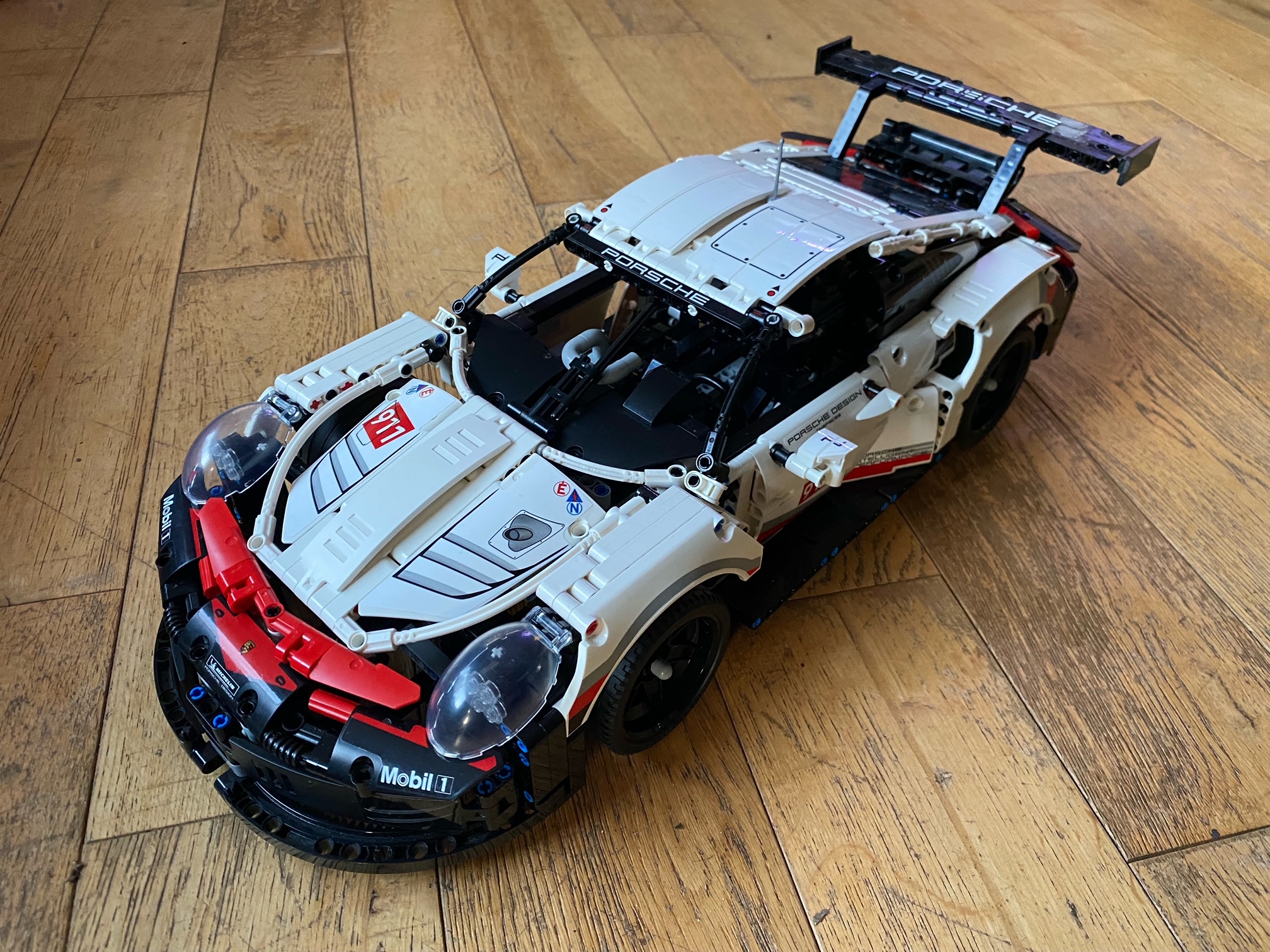
It is the one for you if you want a Le Mans car in an evening or two, with proper suspension and a working engine, and you do not need a gearbox to enjoy a Technic build. It suits a member who has done the GT3 RS and wants the race version, or one who does not fancy the extra 1,100 pieces of the GT3 RS. Sort the bags first, test the pistons before the bumpers go on, read page 174 twice, and lift it from underneath. If the passenger side of the cockpit bothers you, shut the door.
If you like this one, try
The GT3 RS is the road car this one was developed from, at the bigger scale and with the gearbox. The Ferrari 488 GTE is the sister endurance racer. The GT4 e-Performance is the newest Porsche in the library, and the Peugeot is the other Le Mans car.

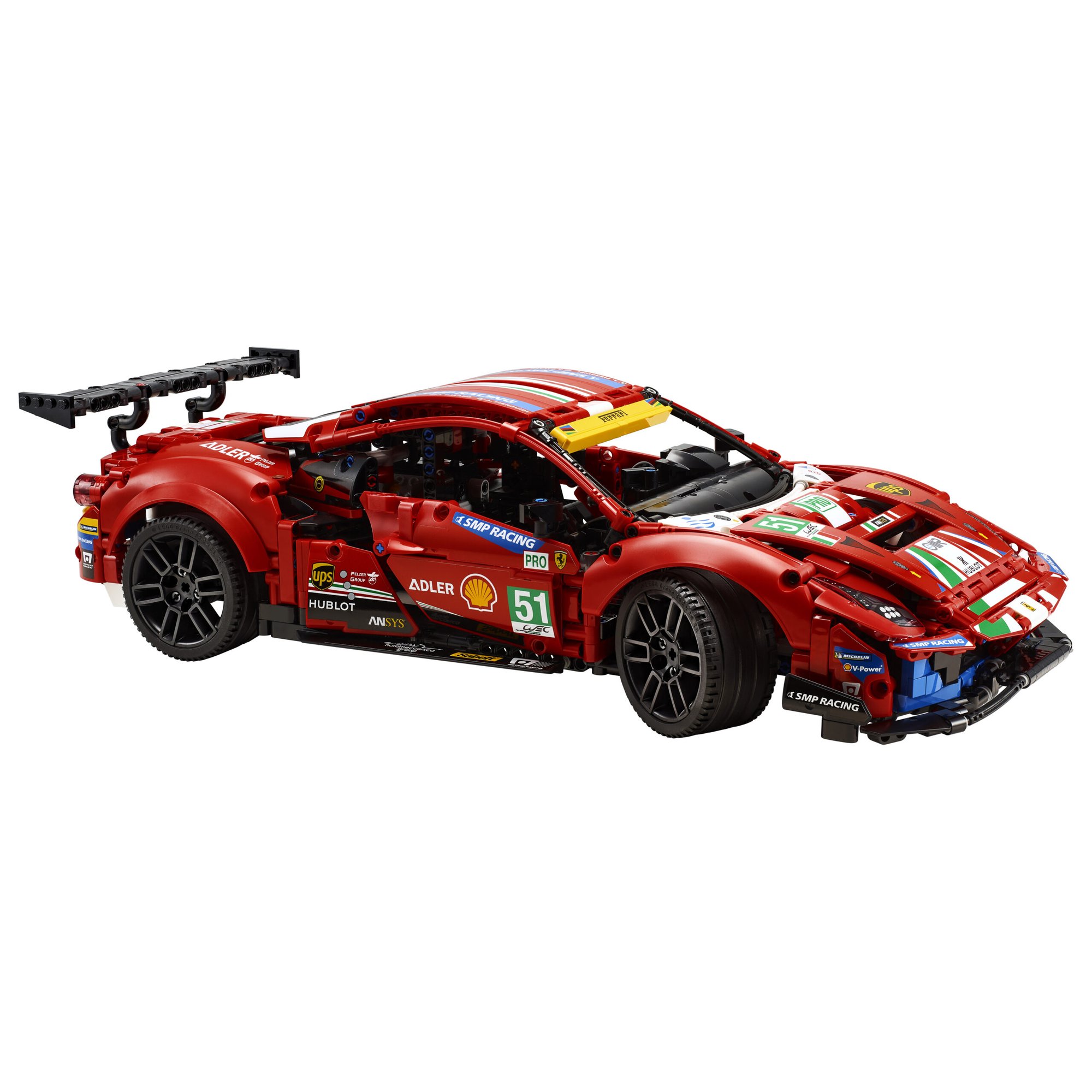


The Porsche 911 RSR is in the library
Technic Fan gets up to 6 kits a year, Master Builder up to 12. Delivery both ways is included and the prepaid return label is in the box.