
One of our Master Builders, Hilton, invited me over to photograph his LEGO Technic collection properly. Not a photo shared on the Facebook group. The actual thing. I drove over one Sunday in 2021 and spent a couple of hours going through six builds he has had on permanent display.
He has a dedicated display space. LED strip lighting across the top edges, white backdrop, every model built and left out on show. Six kits, six different eras of LEGO Technic, all in the same room. Here is what the collection looks like.




The orange one. If you know the 42056, you know why that is all it needs as a description. It came out in 2016 and at the time was the most detailed road car LEGO had built. The PDK transmission actually works. You can shift it. Side-on is the right angle for this model and Hilton has it displayed exactly that way, in a lightbox with LED strips along the top edge.
2,704 pieces and every one counts. The lower bodywork profile and the real proportions of the car are the things that hold up years later. I still think the orange is the correct colour for this set.
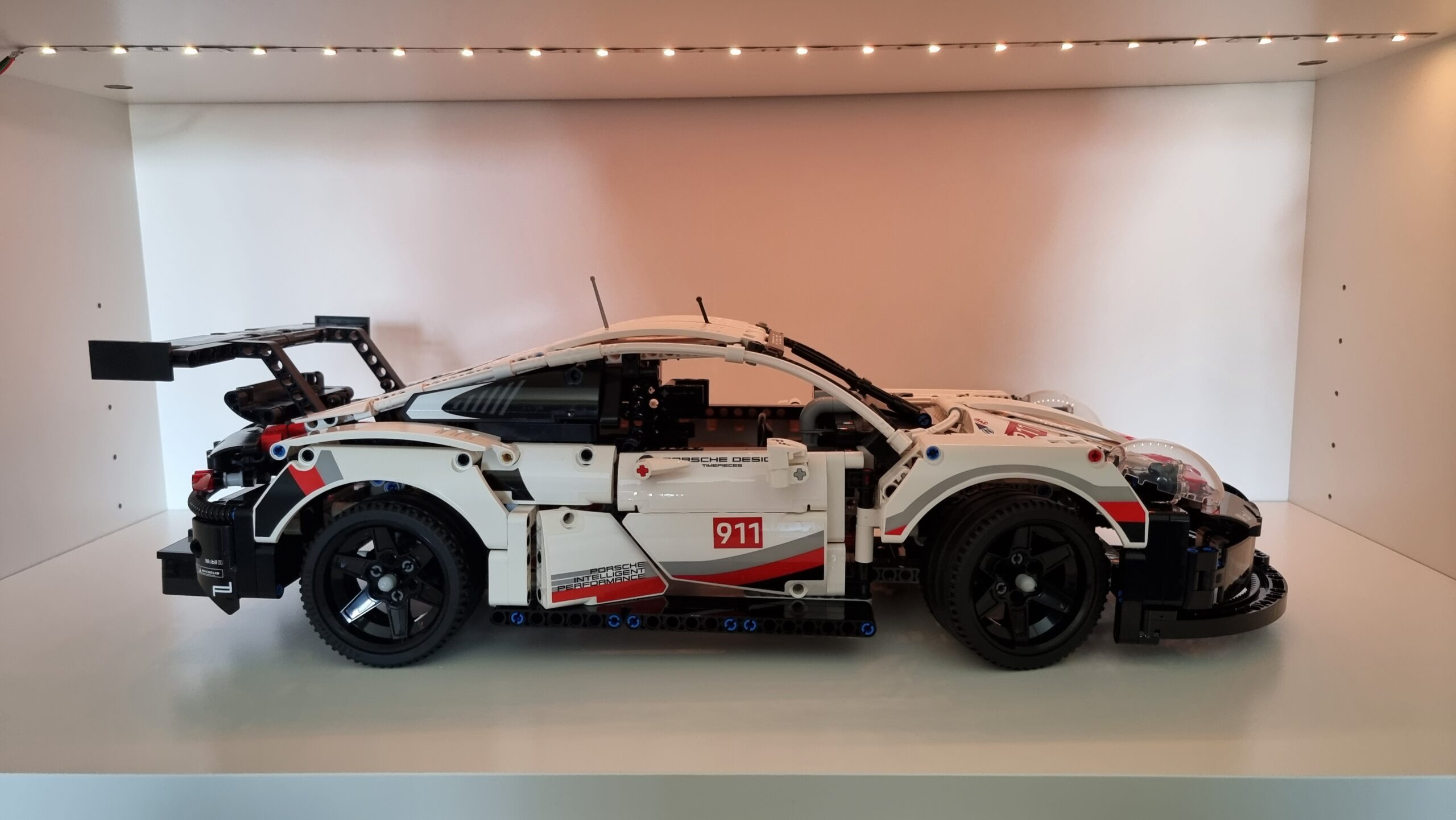
The race version. White with the Le Mans livery, Mobil 1 sponsor graphics, and the flat-6 engine visible when you open the bonnet. Having both Porsches in the same collection is a proper statement. The contrast between the GT3 RS road car and the full race-spec RSR is genuine. One is built for the road. The other is built to go around Le Mans.
At 1,580 pieces it is the smallest of the six models but the sticker work and the race-car proportions make it feel substantial.
The biggest model in the collection at 3,696 pieces. The gold Lamborghini hub caps are printed, not stickered. Hilton photographed the front wheel dead-on so the Lamborghini badge is centred in the frame. I would have done the same. The lime green with those gold wheels is one of the better colour combinations LEGO have put on a Technic model.
The Sian is also a hybrid in real life. The LEGO model carries that through with a motor layout that reflects the powertrain layout of the actual car.
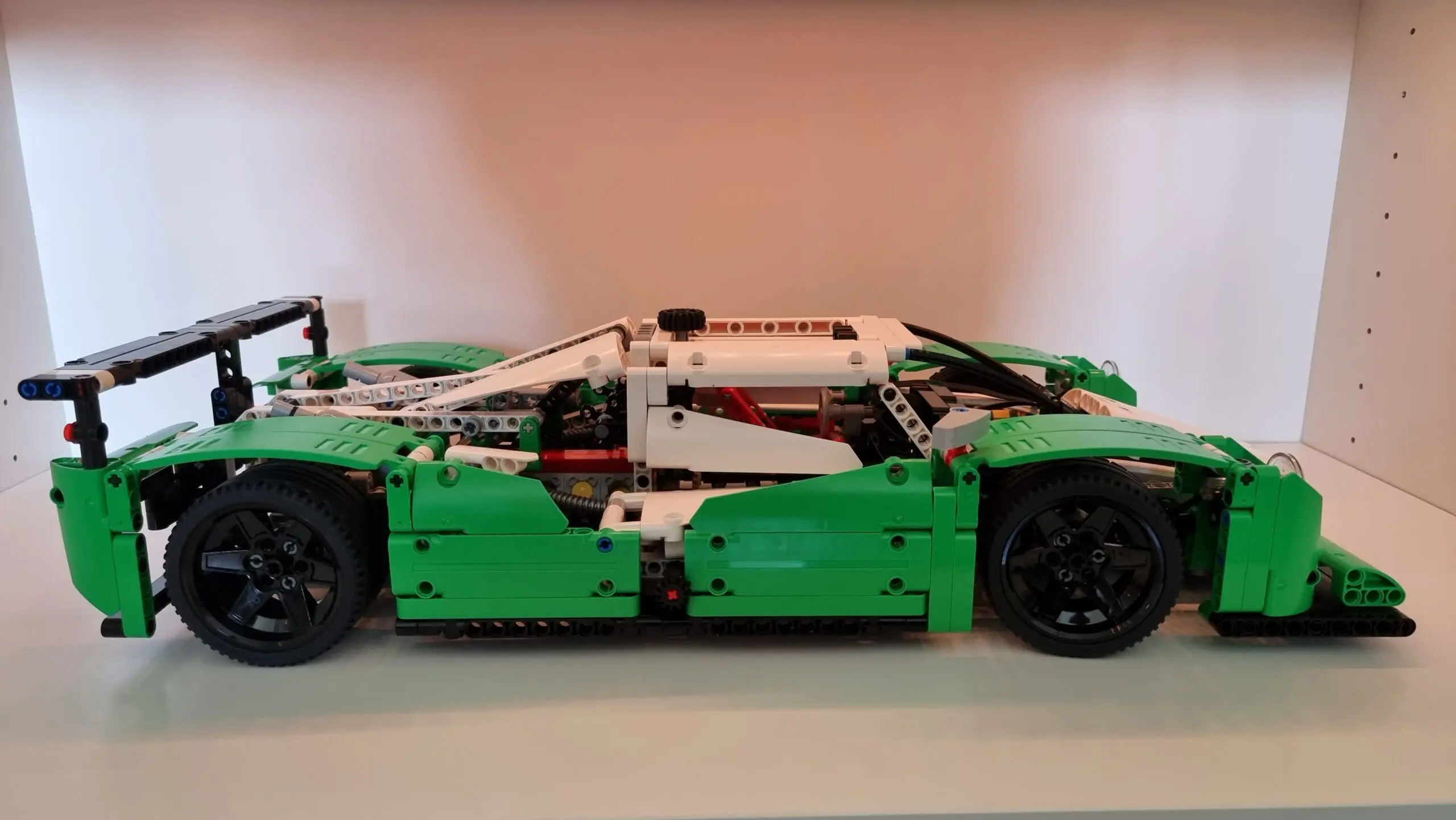
The oldest model after the Ferrari. 2015. A Le Mans prototype in green and white with a big rear wing and absolutely nothing wasted on the exterior. The working sequential gearbox inside is the real reason to build it. It still looks right next to the newer models. The proportions hold up.
This one is also available in the Brick Club library. If you want to build it and send it back, that option is there.
Light blue with a tan interior and a W16 engine layout. I think the 42083 is the best-looking Technic supercar LEGO has made. The tan seats are a detail that should not work at this scale, and they do. Hilton photographed the open chassis so you can see the whole interior layout laid out properly. That photo is worth taking with this model.
3,599 pieces. One of the most involved builds in the library, and one of the most rewarding when it is done.
2007. The oldest set here by eight years and the one that tells you the most about Hilton as a builder. The 8145 is not a model most people keep. You build it, you appreciate it, and most people eventually part it out. He has had this built and on display for years. Grey 5-spoke wheels, red body, V8 under the bonnet. A proper piece of LEGO Technic history.
I would not part it out either.
What stayed with me was not any single model but the fact that all six were built and out. Not in boxes. Not in bins. Sat in a row, all complete. That takes a lot of shelf space and a very understanding household. Six kits, around 14,500 pieces between them.
If you have a Brick Club kit built and on display somewhere, track your build progress and upload photos in your members build account. I want to see what people are doing with these.
Hilton’s display also says something useful about why Brick Club works. Some sets are the sort you want to keep forever. Others are brilliant for the build, then they become large, awkward objects that need dusting. Most of us only have space for a few permanent favourites.
Seeing six major Technic cars together makes that obvious. They look great as a collection, but it takes room, lighting, and commitment. For everyone else, the library gives you the good bit first: allocate, ship, build, return, then move on to the next machine.
Hilton’s display also says something useful about why Brick Club works. Some sets are the sort you want to keep forever. Others are brilliant for the build, then they become large, awkward objects that need dusting. Most of us only have space for a few permanent favourites.
Seeing six major Technic cars together makes that obvious. They look great as a collection, but it takes room, lighting, and commitment. For everyone else, the library gives you the good bit first: allocate, ship, build, return, then move on to the next machine.
The library is open. Pick your subscription.
Technic Fan gets you six kits a year at £17/month with free postage both ways. Master Builder steps it up with more frequent rotations and priority allocation. Both plans include a pre-paid return label, brick separator, and original building instructions.