

Volvo Concept Wheel Loader ZEUX (42081): the loader with no cab
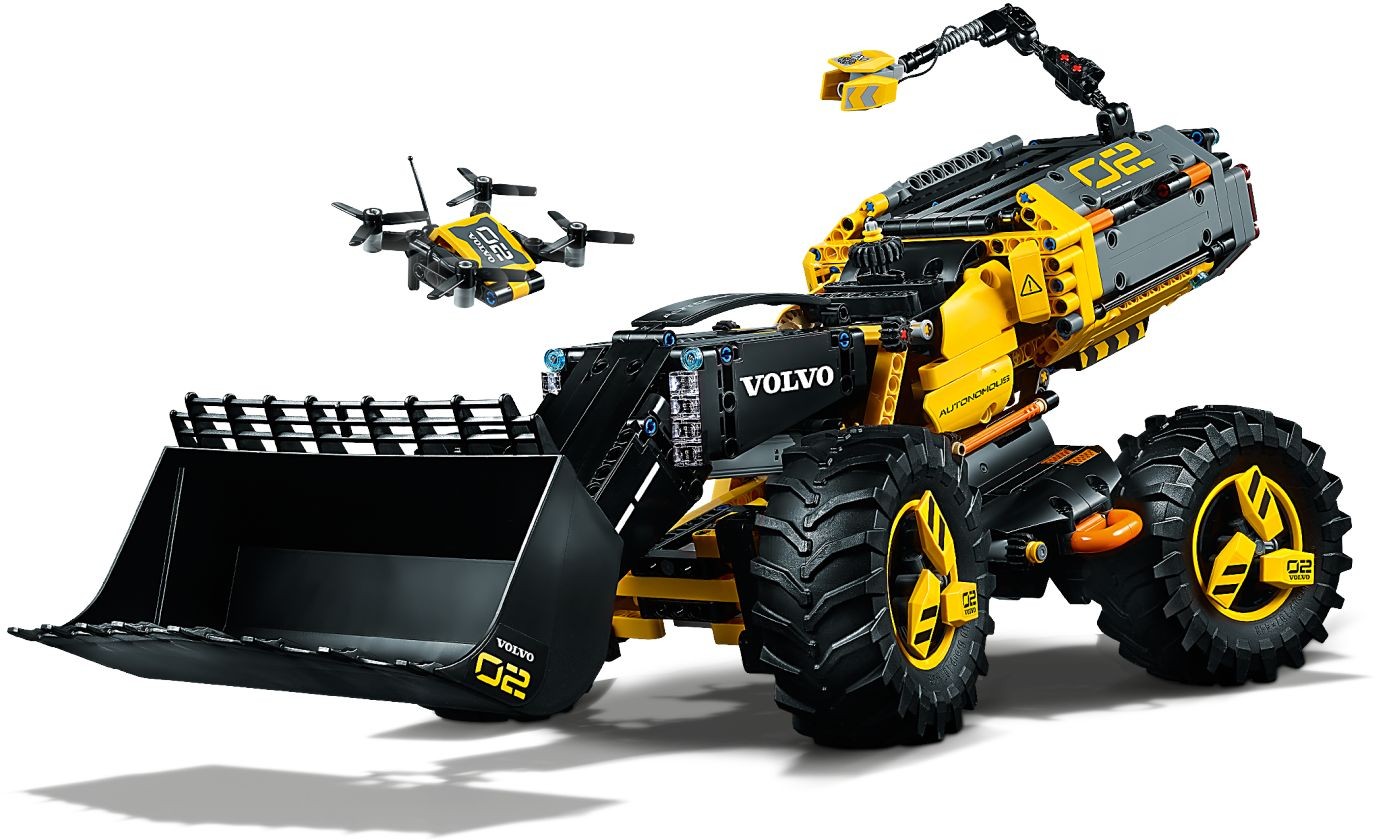
There is no cab on this one. Volvo’s engineers and the Technic design team asked children what a construction machine of the future should be, and the answer was an electric, autonomous loader with a drone for eyes and a battery pack that slides along a rack to act as the counterweight. Volvo built a real one. LEGO turned it into 1,167 parts, five hand-worked functions and one of the strangest shapes in the Technic range.
It is in the Brick Club library. Below is what each gear does, how the build runs when there are no numbered bags to pace you, and where the two reviewers who built it parted company.

Why this one divides people
Two proper reviews exist for this set and they reach opposite verdicts. Adam White at BricksFanz, who had built only a handful of Technic sets, called it his favourite Technic build yet and one of his favourite sets of 2018. Tom Alphin at Brick Architect gave it two stars out of five and the word Acceptable, because the concept did not go deep enough and the price was high for what is in the box. Both are fair, and which side you land on depends on what you want from a big Technic model.
What they agree on is the shape of the build. The parts come in un-numbered bags, which annoyed Adam and shocked Tom in a set this size, and both sorted into trays before starting. The gear train underneath is simple compared with most large Technic sets. Every function is worked from an exposed gear on the outside of the body, and none of them is linked to any other, which Tom counted against it.
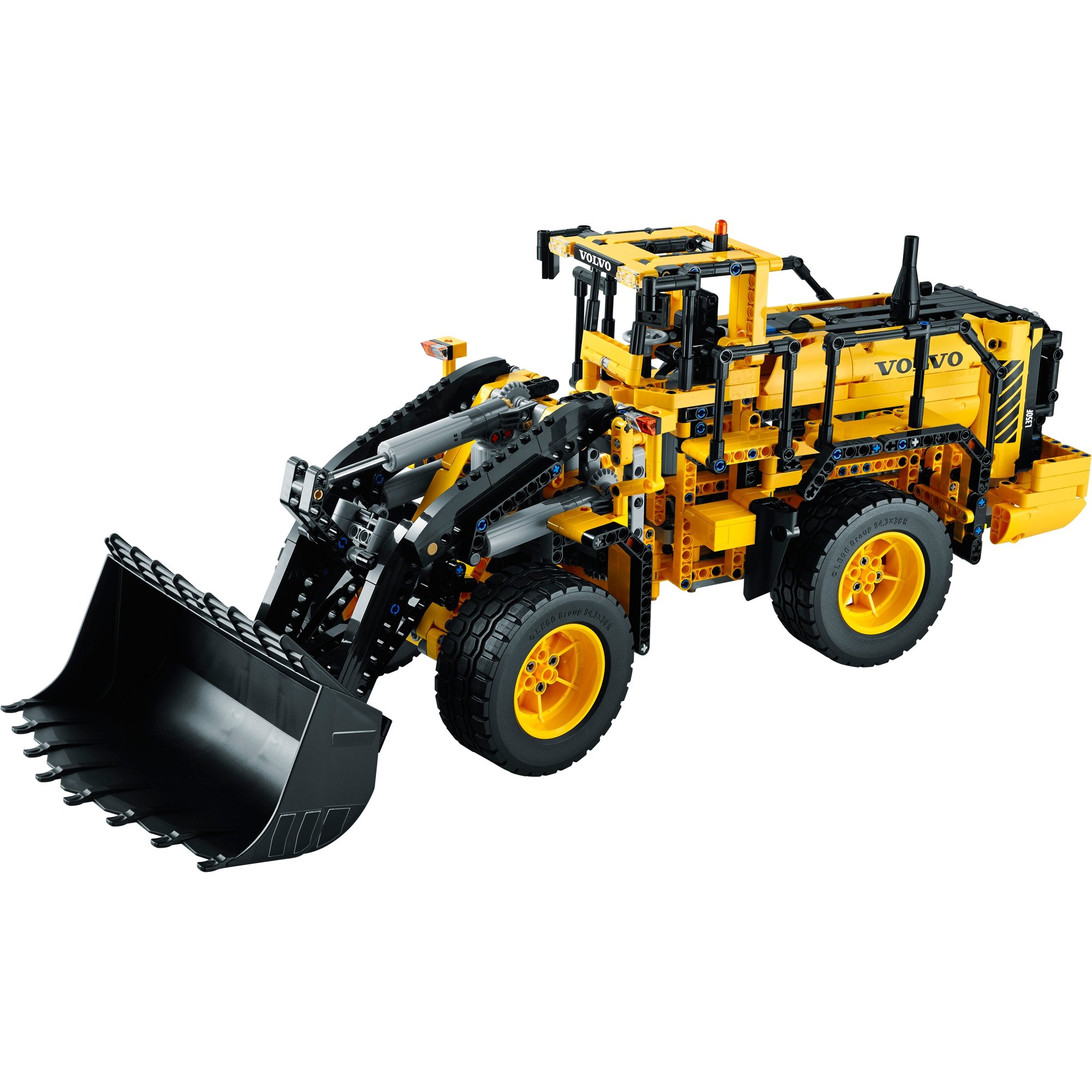
It is the second Volvo wheel loader in Technic. The first, the L350F (42030) from 2014, had 1,636 parts, remote-controlled Power Functions and a far higher price, and it introduced the big digger bucket that this set reuses. Nothing here is a new mould. The two parts in new colours are fifteen small armour plates in yellow and twenty-four 3L axle pins in red. The bucket, 13 by 23 studs, and the four big tractor tyres take a lot of the money, and Tom said they, and the Volvo licence, partly explain a price of 12 US cents a piece.
What it actually does
Five functions, all manual. The box lists them as steering, shovel angle, arm angle, torso bend and counterbalance position. There are no motors and no pneumatics, and both reviewers said they missed Power Functions.
The gear on top of the body turns an axle that runs the length of the vehicle. At each end it drives a gear that pushes the wheels left and right, so the front and rear axles steer together, linked through a universal joint where the body bends. It works, but the model is heavy on those tyres and there is a fair amount of friction in the system. One warning that is easy to forget: do not pick the model up by this gear. Tom tried, and the gear and its axle came away.
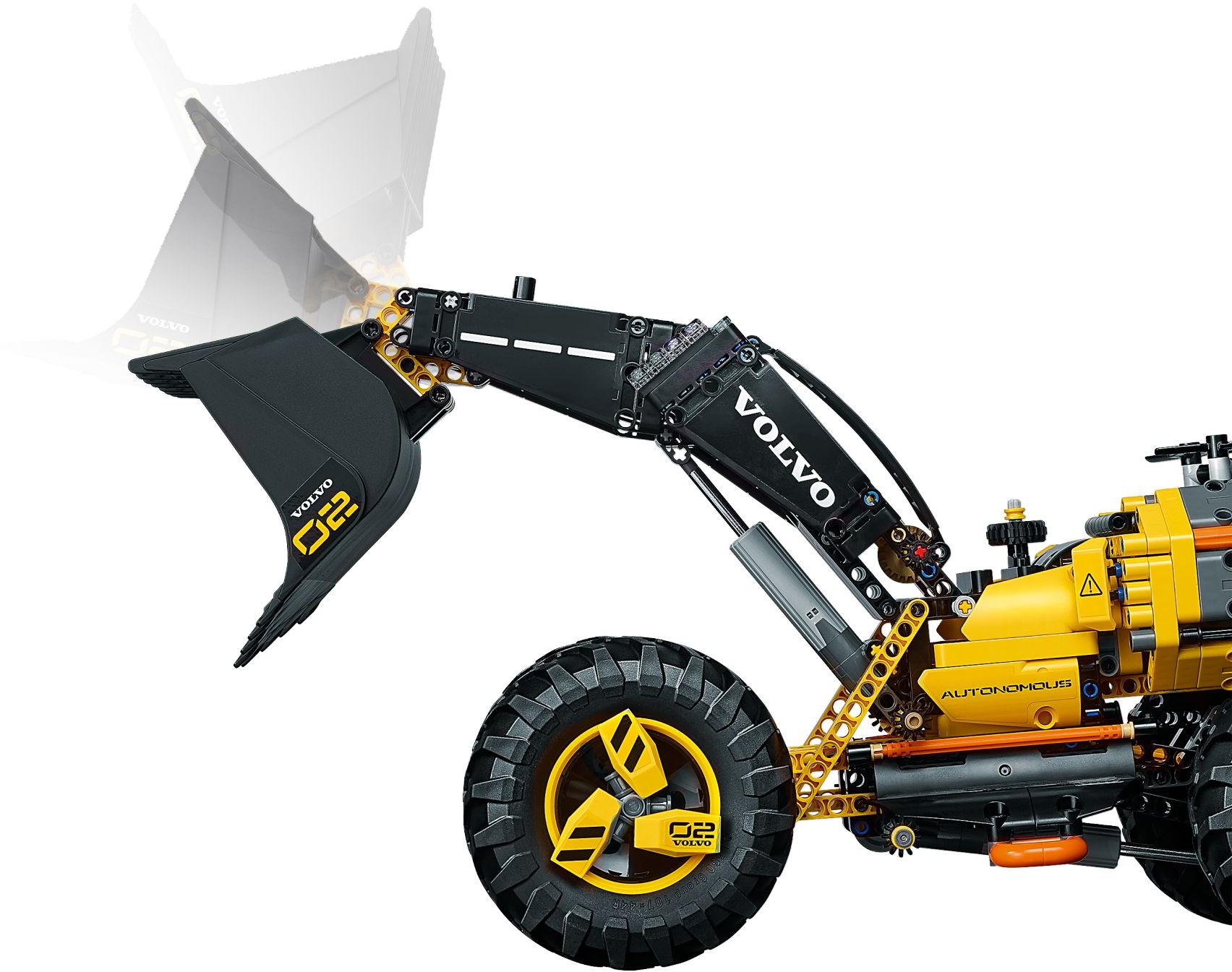
Three gears sit in a stack on the side of the body. The top one angles the bucket through a linear actuator. The travel is not even: the bucket moves quickly as it reaches the top and slowly near the bottom, which is the geometry of the linkage and not a fault in your build. The bucket itself is the element the L350F introduced in 2014, and the stickers for it and the arm sit on large flat surfaces, so they go on without a fight.
The middle gear raises and lowers the whole arm, again through a linear actuator, and Tom found it turned smoothly across the full range. Arm and bucket can be worked together or one at a time, so you can lift the arm clear of an obstacle with the bucket held where it was. The arm is clad in Technic panels with a few System parts for the lights,
The reviewers do not even agree on what to call this one. The box and Tom call it torso bend; Adam calls it suspension. Turn the bottom gear and the body flexes between the front and rear wheels, so the whole machine sits longer and lower, or higher and shorter, and the clearance between the axles changes. Adam’s video of it is the one worth watching. What it is for is less clear, because it is not linked to the counterweight or the bucket, so you decide when a real machine would do it.
The rear section is the battery pack on the real machine and the counterweight on both. A gear on the back turns a worm gear, and the whole rear block moves backwards and forwards along a toothed rack. Extended, the model is 59 cm long; retracted, 51 cm. Under flaps on each side of the block are stickered panels standing in for the battery cells. Tom would have liked it to move on its own as the bucket loads, and that would have made the concept clearer, but as a hand function it is solid and the change in the model’s proportions is large.
The quadcopter sits in a cradle on the rear deck on a pair of Technic pins and lifts off in the hand. Its antenna is a musketeer’s sword, which is the kind of part use that makes Technic builders smile. Tom did point out that with the arm-mounted camera in the way it is hard to see how the real drone would ever take off. There is nothing mechanical to it. It is scenery, but good scenery.
How the build goes
The bags are not numbered, so the stages below are the natural breaks in the build rather than anything printed on a bag. Neither reviewer gave a build time. Our estimate is two evenings, with the sorting done before the first one.
Sort, then the central section
Tip the bags into trays before you start. Both reviewers did, and Tom still lost several minutes at a time hunting for a part. The central section comes first: the steering linkage with its universal joint, and the joint that lets the body bend for clearance. This is where the gear train lives and it is not complicated.
Front and rear assemblies
The front and rear halves attach to the centre and the long steering axle runs through. Tom found this a simple mechanical design that did not take long. Turn the top gear now and check both ends swing before anything covers them.
Arm and bucket
The lifting arm, its linear actuators and the bucket. Technic panels and a few System parts for the lights go on here, along with the arm and bucket stickers. This is the point where it starts to look like the picture on the box.
The counterweight
The rear block is built separately from the main body and there is a surprising amount in it: the worm drive, the rack, the battery flaps and the drone cradle, most of it hidden once the panels go on. Adam was struck by how much building it holds. Tom called it the least interesting section of the build and felt it was over-built for what it does. Either way it is the slow section, so do it while you are fresh rather than at the end of the night.
Wheels and yellow guards
Tyres onto the rims, then the angular yellow wheel protectors. They do nothing mechanically. Tom still called them the most compelling design element in the vehicle, and he is right: they are what make the finished model read as a Volvo concept rather than a black Technic chassis on big tyres.
No member has written this one up yet, so these points come from the two reviews.
- No numbered bags. Sort into trays first. Both reviewers did, and Tom still spent several minutes looking for the right part more than once.
- Never lift it by the steering gear. The gear and its axle pop off. Pick it up under the body, front and rear.
- Steering is heavy. The weight of the model on four tractor tyres puts friction into the steering, so the roof gear takes some effort. It is not a build fault.
- The bucket speeds up at the top. It moves fast near the top of its travel and slowly at the bottom. That is the geometry, not a slipped gear.
- The counterweight block hides its works. The worm gear and rack end up behind panels with a lot of other parts. Run the rear gear through its full travel before the panels close it in.
On the shelf
Finished, it is about 59 cm long with the counterweight out and 51 cm with it in, 21 cm wide and 18 cm high, so it takes a full shelf and it is worth leaving room behind for the block to slide. The colours are the classic Volvo black and yellow with a grey rear deck, and the yellow wheel guards and the 02 markings carry the look. It is a surprisingly big model for the piece count, mostly because of the bucket and the tyres.
It displays best with the arm raised, the counterweight extended and the drone on its cradle. The camera stalk at the back is the tallest point on the model, so mind it when the set goes back in the box.
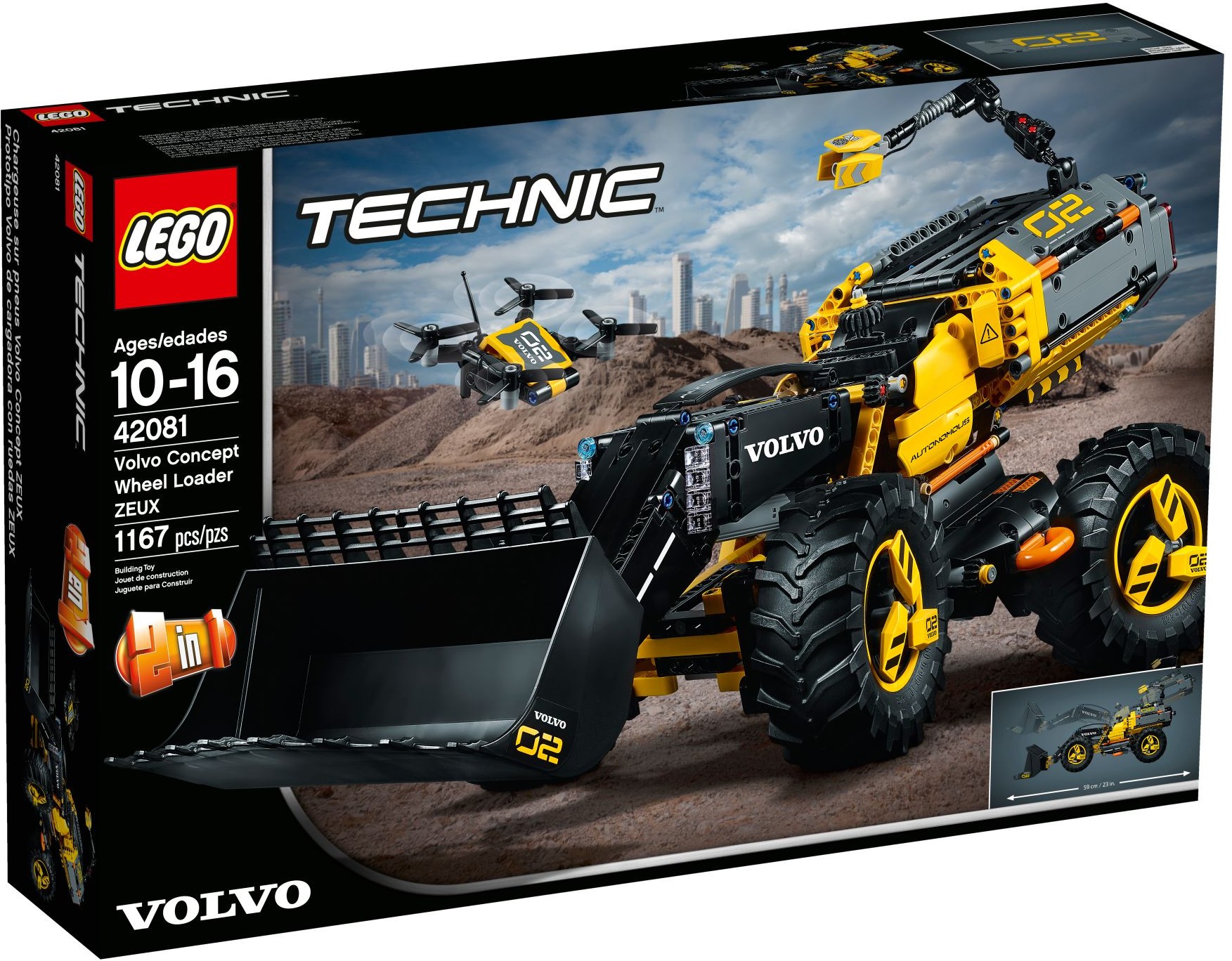
This is the one for you if you want a big, unfussy build with functions you can see working, or if you are curious about where Technic and Volvo were pointing in 2018. Skip it if what you want is a gearbox. Allow two evenings, sort the bags first, and build the counterweight block while you are fresh. If it lands with you and you find yourself on Tom’s side of the argument, the L350F (42030) is the Volvo loader with the motors.
If you like this one, try
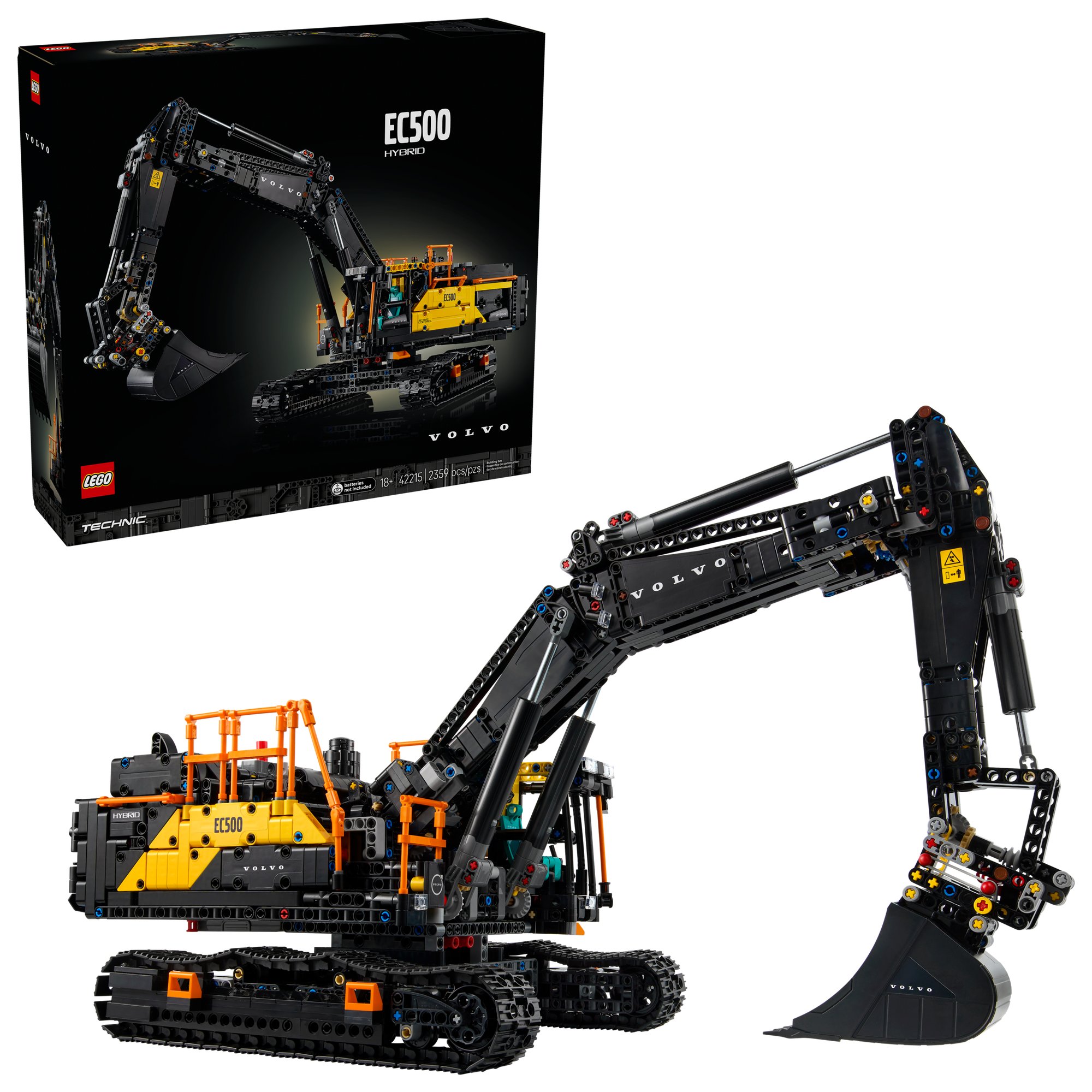
The other loaders and diggers in the library. The L350F is the ZEUX’s predecessor and the one with the motors, the EC500 is the current Volvo, and the forklift is the set Brick Architect pointed its readers to next.


The Volvo Concept Wheel Loader ZEUX is in the library
Technic Fan gets up to 6 kits a year, Master Builder up to 12. Delivery both ways is included and the prepaid return label is in the box.