

If cars are your thing, this is a good library to be in. Roughly a third of it is supercars, race cars and road cars, and you will work through a fair few of them over a year.
What you cannot do is pick which one turns up. So rather than a shopping list, here is what is actually in the pool, sorted by the kind of fortnight each group will give you. When a box lands you will know within about ten seconds which of these three you are in for.



The flagships
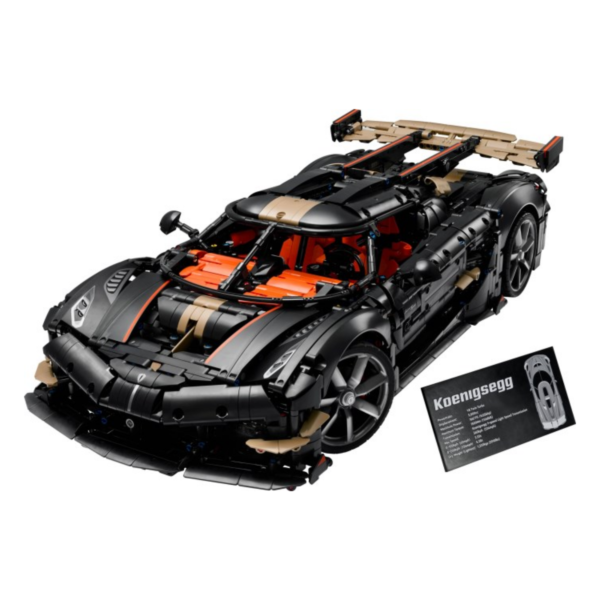
All four of these are 1:8 scale, all four are between 3,700 and 4,100 pieces, and all four will take over a surface for a couple of weeks. They are the reason a lot of people join.
They are also more alike than they look. Each one is built around a gearbox that goes in early and disappears under bodywork by the end, so the single most useful habit across all four is the same: change through every gear and turn the engine over by hand before the panels close. Five minutes then saves an evening later.
The differences are in character. The Koenigsegg is the biggest and the newest, with a nine-speed and that black and gold finish over an exposed orange engine bay. The McLaren P1 has the tidiest assembly order of the four, being the most recent design of the older group, and its dihedral doors are a proper linkage. The Daytona SP3 is the slowest starter and the one that comes back photographed most. The Sián is the one where the gearbox needs the most patience, and the lime green means every misplaced panel is visible from the doorway.


The racing cars
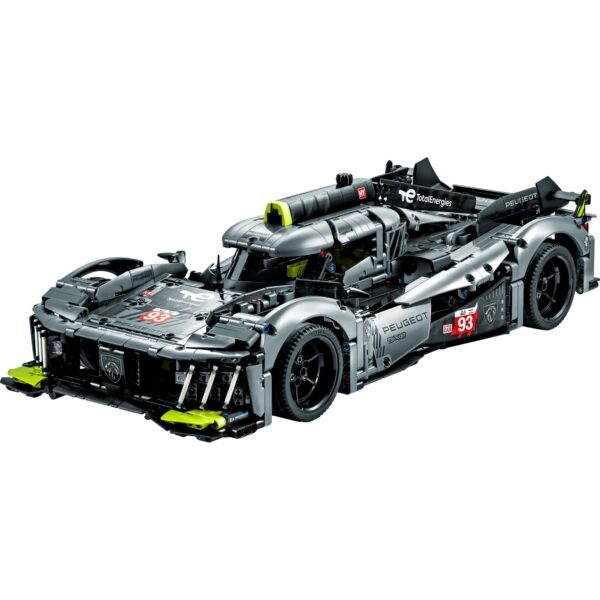
Between 1,300 and 1,800 pieces, and a completely different rhythm. These are long, low and narrow, and the build is front to back rather than outward from a gearbox.
The mechanical interest is in the suspension. Push-rod arrangements on the F1 cars are the real geometry rather than a suggestion of it, and you can watch them work before anything covers them up. The Ferrari SF-24 and the Red Bull RB20 are the two current-era F1 cars and they go together quickly. The McLaren 42141 is the longest at 65 cm and the best middle ground if you want an F1 shape without a short build. The Peugeot 9X8 is the odd one out and the more interesting for it, because endurance-racer bodywork gives the second half of the build a different shape entirely.
The common trap on all four is the decals. Thin panels, a lot of stickers, no forgiveness if one goes on crooked. Do them when you are fresh.
The short road cars
These are the ones that arrive when the table is needed for something else, and they are not the consolation prize.
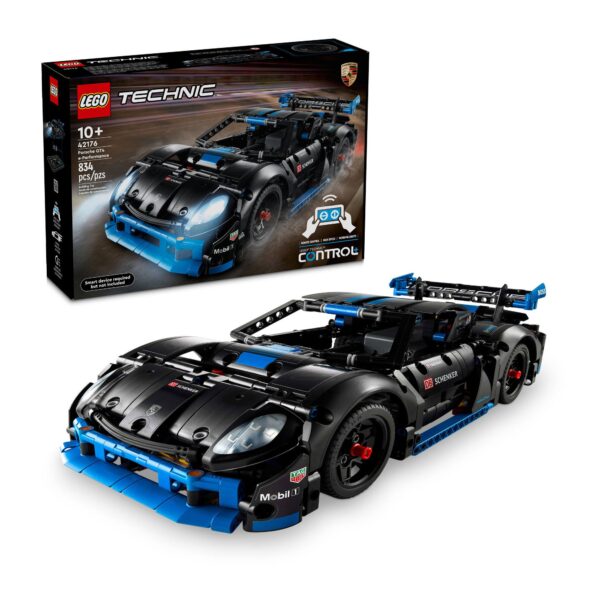
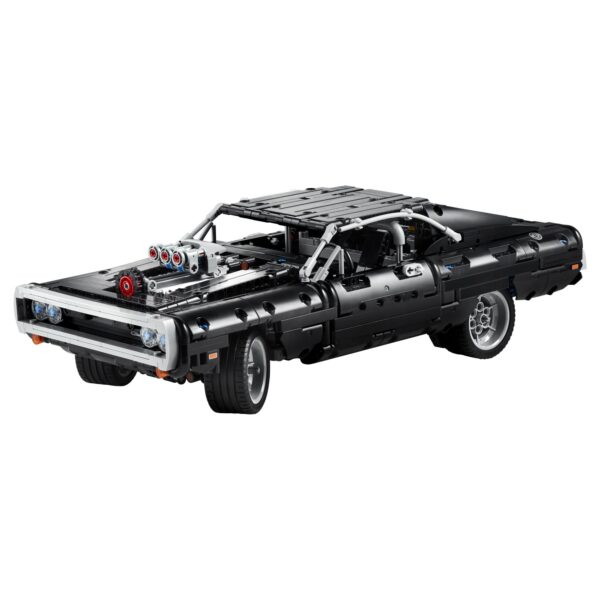
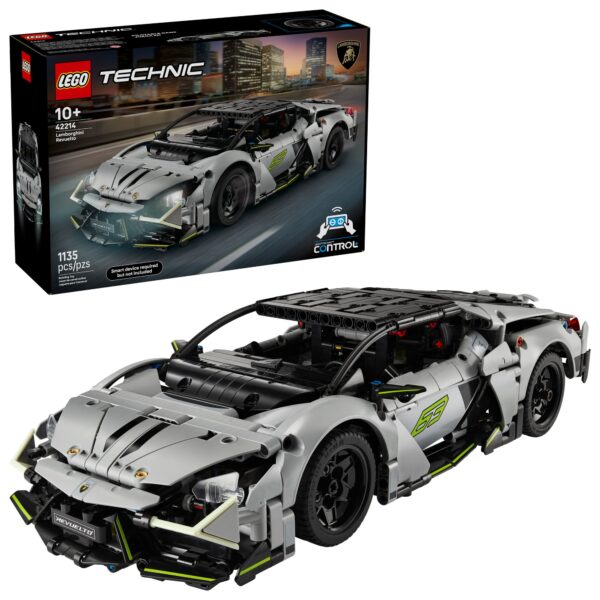
The Porsche GT4 e-Performance is an app-controlled race car in 834 pieces, with motors driving the rear wheels directly and working steering. It is the set I would use to argue that a small box does not mean a compromised build. The Dodge Charger is 1,077 pieces of chrome and attitude with a V8 and a wheelie-bar stance, and it carries more motivation per piece than almost anything else here. The Lamborghini Revuelto is the newest of the three, a 1:12 hybrid V12 with a working gearbox, and it is the answer if it is specifically a Lamborghini you were hoping for.
Not the badge. The mechanism. Two cars at the same scale with the same sort of gearbox are poor companions in a library, however different the shells look, because they ask the builder to do the same job twice.
So when I am deciding what to add, I look at what is missing. A different gearbox layout, an unusual suspension arrangement, a body that goes on in a way none of the others do. That is why the Peugeot is in and why there are only four flagships rather than eight.
What this means when a box turns up
Look at the piece count on the lid and you will know which of the three groups you are in. Over 3,500 means clear the table and settle in. Between 1,300 and 1,800 means a couple of good evenings and a lot of stickers. Under 1,200 means you will be finished this week.
None of those is a worse outcome than the others, and after a year of this most members tell me the same thing: the short ones they would never have bought turned out to be the ones they enjoyed most.
Piece counts come from LEGO’s own pages. If there is a car you think the library is missing, tell me and make the case. garreth@brickclub.uk comes straight to me and the collection has changed shape before on the strength of a good argument.
Up to six or twelve kits a year, and you never know which
Every box is a Technic set worth over 100 pounds, chosen at random, and you never get the same kit twice. Postage both ways, a pre-paid return label, a brick separator and the official instructions come with all of them.
Browse subscriptions See what is in the library