
A long, low Formula 1 build with a proper mechanical core
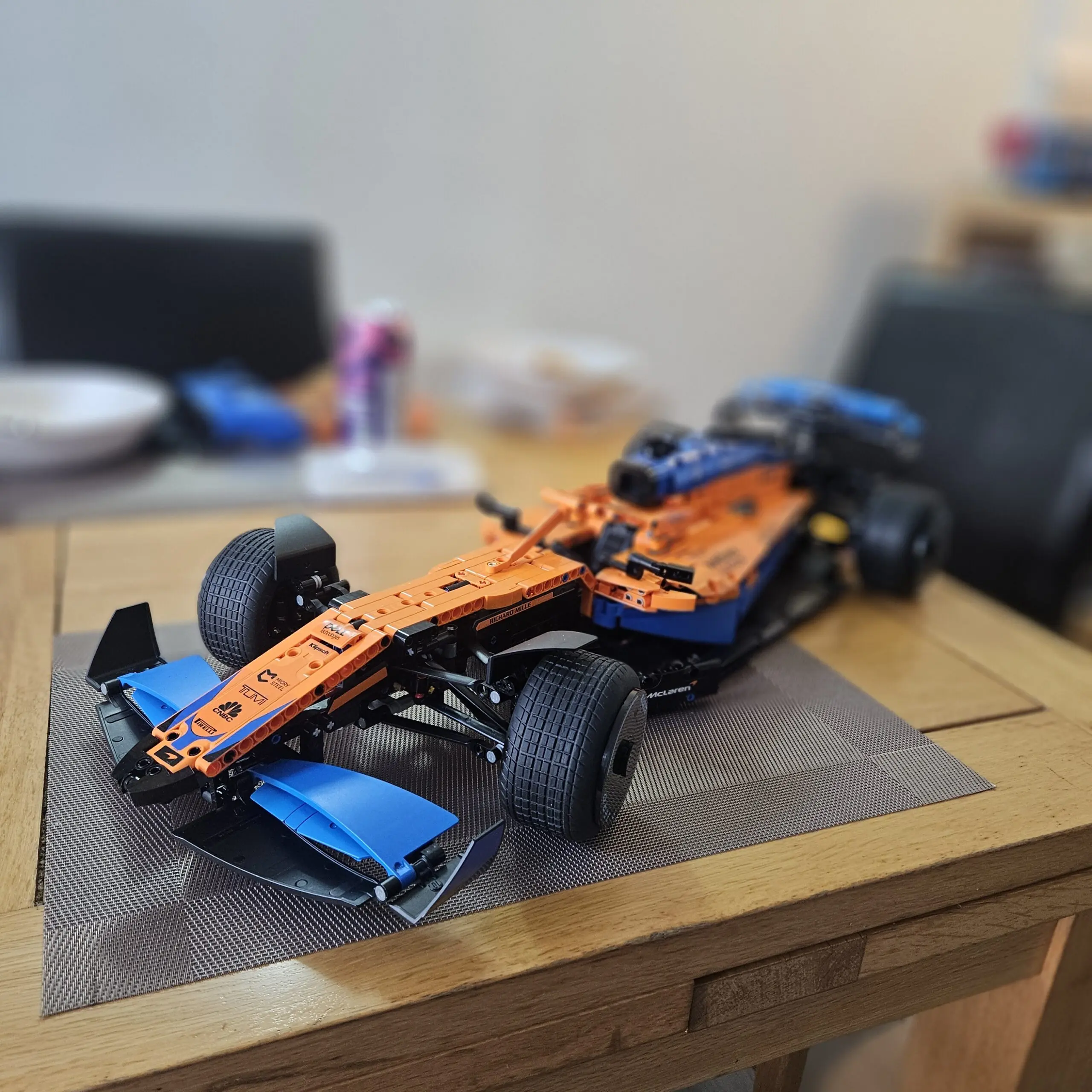
The McLaren Formula 1 Race Car is one of those Technic models that announces its size before the last panel goes on. At 65 cm long, it needs a clear table and a sensible place to live while you work through its 1,434 pieces.
It was developed alongside McLaren while the team prepared its 2022 race car. The livery is the visual hook, but the build is strongest underneath it: a V6 engine with moving pistons, working steering, suspension and a differential.
What the build is actually like
The early stages are mostly structure. You build a narrow central spine, then add the rear axle, differential, engine and suspension around it. The long wheelbase makes alignment important. If one side begins to sit differently from the other, it is worth going back before the bodywork multiplies the problem.
Later bags change the rhythm completely. Flexible elements and angled panels create the sidepods, nose and front wing. The model becomes more recognisable very quickly, but that bodywork is less forgiving than a square Technic chassis. A connector fitted one hole out can leave a visible gap several steps later.
Why it earns its place in the library
This is a good choice for someone who wants a substantial display car without committing to a 3,500-piece supercar. It still has enough mechanical work to feel like Technic, and the low silhouette is very different from the road cars in the library.
One correction to the usual sales chatter: there is no working DRS mechanism in this set. The functions are the V6 engine, steering, suspension and differential. That is still a solid list, and it is better to judge the kit on what is actually there.
Keep the front and rear assemblies square as you join the long chassis. Test the steering and suspension before the final floor and side panels close everything in.
42141 kit details
Build the McLaren F1 car at home
Choose it from the Brick Club library, take your time over the chassis, then return the complete kit for the next member.
Browse the libraryCompare subscriptionsA better way to handle the long chassis
I would build the McLaren on a flat board or mat that can be turned. The chassis becomes long before it becomes rigid, and lifting it by one end can twist the structure enough to make later bodywork feel wrong. Turn the whole work surface, compare the left and right suspension arms, then test the steering with the tyres lightly touching the table.
The stickers deserve their own pace. I apply each one when the instructions call for it, using the edge of the panel as the reference, rather than leaving a pile until the end. That keeps the livery changes tied to the build and avoids handling a nearly finished car more than necessary. The official 42141 page lists the moving V6, steering, suspension and differential; those are the functions I check before the last orange and blue panels go on.