

Volvo FMX Truck and EC230 Excavator (42175): two machines, one box
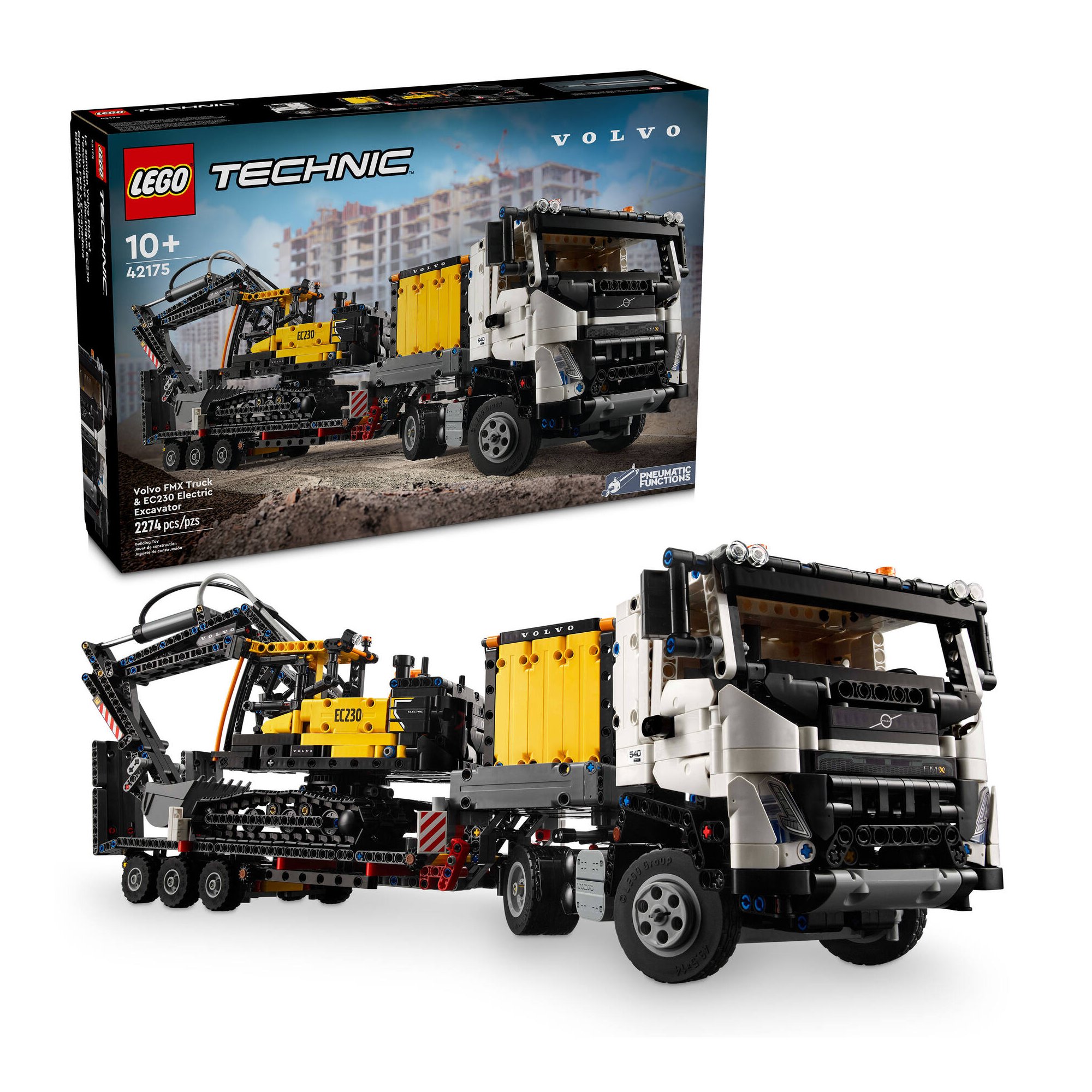
Most big Technic trucks give you one machine to work. This box gives you four pieces that work together: a Volvo FMX tractor unit, a low-loader trailer, a tracked EC230 electric excavator, and the battery power unit that keeps the excavator running on site. Coupled up it is about 70 cm long. The excavator is the reason the set exists. It brought pneumatics back to Technic in August 2024, with a hand pump, two switches and two cylinders, and the truck and trailer carry geared functions of their own.
It is in the Brick Club library. No member has written this one up yet, so what follows comes from Huw’s full review at Brickset, The Lego Car Blog’s launch preview and the Eurobricks thread from the day the set was revealed. Below is what each of the four models does, how the build splits, and where I would slow down.

Why this one matters
Huw at Brickset called it a near-perfect Technic set that will satisfy traditionalists and newcomers alike, and finished by calling it the best value Technic set of the year and his favourite. His reason is the one that matters when you are choosing a kit for a weekend: pneumatics are tactile. You flick a lever, pump the cylinder and watch the arm move. Nothing is motorised and nothing is behind an app. The set also sits in a long line of Technic trucks carrying a trailer with a working vehicle on it.
The other side of it is the excavator arm. There are two pneumatic cylinders on it, not three, so there is no cylinder for the bucket. The bucket is linked mechanically to the arm and moves with it. Huw thought that was realistic enough not to be a major loss, and that the model looks cleaner without another pair of pipes up the arm, but he still listed it as the set’s one weakness. The Eurobricks thread said the same on the day it was revealed, with a second complaint: the bucket is two 3-wide buckets side by side, and you can see the wall down the middle.
Scale is worth knowing before you put it next to anything else. By Huw’s reckoning the EC230 is 1:25, where the older Volvo EW160E wheeled digger (42053) is 1:20, so the two do not sit quite right together, although the older machine does fit on this trailer. The truck has a single rear axle with twin tyres, which Eurobricks members were pleased to see, and it is white, which they were not. There is no exhaust stack either, which Huw found odd.
What it actually does
Four sub-assemblies, and each one has something to operate. The pneumatics are on the excavator. Everything on the truck and trailer is gears, levers and hinges.
The two pneumatic switches sit behind the excavator cab, each with a label. Pump up, flick a switch and one of the two cylinders on the arm moves. Between them they give the arm a good range of movement in two stages, and the pipework is tucked inside the rear bodywork rather than left flapping. The bucket has no cylinder of its own. It is coupled to the arm by a link, so as the arm curls in the bucket tips with it, which looks right in motion. Huw’s honest note is that it is not particularly easy to actually pick anything up with the scoop.
The Lego Car Blog’s launch preview lists a 360 degree slewing superstructure, so the whole upper body turns on the track frame. None of the reviews we hold describes how the slew is driven, so I will not guess. The cab door opens to show a seat, a control lever and a display panel, and the orange safety rails around the top are the detail that makes the excavator stand out. The tracks roll on the trailer deck and off the ramps.
Pull the red ball joint piece behind the cab and the whole cab tips forward, the way a real FMX does for servicing. Under it is a six-cylinder engine coupled to the rear axle, so the pistons move when you roll the truck. There is one rear axle rather than two, with twin tyres on it, and the tanks on the chassis sides drew praise on Eurobricks. The headlights are the 2×3 panel in transparent clear, a first for that part, with a sticker on each.
The truck has working steering. Neither review we have says whether it is worked from the roof or the cab, so check the instructions when the tractor unit is done. The fifth wheel behind the cab tilts back and forth, and it has a coupling mechanism built in, so the trailer locks on and releases rather than just dropping over a pin. It is a smaller scale than the Arocs, so the two do not match up.
The trailer looks like the plainest of the four and has the most hidden in it. Gear wheels on the right-hand side raise and lower the red stabilisers and the rear ramps, so you wind the legs down, drop the ramps and track the excavator off. The frame is built on long 3 x 19 liftarm racks, which is why it stays stiff with the digger on it. The red-and-white boards are there because the load overhangs the sides slightly.
The yellow box behind the cab is a battery power unit for the electric excavator, and it is more than a box. A door opens on stickered battery packs, there is a cooling system and connectors on the side, and a charging cable plugs into the side of the excavator. It is also the load: the excavator can lift it off the trailer, and the thin liftarms on the sides of the bucket are there to catch its chains.

How the build goes
Four separate sub-assemblies, so think of it as four builds. None of the reviews we hold gives the bag numbering or a build time, so the order below follows the four models and the timing is our estimate: two or three evenings.
Tractor unit
No source gives the step order, but the six-cylinder engine, the single rear axle and the tilting fifth wheel all sit on the chassis under the cab. When it is done, roll it and watch the pistons, and check the cab tips forward on the red ball joint and drops back square. The clear 2×3 headlight panels take stickers, so keep them for last and apply them flat.
Trailer
The long 3 x 19 racks make the frame, and the gearing for the stabilisers and the rear ramps is worked from the right-hand side. Test the gear wheels as soon as they are in: the stabilisers and the ramps should move freely without slipping. The red-and-white boards and the wheels finish it.
Excavator
The pump, the two switches and the two cylinders are the heart of the set. Pump it and work both switches while the pipework is still exposed, because it ends up enclosed in the rear bodywork and is a nuisance to reach afterwards. Then the arm, the bucket link and the two-part bucket, the cab with its opening door, and the orange rails.
Power unit and load
The smallest sitting. The battery unit with its opening door, stickered packs, cooling gear and the charging cable, then the chains it hangs from. Finish by winding the stabilisers down, dropping the ramps and tracking the excavator off to lift the unit clear of the trailer.
No member diary yet for this one, so these come from Huw’s review and the reveal thread. Points to slow down for.
- Pipework before bodywork. The hoses end up neatly enclosed in the rear of the excavator. Route them, pump the system and check both cylinders move fully before you close it up, because opening it again means undoing the back of the machine.
- The bucket link. There is no third cylinder. The bucket is mechanically coupled to the arm and should tip in step with it. If it hangs or binds while the arm curls, the link is a hole out. Fix it before the second bucket half goes on.
- Do not expect it to dig. Huw found it not particularly easy to pick anything up with the scoop. The lift it is designed for is the power unit, caught by its chains on the thin liftarms either side of the bucket. Practise that one.
- Stickers on clear panels. The headlights are transparent 2×3 panels with a sticker on each. A crooked sticker on a clear part shows from both sides, so line each one up once and press it once.
- Coupling the trailer. The fifth wheel tilts and has a mechanism for coupling and decoupling. Learn how it locks and releases with the trailer empty before you put the excavator on it.
On the shelf
Coupled up it is about 70 cm long and needs a full shelf. It splits into four pieces, which helps if you are short of space: the excavator alone displays well with the arm raised. The white cab drew complaints at the reveal for looking too much like the Arocs; Huw particularly liked the grille.
The arm and its exposed cylinders are the parts that get knocked. Park the arm down with the bucket on the deck when it is on the trailer, and lift the excavator by the track frame, not by the orange rails.
This is the one for you if you want functions you can feel rather than a body shell, or if you have never built a pneumatic Technic set. It is four medium models rather than one dense one, so it suits two or three evenings with a machine finished each time. Test the air before the excavator’s bodywork closes, learn the trailer coupling empty, and do not judge the bucket on picking up loose bricks. Its job is lifting the power unit.
If you like this one, try
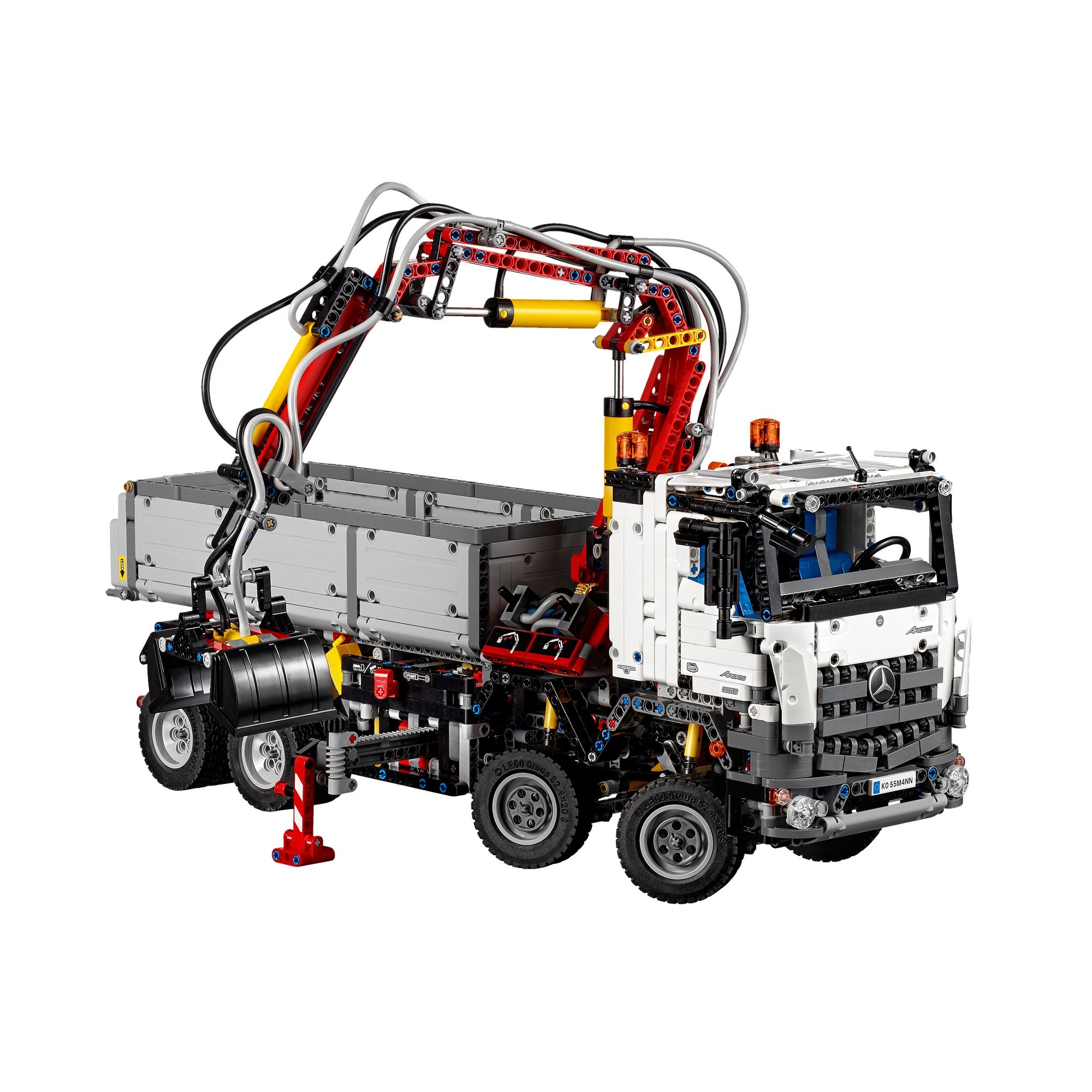
The other big trucks in the library. The Volvo Articulated Hauler (42114) is another Volvo CE licence; the Heavy-Duty Tow Truck (42128) is another pneumatic truck; the Car Transporter (42098) is the trailer set Eurobricks members compared this one’s ramps to; the Arocs (42043) is the bigger-scale construction truck.


The Volvo FMX Truck and EC230 Excavator is in the library
Technic Fan gets up to 6 kits a year, Master Builder up to 12. Delivery both ways is included and the prepaid return label is in the box.