

Yamaha MT-10 SP (42159): where the new gearbox parts started
Four new parts arrived in this box in 2023, alongside a new red 24-tooth clutch gear: a yellow eight-tooth stepper gear, orange shift forks, a two-module driving ring and a pair of azure shift drums with a groove round them. Huw at Brickset predicted they would most likely replace the gearbox parts used before them, and the Ducati Panigale V4 S (42202) that followed used the same set. This is the bike where they started.
It is the second of LEGO’s 1:5 scale motorbikes, after the BMW M 1000 RR (42130), at 1,478 pieces and 44 cm long. Inside the black panels there is a three-speed gearbox with neutral, worked from the left foot pedal, and an inline four driven from the rear wheel through the chain. It is in the Brick Club library and two members have built it and sent photos back.

Why this one over the BMW
The MT-10 SP is what Yamaha calls a hyper naked: a performance bike with the bodywork taken off. That suits Technic. The frame, the engine block and the swingarm are on show, and the model does not lean on stickers to look right. There are a few, mainly the maker’s name and the model name on the tank, and Zachary Hill at New Elementary built his with every sticker left on the sheet. Huw made the same comparison with the BMW, which relies on its sticker sheet, and much prefers this one.
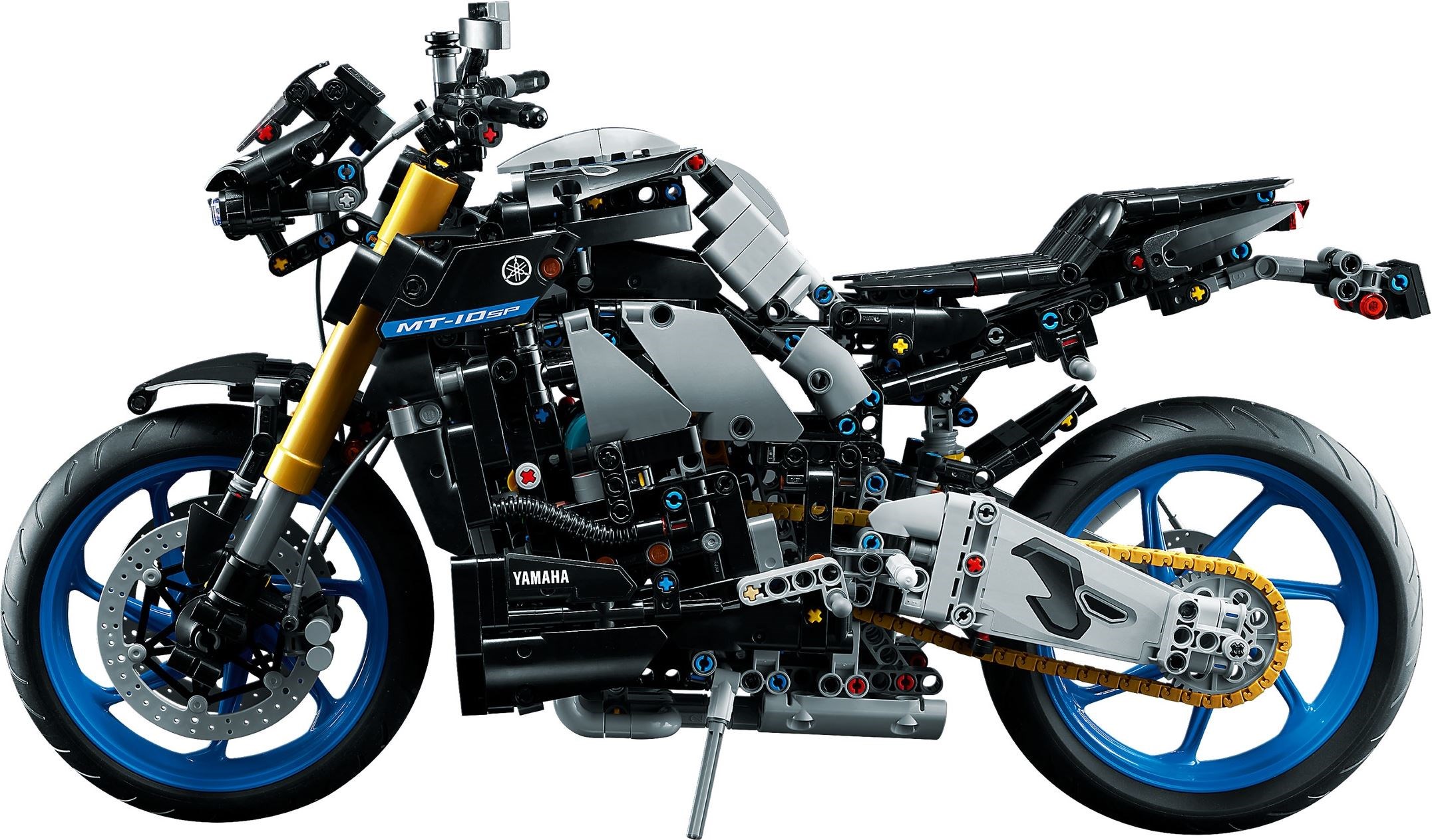
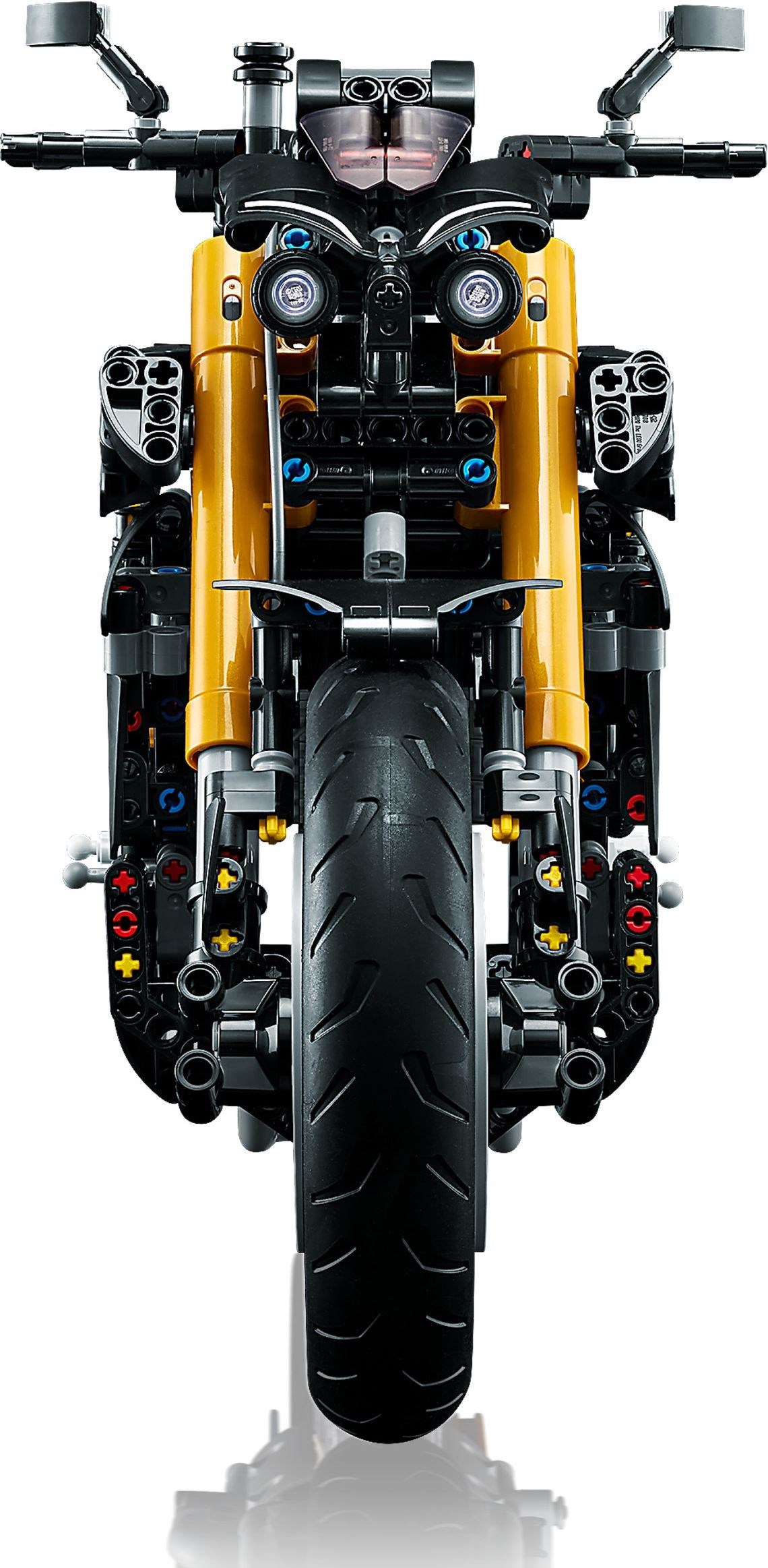
The colour is in the metal rather than the panels. Blue seven-spoke wheels, gold front forks and a gold chain break up what would otherwise be a black and grey model. The wheels, the front shock absorbers and the rear shock were first made for the BMW and are recoloured here. The front brake discs are the dual-moulded parts with the drilled pattern, and a silver flexible line runs from the brake cylinder on the handlebars to the calipers.
The scale is honest. The real bike has a 1.4 m wheelbase and the model’s is 29 cm, just under 1:5. Finished, it is 44 cm long, 25 cm high and 15 cm wide.
What it actually does
Nothing is motorised. LEGO’s own list is a four-cylinder engine, a three-speed transmission, chain final drive, front and rear suspension, steering from the handlebars, a side stand and a display stand.
Press the pedal on the left and a rocker pushes one of two dark grey axles against the yellow stepper gear, turning it 45 degrees. Press the other way and the second axle turns it back. The stepper carries two azure shift drums, each with a groove round its edge. A red ball pin on each orange fork rides in that groove, so as the drums turn the forks slide sideways and push the grey driving rings into the red or green clutch gears. First is one side of neutral, second and third the other: first down, the rest up, as on the real bike.
Each drum’s axle hole is split into two halves turned 45 degrees from each other, so the two drums share an axle in different phases, which is how two drums give five combinations of fork positions, and a spring-loaded red liftarm bears on two teeth of the stepper so the box stays fully in gear. A red ball on the frame shows first, neutral, second and third, and it stays visible through the panel gaps when the bike is finished. Huw found it often took a few pushes to change and suspected slack somewhere, or his own build; Hothbricks had no such trouble.
The engine sits on top of the gearbox, tilted slightly forward. Roll the bike and the rear wheel turns the chain, the chain turns the gearbox and the gearbox turns the crank, at a different speed in each gear. Once the bodywork is on you only see the effect through the holes in the panels, watching the cylinder heads as you roll it, which Huw lists as one of the set’s two weaknesses, though he adds it is not a problem unique to this model.
One for engine people. Yamaha’s selling point is the crossplane crankshaft, and the manual and the AR app both talk about it, but the model has a flat-plane crank: two pistons reach the top together. A crossplane version would have made the engine at least two modules longer, and keeping it to eight won.
The front wheel hangs on two 18-module shock absorbers with internal springs, gold to match the Öhlins forks on the real bike. The rear is a swingarm with a single nine-module shock and a yellow spring. Both ends move.
The handlebars turn the front wheel through the forks. That is all LEGO’s description says and none of the reviews dwells on it: a bike that steers when pushed, not a mechanism to study.
The black display stand carries the Yamaha plaque and is built early so the bike sits on it for the rest of the build. A kickstand folds out under the engine; Huw thought it flimsy but it just about holds the bike, and Zachary used it more than the stand. The levers, brake cylinder, brake lines and rear brake pedal are all there and none of them do anything.
How the build goes
None of the three full reviews lists the bags, so the stages below follow the order Huw and Hothbricks describe. Both call the build modular. No reviewer gave hours; our estimate is two or three evenings, the first mostly on the gearbox.
The frame
The frame comes first, much as on the real bike, and it is not square. The engine and gearbox sit tilted, so the frame uses some careful geometry to get the angles. Follow the pictures exactly here.
Gearbox and engine
The gearbox and the engine above it are built as one separate unit and pinned to the frame with a couple of pins. This is the part to slow down for. The azure drums have letters engraved on their edges, the instructions show which letter faces where, and there are several check pictures before you move on. Use them. Then work the shifter by hand while it is still open, and once the unit is in the frame the side indicator on the chassis lets you check it steps through the gears before you carry on.
The marriage, then the stand
The engine and gearbox unit is pinned into the frame with a couple of pins, and it stops being a collection of parts. Then the display stand is built, still early in the process, so the bike can sit on it while you add the rest.
Forks, swingarm, wheels and panels
The gold forks, the swingarm with its single shock, the two big wheels and the black and grey panels, with the tank, seat and stickers. The reviews do not break this half down or give its order.
Two members have built it and sent photos, but no build notes, so these come from the reviews.
- Drum alignment is everything. The two azure drums must sit in the right phase or the forks will not land in the right gears. The letters on their edges and the check pictures exist for this. Huw’s often needed a few pushes per change and he suspected slack somewhere, or his own build; Hothbricks had no trouble. Getting the drums right is the part of this you control.
- Test before it disappears. Play with the gearbox while it is still a sub-assembly. Inside the frame and under the panels you are left with a few visible axles and the indicator ball.
- Coloured pins on show. It is a naked bike, so blue and red pins show all over it, including a red pin under the two transparent brown panels at the front of the handlebars. That is how LEGO built it, not a mistake.
- The kickstand takes the weight, just. On a shelf, use the display stand; on the table, the kickstand looks better.
- Stickers are optional. The sheet is small: the model name on the tank, Yamaha in a couple of places, the dash, the badges on the fake air scoops and the plaque for the stand. Zachary left all of his off and it still reads as the Yamaha. Whether they are on when it reaches you depends on who built it before you.
On the shelf
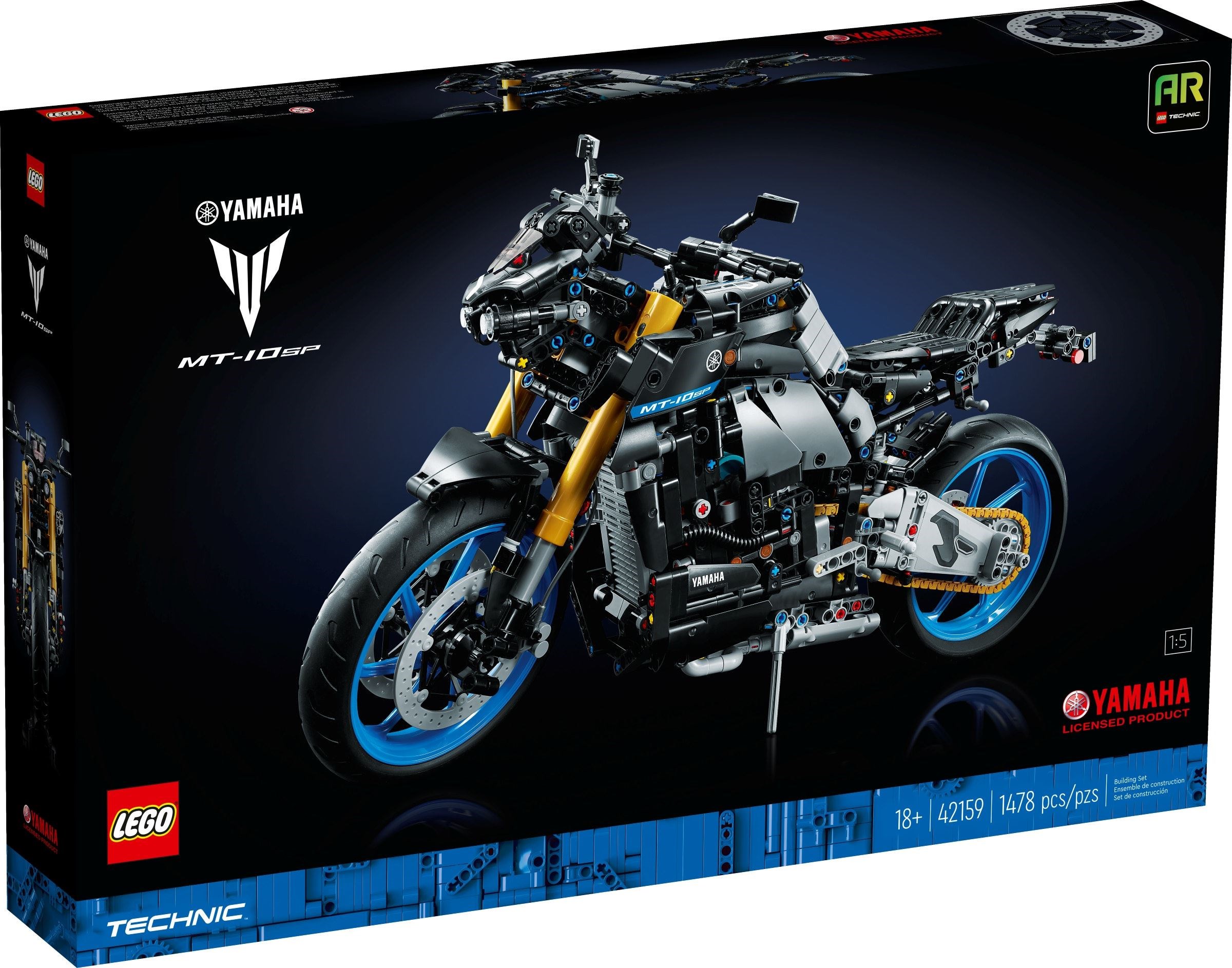
Finished, it is 44 cm long and 25 cm high, about the same shelf as the BMW and the Ducati. Huw thinks it looks better off the display stand, and Zachary used the kickstand far more than the stand because he kept playing with it. The left-hand side carries the chain and the gear pedal, and the official pictures all show that side. The member photo below shows the right-hand side, with the exhaust.
On looks, the reviews flag the tank, not quite the real shape and with a central bump Hothbricks did not like, and a seat that is a bit thin. The headlights are two minifigure-scale barrels, which works better than it sounds.
A member who has built it
Two Yamahas have come back with photos. Each diary is linked under its pictures.


It is the one for you if you want to learn the current gearbox parts on the model where they arrived, and where they are the whole point. Allow two or three evenings, one of them on the gearbox. Take the drum alignment slowly, test the shift before the frame closes round it, and do not expect to see much of it working once the panels are on. For the same gearbox with more of it visible, the Ducati Panigale V4 S (42202) came two years later and shows it from underneath.
If you like this one, try
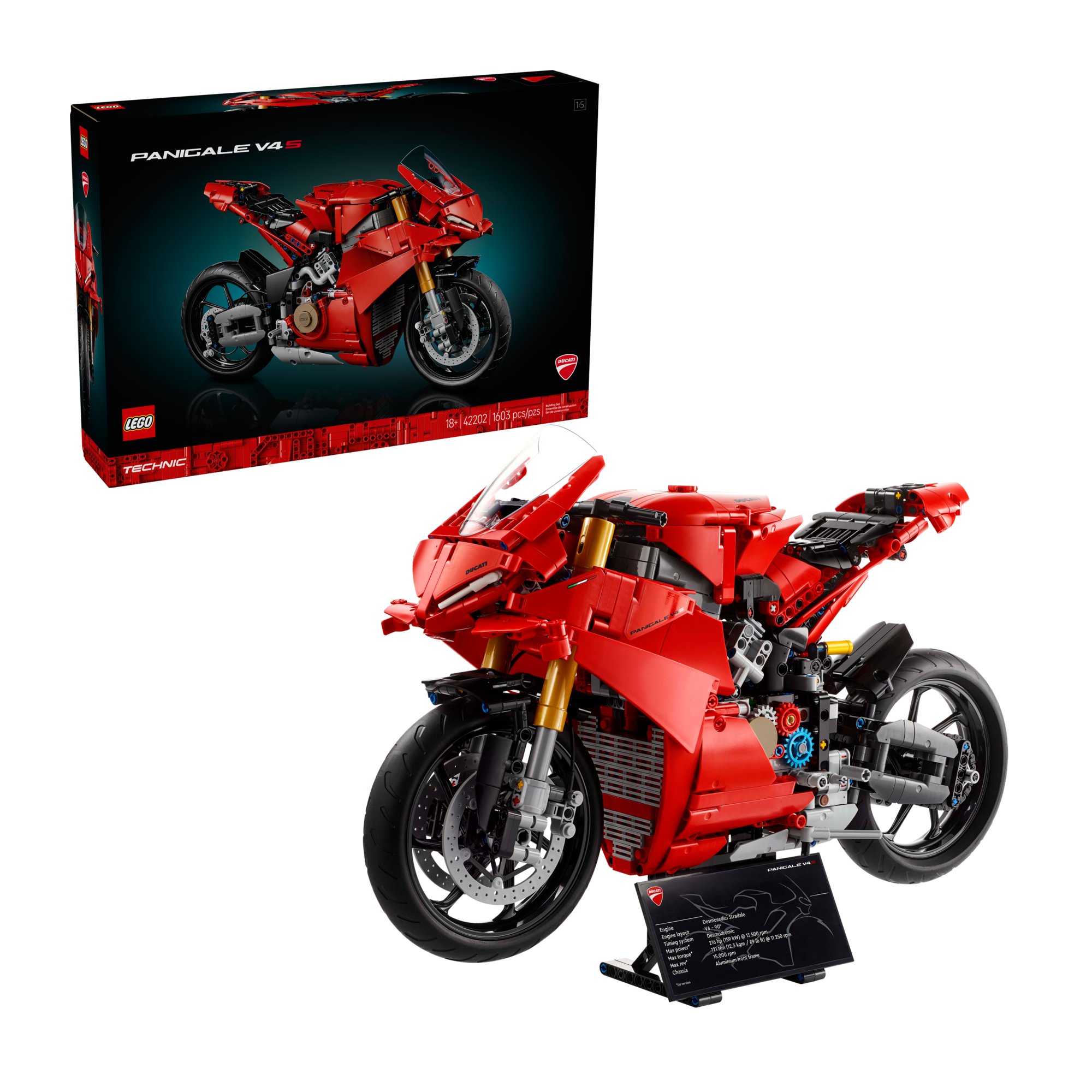
The other big Technic bikes in the library; the BMW, the Yamaha and the Ducati V4 S are all around 1:5. The BMW came first and shares its wheels and shocks with the Yamaha; the Ducati V4 S uses the Yamaha’s gearbox parts; the V4 R is the small one.


The Yamaha MT-10 SP is in the library
Technic Fan gets up to 6 kits a year, Master Builder up to 12. Delivery both ways is included and the prepaid return label is in the box.