

A bike builds the other way round
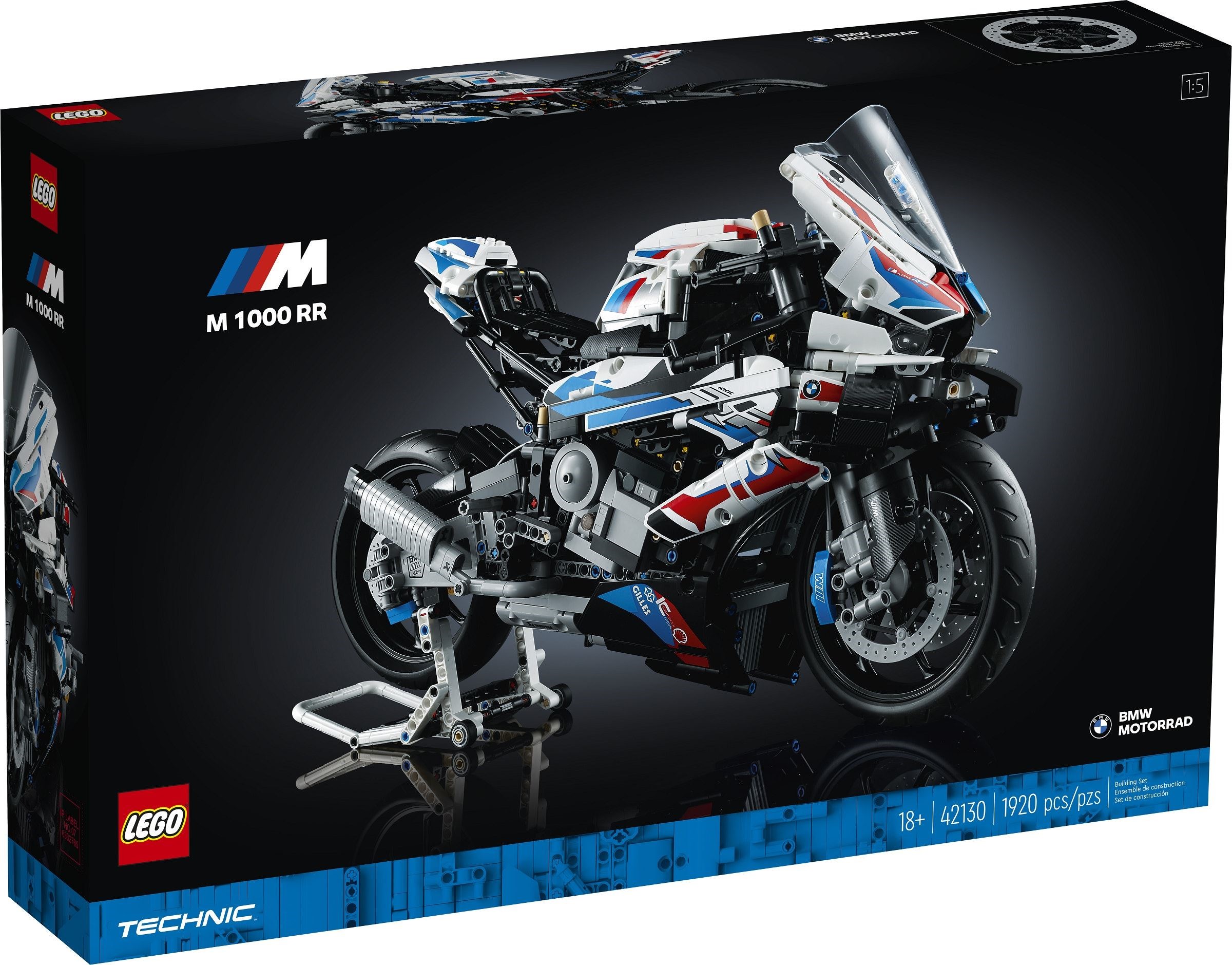
If you have come to this from the 1:8 cars, the BMW will feel wrong for the first hour, and that is the point of it. On a car you spend most of the build on a chassis and the last stretch hiding it. On this bike the frame is the model. LEGO said at launch that the 1,920-piece build follows the way BMW puts the real bike together, and at 1:5 scale most of what you assemble is still on show when it is finished.
The main BMW M 1000 RR spotlight covers the function list, the numbers and the two stands. This one is about how it builds compared with the cars most members know, and how it sits against the two 1:5 bikes that followed it into the library, the Yamaha MT-10 SP (42159) and the Ducati Panigale V4 S (42202). The write-ups on file for the BMW are launch news, not builds, so where I am reading from the photos I say so.

Why car builders keep talking about it
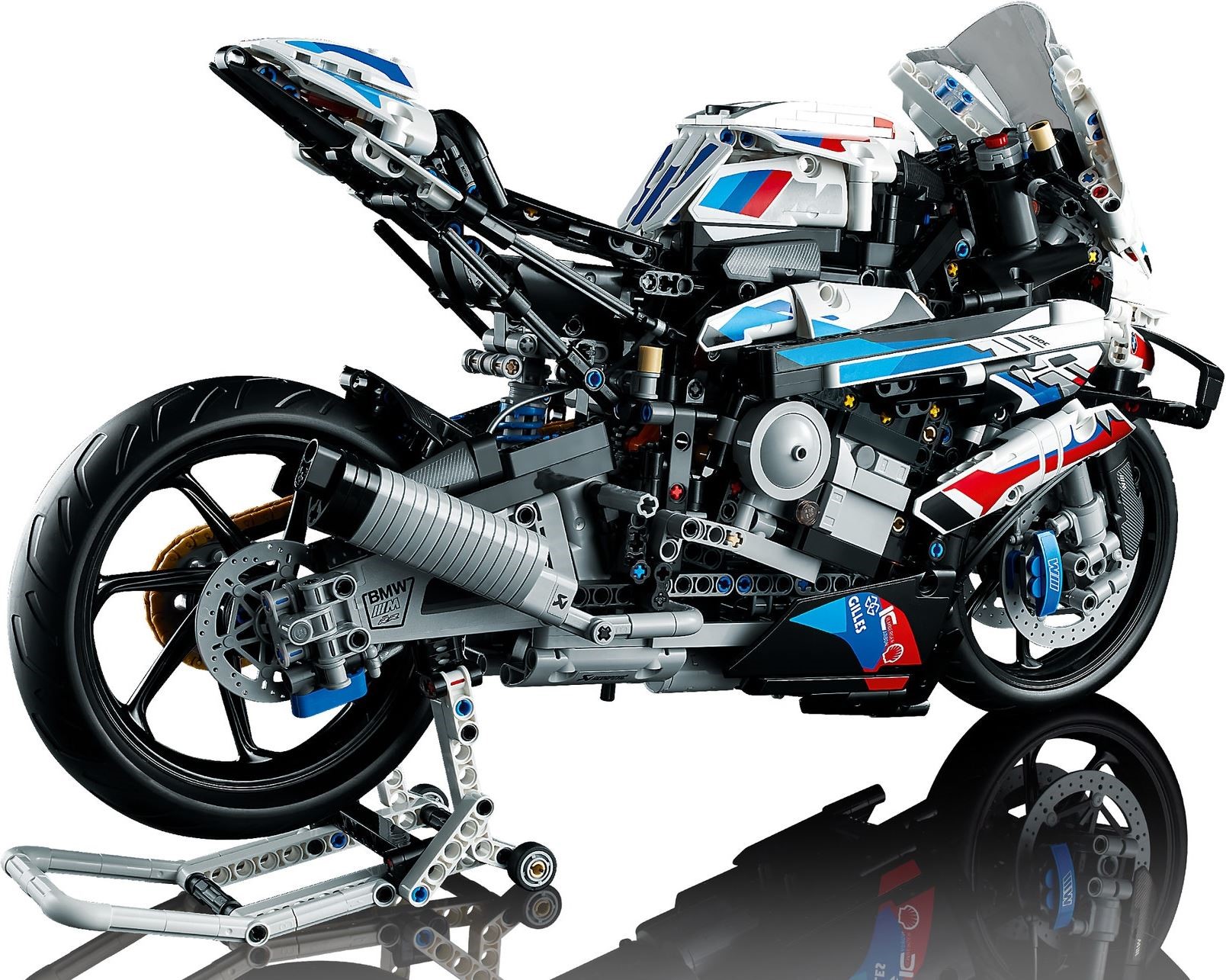
On a Technic car the gearbox, the differential and the suspension all disappear under panels. Look at the official left-side photo of this bike and count what is covered: the nose, the tank, the tail unit, two side panels and the belly pan. The black frame, the engine block, the swingarm, the rear shock and the fork legs are all in the open, so a fork leg half a stud out of line shows from across the room.
LEGO leaned into that. The press release says the build follows the real product to give a glimpse of BMW’s own production processes, and the designer, Samuel Tacchi, called it a challenging build. Brickset tags it Functional Steering, Sprung and I4 Engine, our product copy adds moving pistons and a chain drive, and the launch list has a new three-speed gearbox. It is still the largest Technic bike LEGO has made: 1,920 pieces against the Yamaha’s 1,478 and the Ducati’s 1,603.
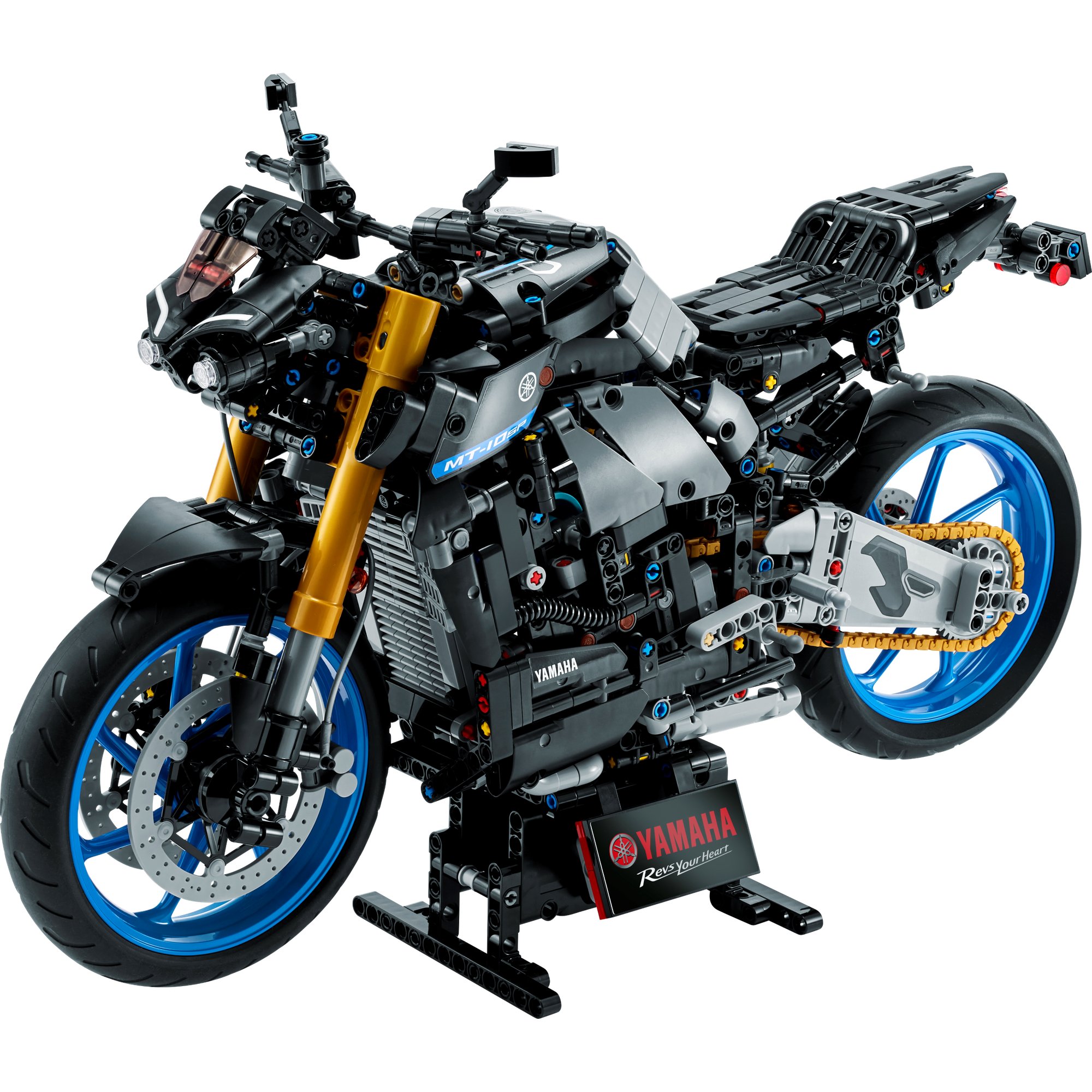
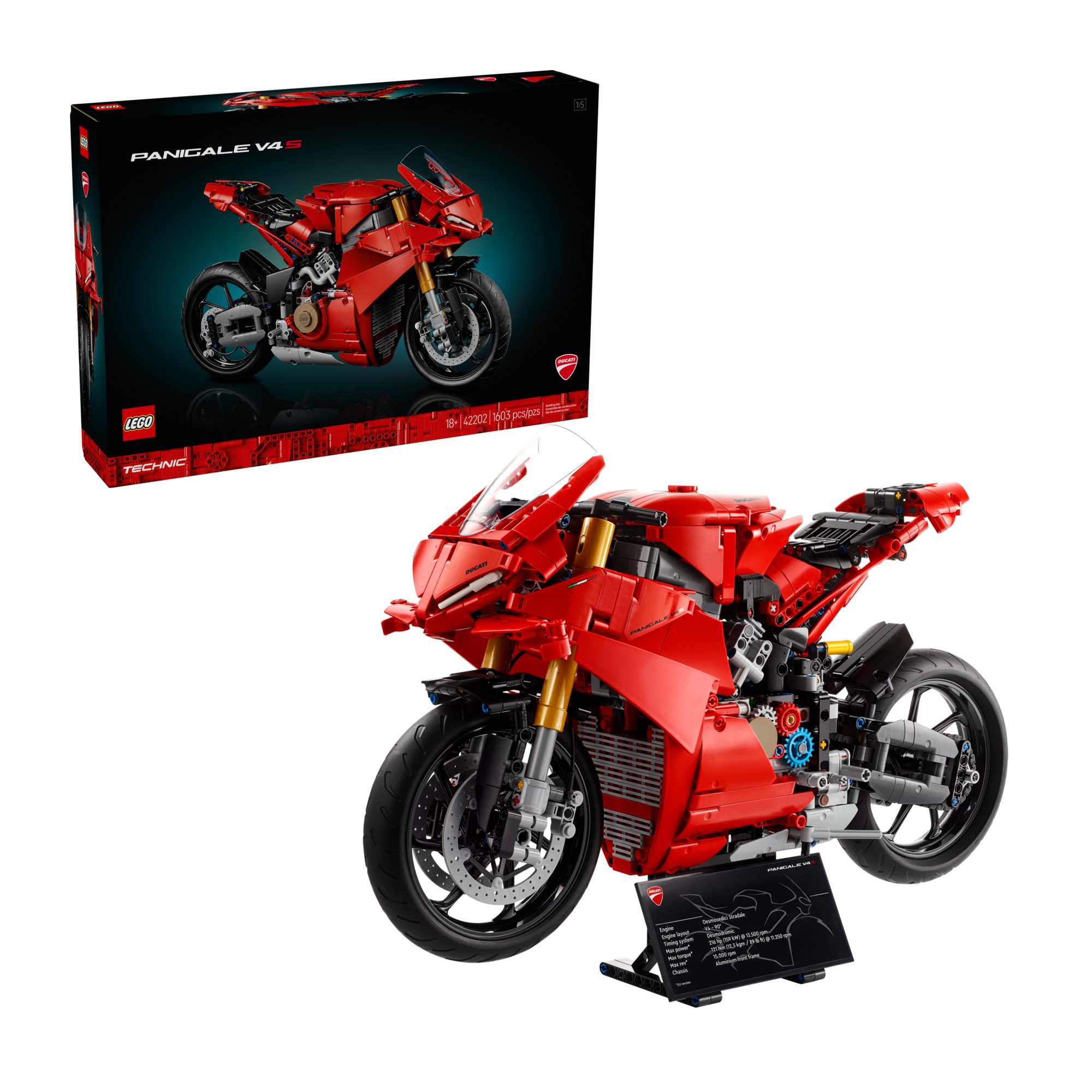
Where the three differ is how much of the mechanism you see afterwards, and here the BMW came first and did least well. Our Yamaha spotlight has Huw at Brickset noting that the BMW relies on its sticker sheet where the naked Yamaha barely needs one, and that the Yamaha is where the current gearbox parts arrived in 2023. Our Ducati spotlight says that bike’s gearbox can be watched from underneath once it is finished. The BMW’s gearbox is the 2022 design that came before those parts, and no review on file says how much of it you can see once the panels are on. That is the reason to test it before the panels go on, not a reason to skip it.
What it does, briefly
The full list is in the main BMW M 1000 RR spotlight. Here is the short version, with the drive paths left off wherever no source on file describes them.
LEGO’s headline function, described at launch as new and fully functional. No review on file says where the selector sits or how the ratios are picked, so there is no path here. Alan’s diary counts six speeds; LEGO says three, and LEGO’s number is the one to trust until a second member counts.
Our product copy has an inline-4 with moving pistons and a chain drive, and the gold chain is on LEGO’s own list. In the left-side photo the chain runs along the swingarm to the rear sprocket and the black block sits behind the blue panel. Nothing on file says whether rolling the bike turns the pistons. Our Yamaha and Ducati spotlights say it does on those two, and I would expect the same here, but expecting is not knowing.
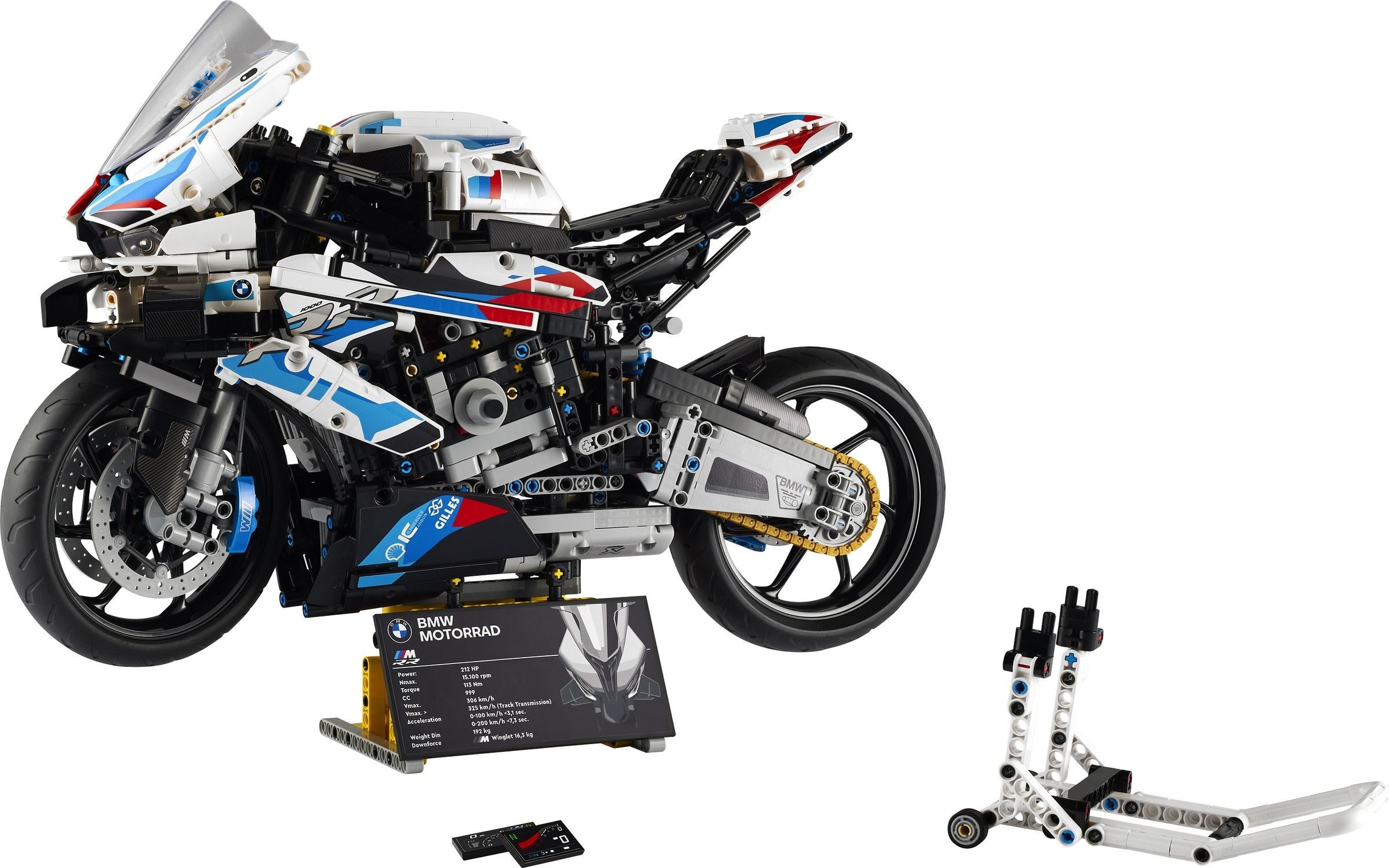
Front and rear suspension and front steering are on LEGO’s list, and our product copy calls the forks working. From the photos the front is a pair of black fork legs on grey lowers with twin discs and blue calipers; the back is a swingarm with a single shock behind the engine. The clip-on bars turn the front wheel, so the steering test is a push along the table.
A racing stand that lifts the rear wheel by the swingarm, a display plate with the BMW Motorrad plaque, three dashboard tiles to choose between and a printed windscreen. The two tiles you do not use come back to us with the rest of the kit.
How the build goes, for someone used to cars
No review on file goes bag by bag, so no bag numbers. This is the order the finished model implies and LEGO’s line about following BMW’s production suggests: engine and frame, then running gear, then skin. Alan logged five to six hours.
Engine, gearbox and frame
The inline-four, the gearbox and the frame around them. On a car this is the phase that gets buried. Here it is the phase that gets looked at, so take the alignment seriously: if the frame does not close square, the swingarm and forks will not sit in line later. Work the gearbox by hand while you can still see it.
Front end, rear end, chain
Steering head, fork legs and the front wheel, then the swingarm, the shock, the rear wheel and the gold chain. This is where a car builder’s habits help. It is running gear, and the test is the one you would give a chassis: flat surface, look straight down at both wheels and the frame, roll it a few feet. Anything out of line is still reachable.
Fairings, stands and plaque
The white panels with the M graphics, the sponsor decals on the belly pan (Brickset lists Gilles Tooling, Ilmberger Carbon and Shell), the printed windscreen and one of the three dashboard tiles. Then the two stands. On a car this last third is a long evening. On the bike it is a short one, because there is not much skin to fit.
One member diary and no build reviews on file, so these lean on the photos and on the other two bikes.
- Alignment shows. Nothing hides a crooked fork leg or a swingarm a stud out of true. Check the frame is square before the running gear goes on, and that the wheels track together before the panels do.
- Count the gears yourself. LEGO says three speeds. Our own diary says six. Take LEGO’s word for now, and click through the box before the side panels close it in.
- The livery is stickers, and they cross the panel joins. In the official side view the 1000 RR lettering and the blue stripe run from the upper side panel onto the lower one, so get the panels flush before you judge the stripe.
On the shelf
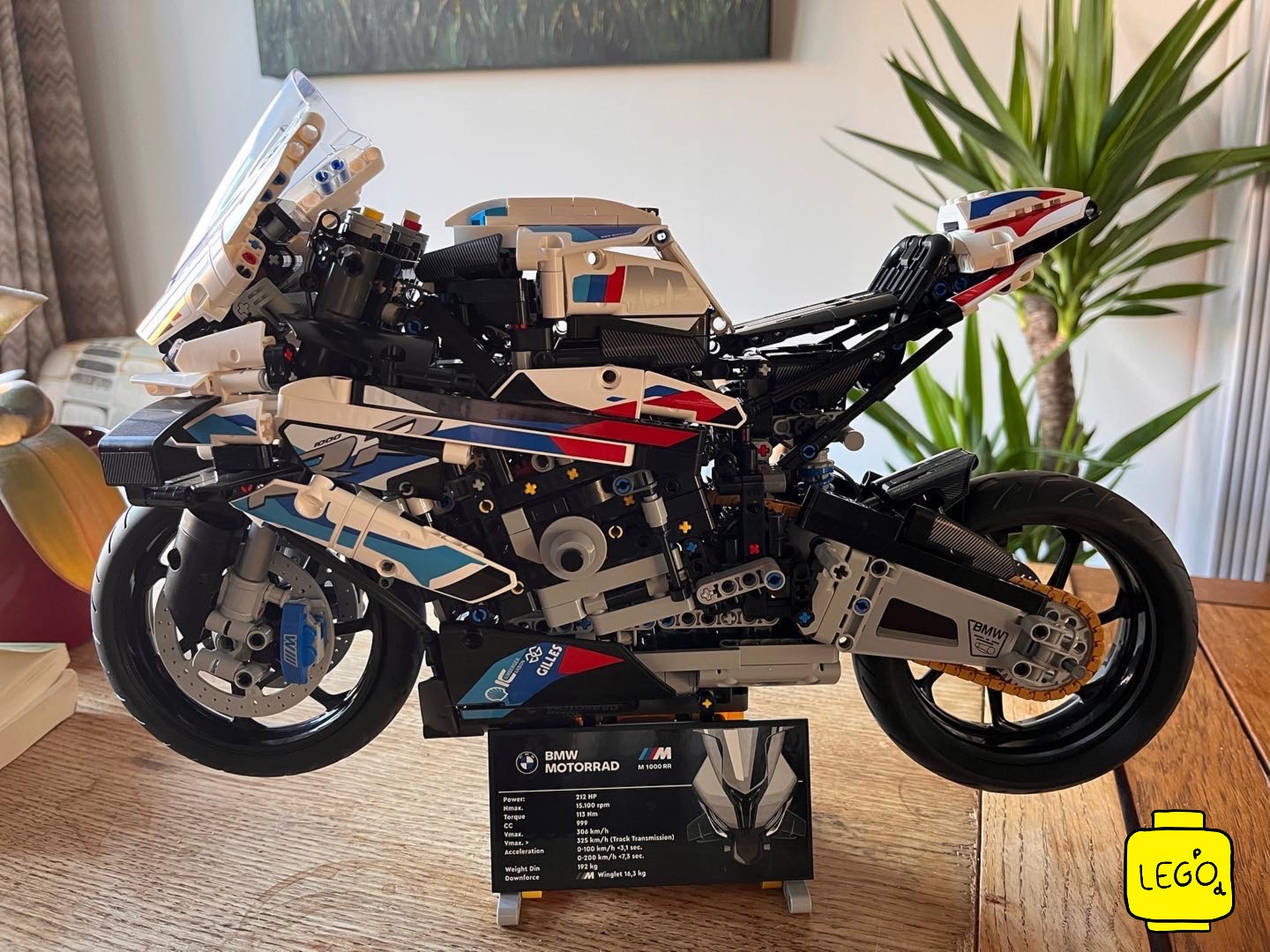
It is 45.5 cm long and 17 cm wide, 27.7 cm high on its wheels and 32.6 cm on the display plate, the pose Alan photographed at home. With so much frame exposed it reads in daylight as a black and grey machine with the livery as accents. On the racing stand it is 46.9 cm long, with the rear wheel clear of the table.
Members who have built it
Alan’s diary went up in December 2025 with two photos, both on the display plate. The diary is linked under each picture.

If your last three kits were cars, have this one sent next. Five to six hours on Alan’s clock, so one long evening or two normal ones, and it asks for a different kind of care: less about a shape arriving on time, more about the frame being square and the wheels tracking. Test the gearbox before the side panels go on. If you want a gearbox you can watch working, have the Ducati sent; to learn the current gearbox parts, the Yamaha. The BMW is the one where the frame is the model.
The other bikes in the library
The BMW was first at 1:5. The Yamaha and the second Ducati followed with the newer gearbox parts, and the small Ducati is the one for a bike in an evening.

The BMW M 1000 RR is in the library
Technic Fan gets up to 6 kits a year, Master Builder up to 12. Delivery both ways is included and the prepaid return label is in the box.